
What should I do about my brother who's in a coma? Is he still himself? How can I help him? Should I take him off life support?
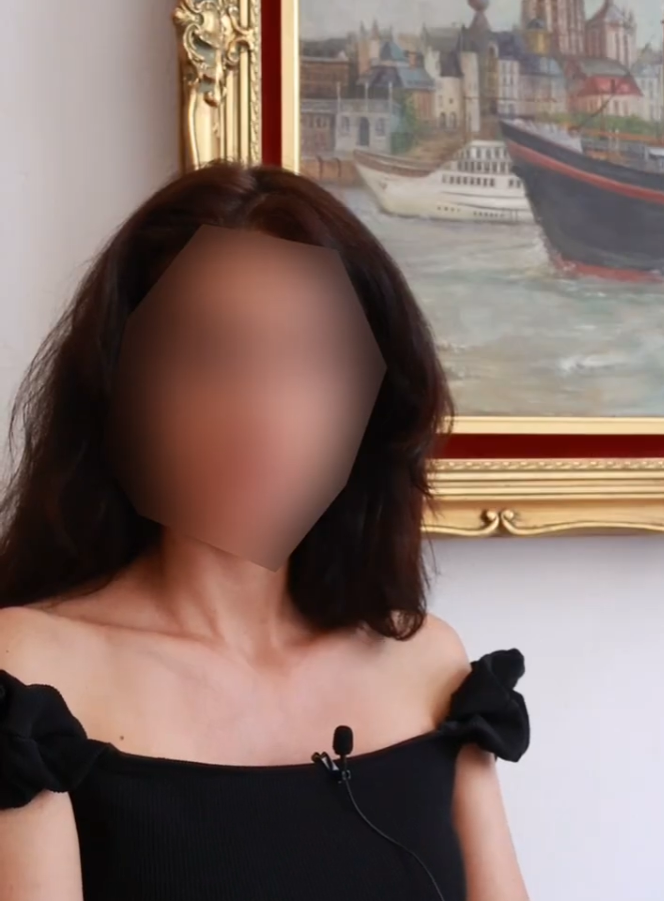
Alžběta and her brother, who was in a coma, spoke with Oleg Vojtíšek
Our job is to tell the stories of people’s lives. To celebrate them, pass on their messages, and help with saying goodbye. But for today’s episode, we’re struggling to find the right words.
It's about someone who is no longer alive, but isn't quite dead yet.
Alžběta’s brother was a handsome, young man with his whole life ahead of him. A single second and a fall at a construction site changed everything. Since that day, Alžběta has thought of nothing else but how to help her brother. At first, it was about saving him—and, in a way, a miracle. It was about finding the best of the best. Because when your skull is in one hospital and your body is in another, you’re teetering on the edge of the unimaginable.
But his desperate struggle for life gradually turned into the opposite: a struggle over how to end his life so he would no longer suffer. Unfortunately, a young, healthy body is unlikely to give out on its own.
Is it even possible to find hope in such darkness?
What is it like to stand face to face with the empty eyes of a loved one staring at you?
And how is it possible that keeping someone in this condition costs the government millions of crowns a month, yet insurance companies refuse to cover home care, which is slightly less expensive?
Sharing such painful stories helps not only the family, but also everyone who finds themselves—or may one day find themselves—on the brink of a similar abyss. We are therefore immensely grateful to Alžběta for opening the door to a story full of tragedy and systemic absurdities, but also of incredible strength and reconciliation.
Warning: The details of the accident discussed in the podcast are not suitable for the faint of heart.
What is it like when someone comes to inform you of the death of a loved one? The person who rings your doorbell might be police crisis intervention specialist PhDr. David Ondráček, MBA.
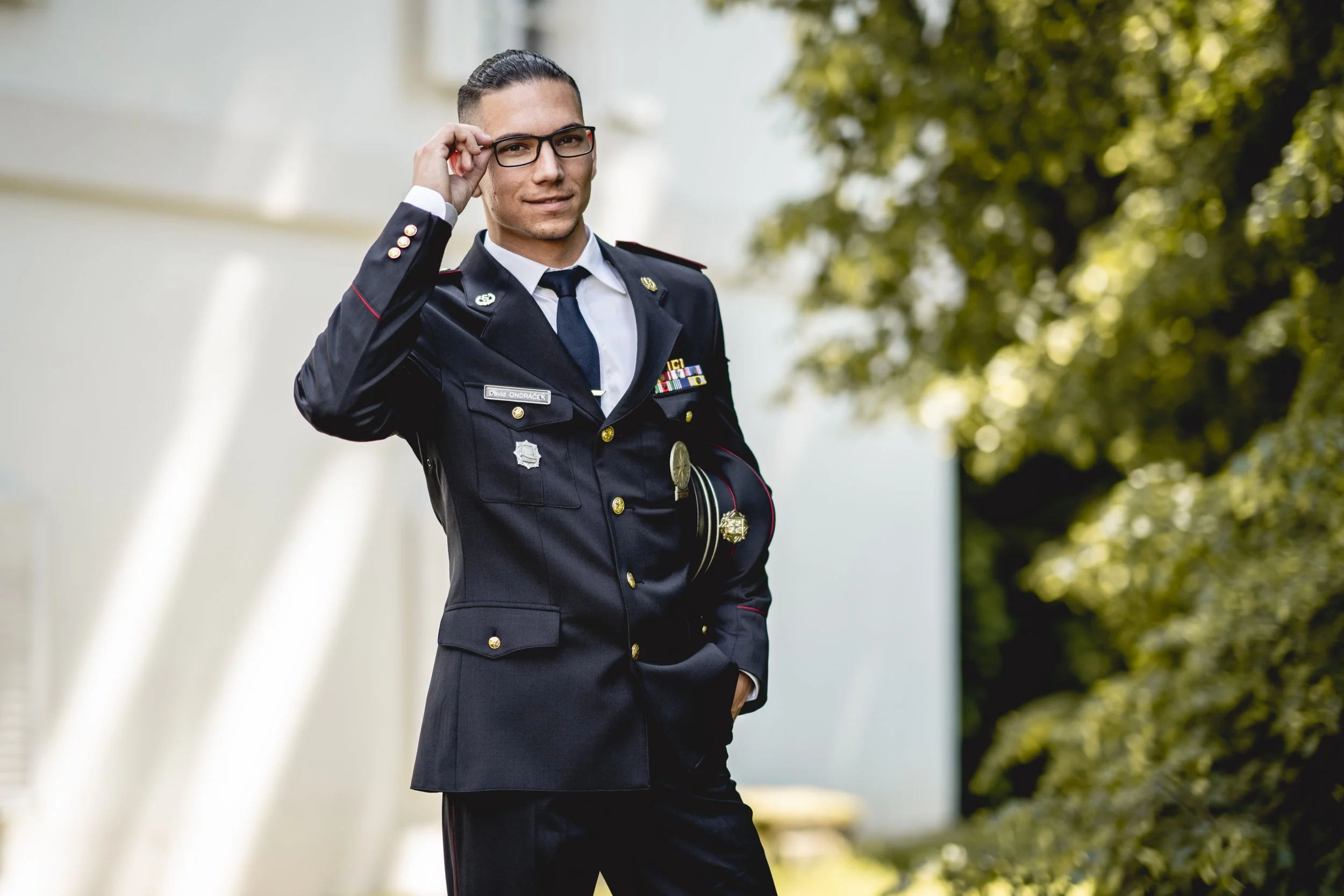
Police crisis intervention specialist PhDr. David Ondráček, MBA, spoke with Oleg Vojtíšek.
My husband left for work this morning by car. A few hours later, the doorbell rings. You open the door: the police are standing there, delivering news that will change your life forever.
What exactly happens when someone comes to tell you that a loved one has passed away?
PhDr. David Ondráček, MBA, a police crisis intervention specialist, deals with the worst cases: tragedies, murders, and suicides. When he isn’t investigating them, he has only one task: to devote himself to his family and be there for them.
In those most urgent moments shortly after a death, it is he who rings your doorbell. But before that happens, he may very well “test the waters” — to see how you’ll react. To see if he’ll scare you, if he should be more afraid of you, or if you’ll try to run away.
But no matter what your history with the police may be, it's his job to break the news to you and reassure you during the worst of times.
Why should families learn about a death from a crisis counselor rather than from social media, the media, or friends?
How do you break this news to the children?
Can the police make sure they let you see the body one last time?
Police crisis intervention team members are all volunteers from among active-duty police officers. They have practical experience, but at the same time, they care deeply about what happens to the “collateral” victims of tragedies: the bereaved.
Listen to our podcast with David Ondráček about how and when the police (don't) help.
How Anička from Zrádci fell asleep in her coffin at Křivoklát. And also about burying hamsters.
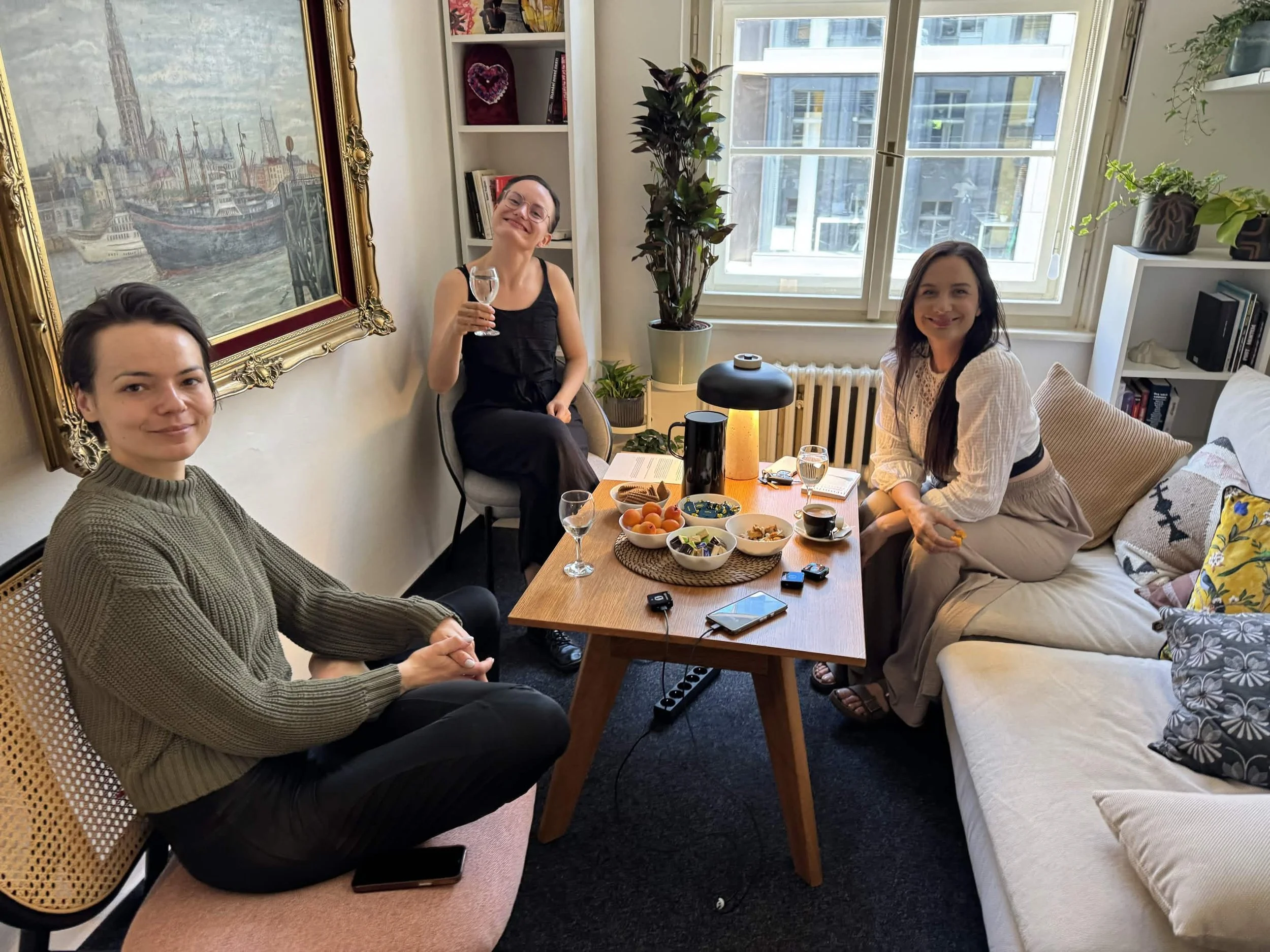
Anička Kadlecová from The Traitors is recording a podcast with Funeral Guides Noemi Svobodová and Sandra Šindelářová.
The Traitors! Are you watching?
If you've ever played Mafia (or any of its variations, including Among Us), the concept will feel quite familiar: players complete missions during the day, and at night, the traitors eliminate one of the players. The next day, along with the mission, players vote on who the traitor might be—and thereby eliminate one of "their own."
The Traitors generally revolves around the theme of death. In the second season, players even lay in coffins, were locked inside them, and had flowers thrown into their graves by others... basically experiencing everything we will all face one day... except they get to stand back up out of that grave.
Anička Kadlecová, whom we invited onto the podcast to share her experience on The Traitors, reportedly fell asleep while locked inside her coffin at Křivoklát.
The Traitors is a game, of course: the crew is there with you, and when you lie down in a coffin, you don't do it knowing you've died, but knowing you don't want to be voted out. But when the lid of your coffin really does close and you are truly eliminated, it actually symbolizes death.
Did the crew take their biggest fears into account—like claustrophobia?
How aware were the players of the symbolism of a game about life and death?
Over the course of two weeks, the players live out a whole miniature life without knowing when it will end. That's why they dive into everything fully, without hesitation, just to avoid being eliminated.
How is it that when we have perhaps ninety years instead of two weeks, but with the exact same uncertainty of whether we'll be here tomorrow, we become so comfortable?
And we can continue with the analogies: each of us is convinced of our own uniqueness, but even when we are eliminated from the game, the story goes on. And it is no different in death.
A summer episode about The Traitors (beware of spoilers!), about (im)mortality, and about how a game of life and death teaches a person more about themselves than they might perhaps want to know... also touching on burying hamsters and cryonics! Funeral Guides Noemi Svobodová and Sandra Šindelářová speak with Anička Kadlecová.
Listen on Spotify and other platforms.
The First 48 Hours: The Power We Handed Over to the System: Oleg Vojtíšek, Olga Nešporová, Magdalena Ondrová, Barbora Steinlauf
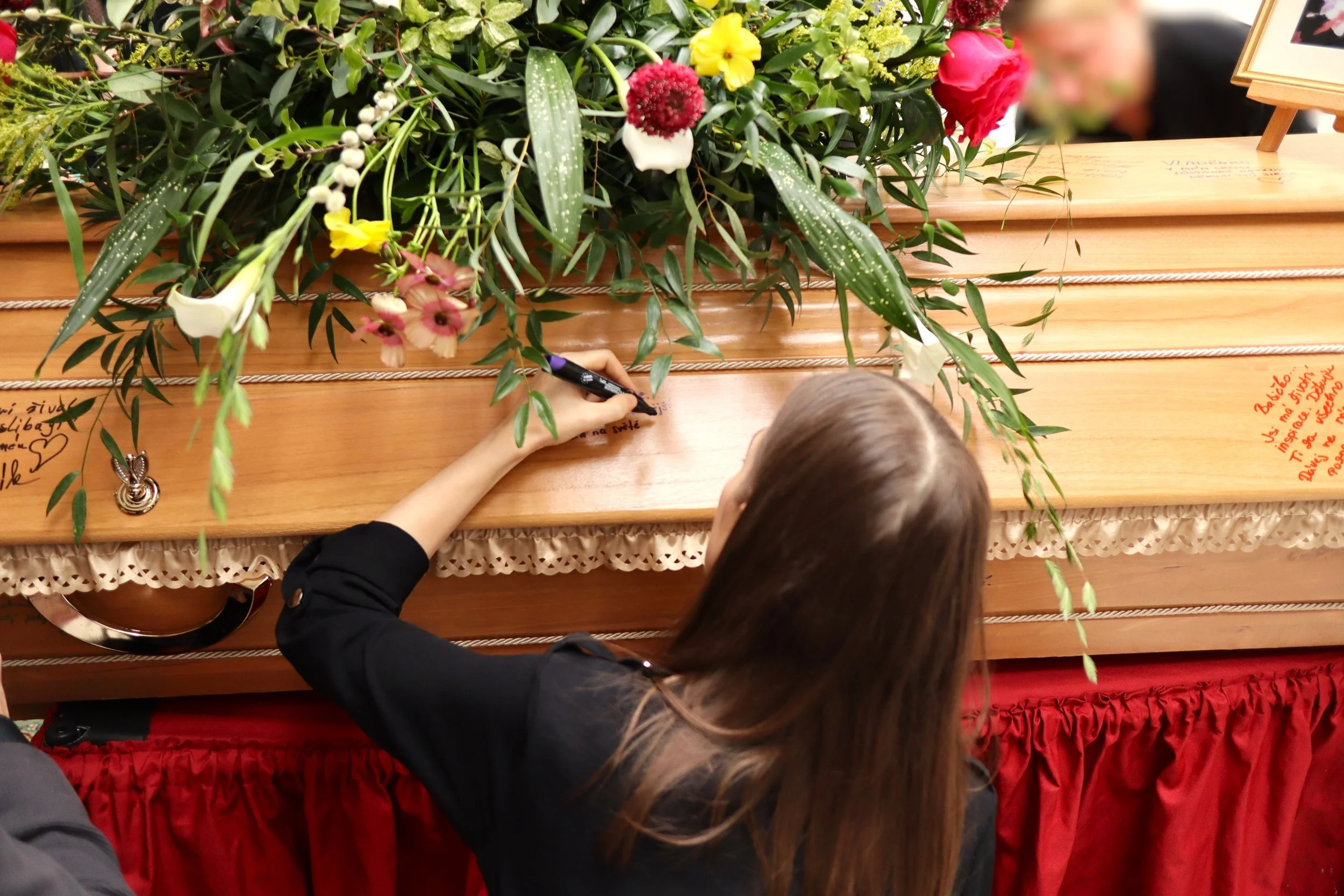
At a funeral, we can write messages on the coffin.
Dad has died. And now, quickly: call a doctor, search the internet for the nearest funeral service, and have them pick him up as soon as possible. First thing in the morning, go arrange the funeral at a branch office, ideally before work. Order wreaths, put together a death notice, choose a coffin from a catalog. That is what the most classic 48 hours after a death look like.
Olga Nešporová, an ethnologist from the Czech Academy of Sciences, notes: "People have stopped being used to caring for the dying. We don't know what to do with the deceased, and we are afraid of their physicality and potential changes."
A dead human body is not biological waste, however. As our Oleg nicely puts it: "A dead person no longer breathes, coughs, or sneezes. Bacteria may be there, but they love our living 36 degrees. If you weren't afraid to touch them in life, there is no reason to pull away now." The first few hours after death belong to you and them, not to funeral attendants.
Magdalena Ondrová from the hospice adds practical examples: in hospices, it is normal for nurses to help the family wash, dress, and generally prepare the body. Sometimes the family wants to style the hair, other times give them something to take along on their journey. And sometimes someone just needs a phone consultation on how to do it.
All three experts across fields agree on the same thing: we are afraid of death and we are afraid of the dead body. Yet caring for it can help us immensely. The deceased is already calm, nothing hurts them, and you have them fully in your hands. That peace transfers to you when you give yourself the chance. To say goodbye, do them a final service, and care for them one last time. And only then let them go.
If you want to learn more about the first 48 hours after a death—what your rights are and what no one is allowed to forbid you—read Klára Nesitová's interview with our Oleg, as well as Olga Nešporová, Magdalena Ondrová, and healthcare attorney Barbora Steinlauf.
Would you like a tree to grow from your body? And did you know that isn't possible here? Ekonews reports on the conference Together for Terramation
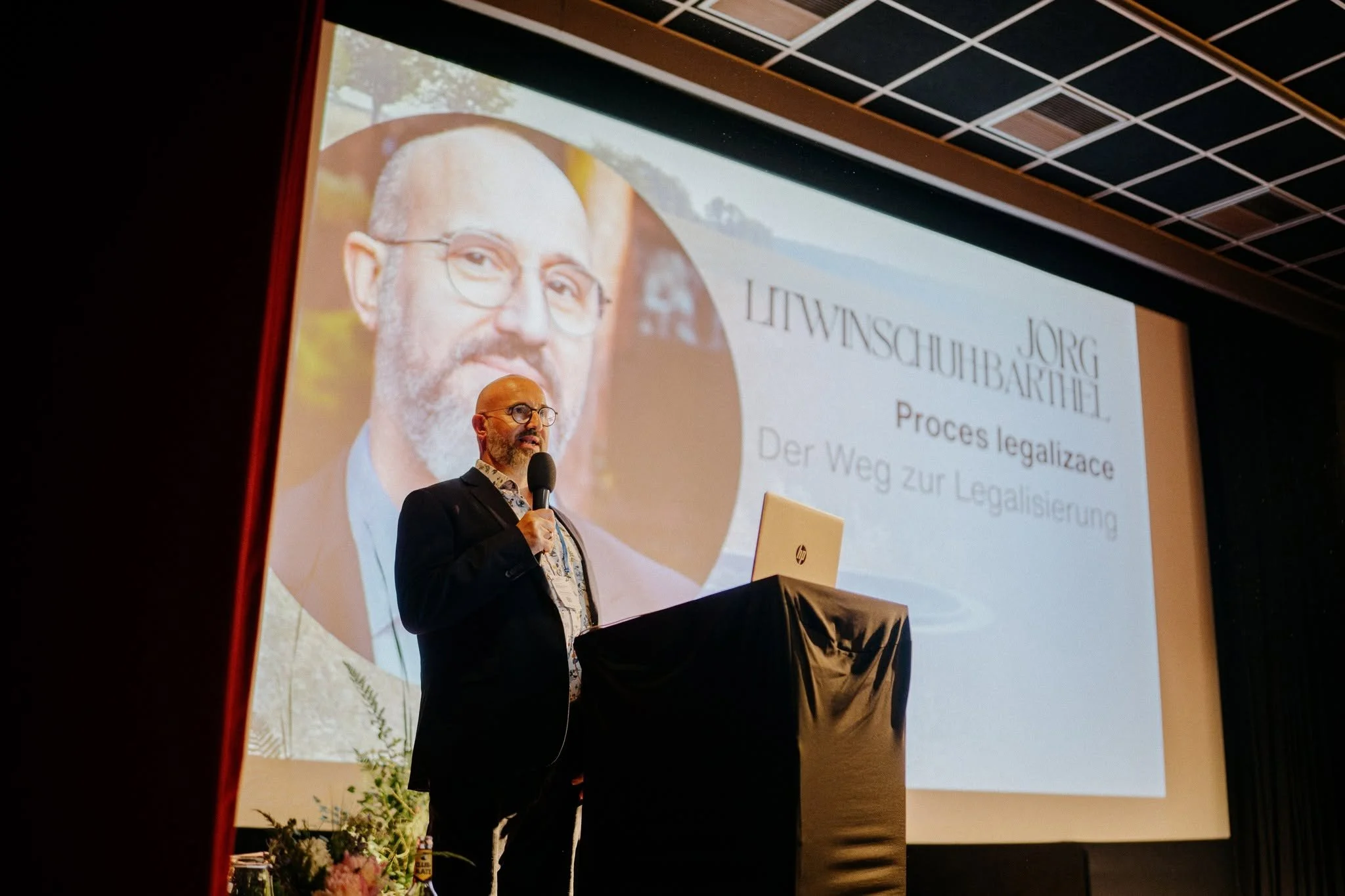
Jörg Litwinschuh-Barthel on the legalization of terramation
Would you like a tree to grow from your body? And did you know that isn't possible here?
Well, not quite: here, any tree burial must be preceded by cremation. So only your ashes are poured around the tree. And since ashes are mostly phosphorus and calcium, the tree mostly just tolerates you rather than being helped to grow by you.
(A rarer exception is, of course, cemeteries where trees were planted and then allowed to grow so wildly that their roots grew through the graves. No one can be newly buried there in a coffin without cutting down the tree, but it's proof that it is possible – when there's a will!)
But how to make it actually possible? How to truly transform into useful soil that gives rise to a tree? And how to do it within dozens of days, when a body normally takes decades to decompose?
This is what the German company Meine Erde looked into. They came up with a "cradle" where a deceased person's body decomposes in 40 days through natural processes: moisture, warmth, and gentle movement. Once the process is finished, you are left with terramate – soil, earth, in which a tree can theoretically be planted.
Except: even in such a progressive country as Germany, this soil must be transported to a cemetery and buried several meters deep.
And now the crucial question – can we do this here as well?
No funeral home has the technology (the cradle) to do this yet. But we don't see any problem with that: we can arrange the transport of the deceased to Germany, and then the transport of the terramate back to us. We will take care of the necessary paperwork.
However, it would be completely ideal without transport and without issues with our laws. This is what the Last Trace association, led by Adam Vokáč, is striving for.
The ministry's statement reads (among other things): "Ecological criteria and moral sentiments can diverge significantly, while in the field of burial and handling human remains, a violation of the public's moral sentiment is judged as a potential offense under the Burial Act."
So what do you think? Is it an offense? Is it an ecological problem? Is it a violation of public moral sentiment in a place where, according to the ministry, cremation is not considered such a violation?
Read the article by Irena Buřívalová on Ekonews about the conference organized by Adam Vokáč and the Last Trace association, which was also attended by our Oleg Vojtíšek:
Every depression can be cured – says Jiří Horáček, Director of the National Institute of Mental Health
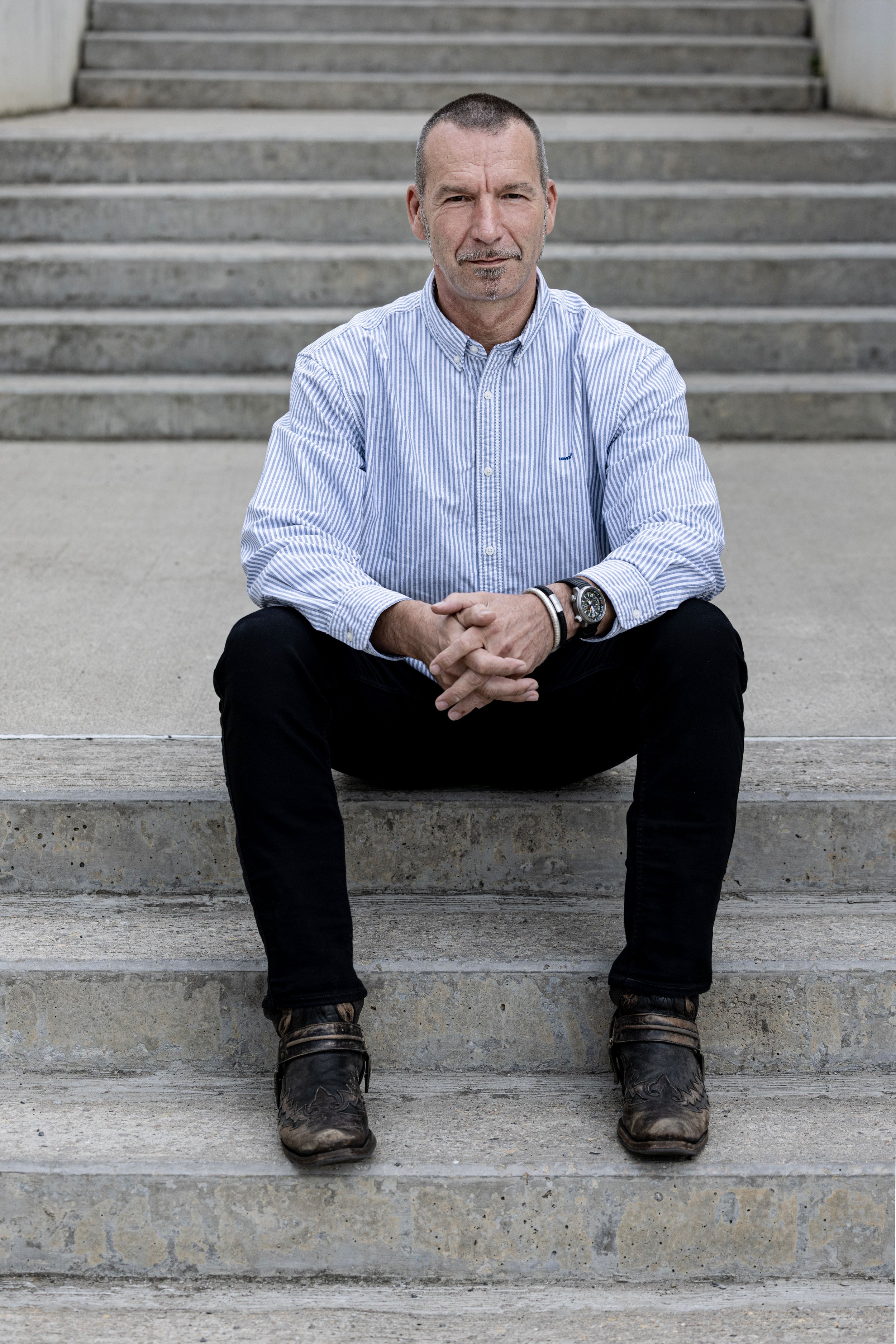
Oleg Vojtíšek spoke with Prof. MUDr. Jiří Horáček, Ph.D., FCMA, Director of the National Institute of Mental Health (NIMH), Head of the Department of Psychiatry and Medical Psychology at the 3rd Faculty of Medicine, Charles University, and Head of the Center for Advanced Studies of Brain and Consciousness at NIMH.
"I have a terminal diagnosis," says a caller on the phone who wants to arrange a funeral. But their "diagnosis" is suicidal intentions.
What next? Police, a stay in a psychiatric hospital, medication. And many people are afraid of that. Yet modern psychiatry is no longer what we know from One Flew Over the Cuckoo's Nest.
That is why we invited the Director of the National Institute of Mental Health, Prof. MUDr. Jiří Horáček, Ph.D., FCMA, to our podcast.
According to him, EVERY depression is curable sooner or later. That is why stories ending in suicide are so extremely sad: because we know a cure exists, it just needs time.
The critical window is two weeks from starting antidepressants: depression masks its "host" by taking away the energy to do anything at all. Antidepresants give them this energy, but it's not enough time to heal the root of the depression – that "existential weight."
What is the relationship between the economy and suicide? And are certain nations more prone to suicide, perhaps due to their geographical location?
Is the fear of death as old as humanity itself? In what ways is the "longevity" lifestyle actually naive?
Why do psychedelics work?
Listen to our Funeral Guides podcast on Spotify and other platforms!
A podcast about people who forgot how to die: with nurse Veronika Effenbergerová
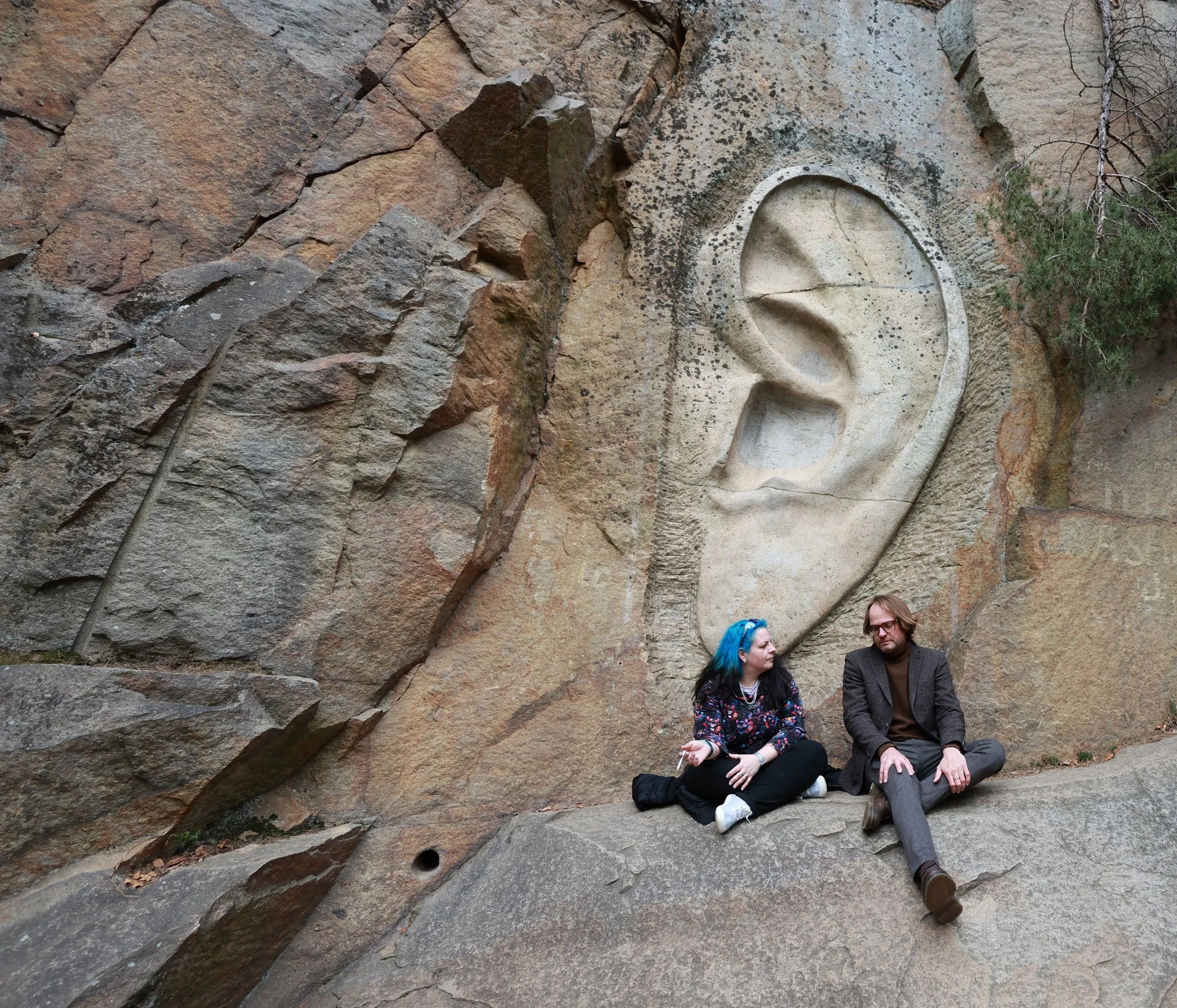
Veronika Effenbergerová and Oleg Vojtíšek recording a podcast at "Ucho"
"When they are still able to perceive the world around them, the moment I pick up a syringe and open the tube of artificial nutrition to prepare it, they already turn their eyes away so they don't have to see it."
Such is the reality of people who spend their final days bedridden, hooked up to tubes. Being unaware, or perhaps even in a coma, might be the better option. Some of them, while they still can, even attempt suicide: yet families insist on resuscitation, even when the heart begins to fail naturally.
Why? Because they want to keep them alive for another month or two. In life, a person only has to do two things: be born and die. "Forgetting how to die" is perhaps the worst nightmare of us all.
Nurse Veronika Effenbergerová has witnessed countless such cases in nursing homes. She is the very person who might one day care (or perhaps already cares) for your parents. And she herself asks families, "Why won't you let him die?"
What drives families to keep a person on life support when there is no longer any chance of recovery and a return to an active life?
Where does love for another end and self-love—that overprotective kind—begin?
Is death healthy?
We discussed this with nurse Veronika Effenbergerová in our podcast. You definitely shouldn't miss this: it's not often you get a glimpse behind the scenes of what happens in nursing homes, especially since many people are afraid to even walk through their doors.
Vojta Náprstek: Threats of being boiled alive, the beginnings of cremation, and a spectacular funeral at a railway station. With Pavla Hubáčková from the Náprstek Museum.
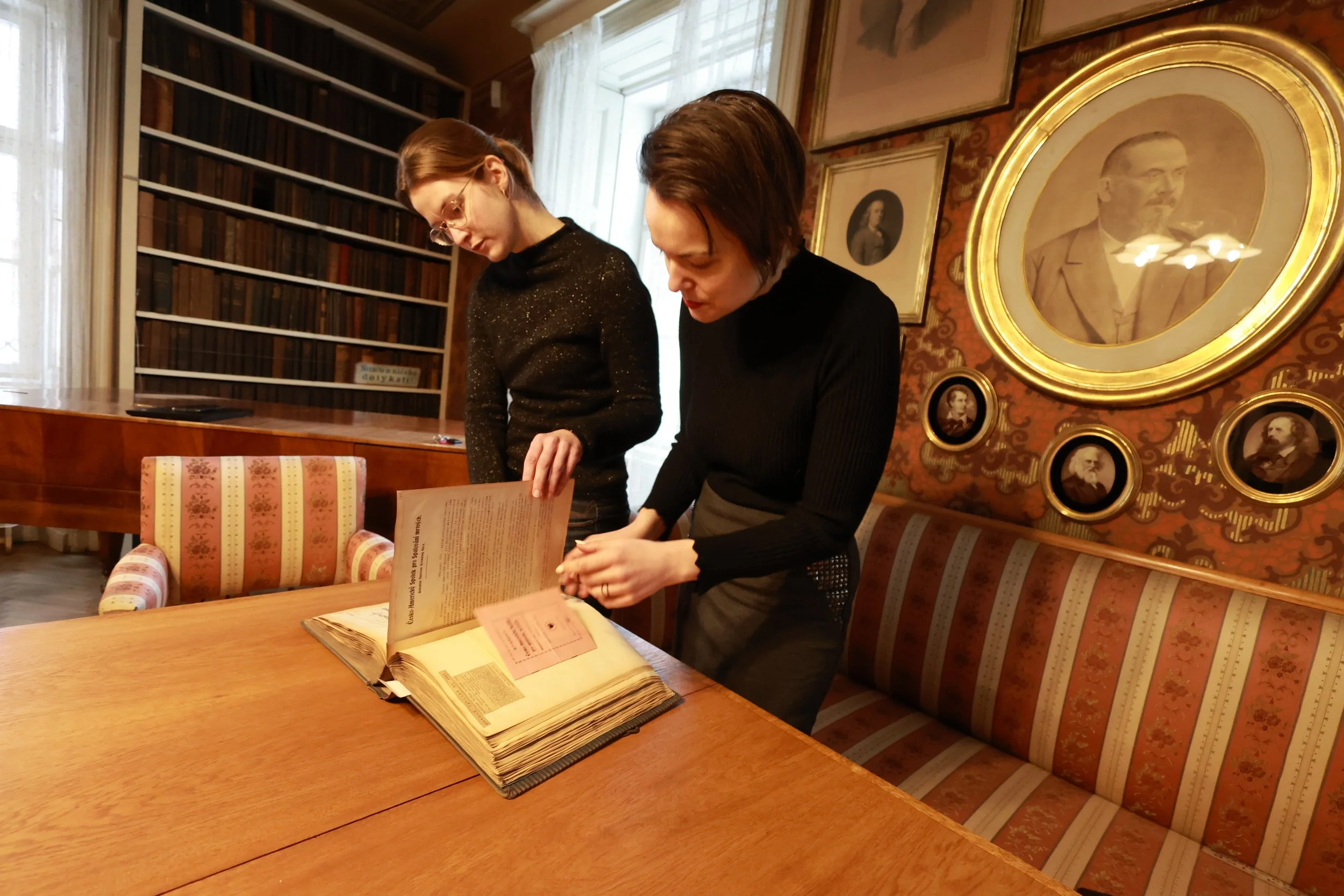
Pavla Hubáčková from the Náprstek Museum talks with Sandra Šindelářová in a podcast about the funeral of Vojta Náprstek.
How did we go from threats of being boiled alive to becoming a cremation superpower?
One hundred and fifty years ago, burials took place solely in the ground here. And everyone strongly opposed cremation.
Today, over 80% of funerals in our country are cremations. And yet everyone opposes human composting, also known as teramation. Who knows what it will look like in a hundred years?
Do you know the story of the person who actually pushed for cremation here? Vojta Náprstek was not only one of the first feminists (he founded the American Ladies Club, where he promoted education for women), but also one of the first Czechs to be cremated despite the opposition of both the church and society.
His decision was backed by science: it was supposedly more hygienic, more economical, and cleaner—at a time when graves were regularly robbed and dead bodies sold to young medical students for practice.
We talked (not only) about him with Pavla Hubáčková from the Náprstek Museum in our podcast, and if you also want to know how we got from threats about boiled bullets to the majority choosing cremation, be sure to listen to us!
And definitely make sure to visit the Náprstek Museum this April, where his urn is on display again (as per his wish)!
Have you heard of POST-MORTEM accompaniment? Josef Šťastný and I have ventured into the waters of Buddhism and the Tibetan Book of the Dead.
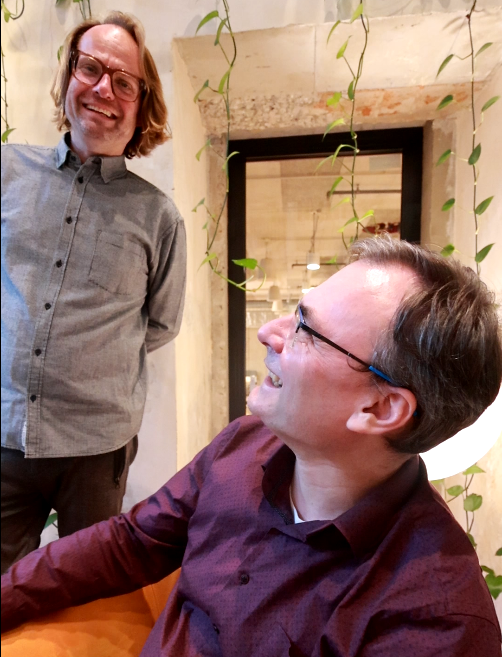
Josef Šťastný hosts a podcast about post-mortem accompaniment for the deceased.
We guide the dying before death and the bereaved after death. But for someone to guide the dying (meaning those who have already passed away) even after death—that was a first for us.
Josef Šťastný focuses precisely on this: his approach is rooted in Tibetan Buddhism. In very simplified terms, he finds the soul of the deceased in the so-called bardo (an intermediate state between death and rebirth) and helps it find the right path.
The goal is, in his own words, "to improve the future direction of the deceased by a few percent." Because, let's not forget, Buddhism believes in the reincarnation (rebirth) of the soul. Does that mean being born into a richer family? Or not being reincarnated as an animal?
For many of us who have ever watched a cat or a dog, perhaps living our next life as an animal would actually be more peaceful...
And can we really help those who did terrible evil during their lives? A high school shooter, for example? Do their souls deserve "salvation"—or, as Josef Šťastný calls it, being "wrapped in light"?
We are in the year 2026, which in numerology corresponds to the number one: a year of new beginnings, preceded by a year full of changes and endings. Post-mortem accompaniment similarly begins even before death: in changing one's life, life priorities, and turning inward. What comes after death is then merely a continuation of a journey already begun, one on which you can be accompanied.
A podcast for anyone curious about what awaits us after death: whether truly nothing, God, or Josef Šťastný!
Oleg Vojtíšek: A funeral should help, not harm: An interview in Ľudia a Zem magazine
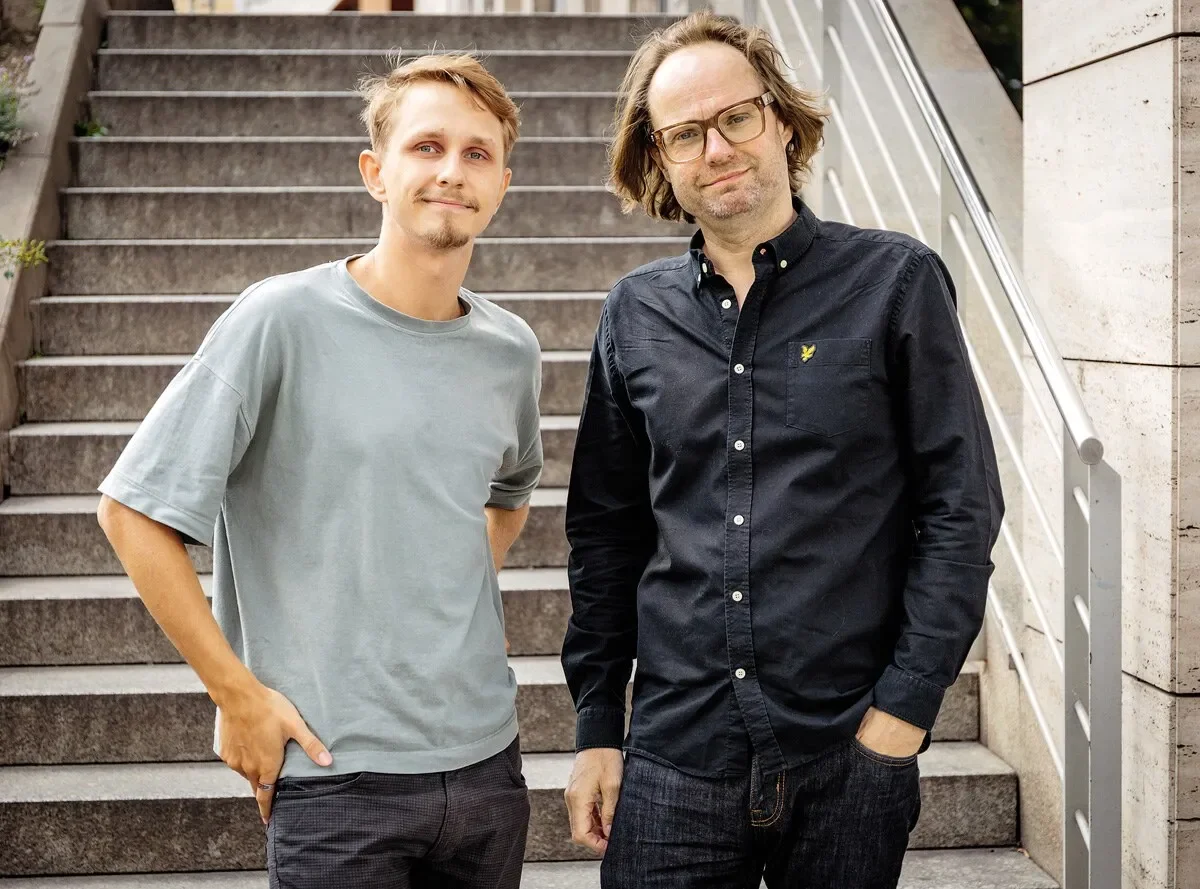
Oleg Vojtíšek and Adam Krecl, article author
An interview full of questions. And answers.
What is your relationship with death? I assume that after all your experience, you aren't afraid.
Was the idea of founding a funeral service driven by any negative experiences?
On the contrary, your organization also features young female guides. How do they handle a profession where age plays a role?
What skills does a person need to master to become a funeral guide?
Is death still a taboo in Czech society, or is the situation improving?
Do you have any experience with funerals abroad?
Is there a country whose funeral rituals you would like to see with your own eyes?
Where do you look for inspiration for funeral formats in the Czech Republic?
Are you succeeding in transforming Czech mourning rituals?
Your website features the phrase "a good funeral." What does a good funeral mean?
That reminds me of Mexico, where people believe that the departed stay among us...
During my studies in social anthropology, I also came across the Indian ritual of sati, where a widow is ritually burned alive with her husband's body. Have you ever witnessed anything like that?
Can you personally help the bereaved with grieving after the funeral?
People often embark on journeys during major life changes. Can you also prepare a symbolic journey for the bereaved?
You also offer burials in a natural woodland cemetery. How did you come up with that idea?
Why should I choose a woodland burial instead of a traditional city cemetery?
Do people come to you asking to hold a funeral a second time?
What types of funerals are currently the most popular among the bereaved?
Do people plan their own funerals in advance?
As a funeral guide, which part of the process do you find the most difficult?
How can I prepare myself for death?
Can aromatherapy help us die well? Care well? Grieve? Ludmila Kotalíková and Oleg Vojtíšek
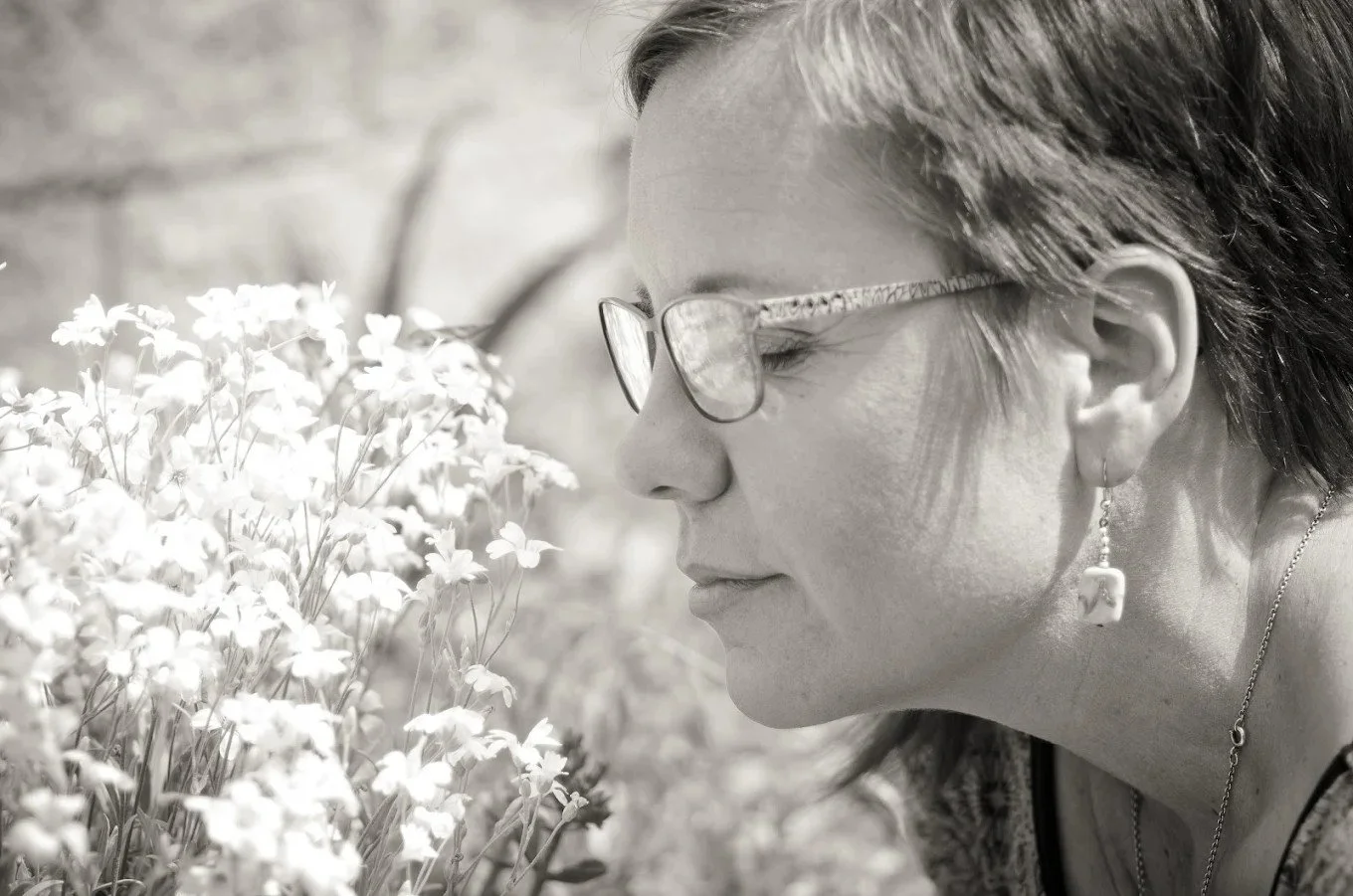
Ludmila Kotalíková, aromatherapist
What scent comes to mind when you think of home? 🏡
And what scent comes to mind when you think of spring, the sea, a holiday at grandma's, or mom's pie? 🥧
🧴Have you ever thought that you might never smell some of those scents again in your life? If you had the chance, would you want to return to those moments?
And what if you could do it even before death?
🎙️ Ludmila Kotalíková, aromatherapist and founder of Aromadoteky, has accepted our invitation to the podcast!🎙️
🌿 Aromatherapy in palliative care is not just about a "nice scent".
It is about memory, emotions, safety, and returning home – even if only in the mind.
When the dying person no longer has words, but still feels... 🤲
💭 How to use scents and touch to bring comfort to someone who is dying?
🌿 Where should you even begin with aromatherapy in palliative care?
🥀Which oils to use for calming, better sleep, or conversely for encouragement, warming up, cooling down, acid reflux, constipation, and a dry mouth?
➡️ You can listen to the full interview in our podcast
How not to fear death? It is easier than it seems. Tips for overcoming fear from a funeral guide
The fear of death can be eased
Want to know how to overcome the fear of death? It's easier than you think: Just accept it. Give it a symbolic kiss of acceptance. That's our secret trick. All those anxieties and that nagging feeling that things are out of your control? Most of the fear of death disappears once you understand and accept that it's simply part of the package called life.
Our Oleg Vojtíšek wrote an article for Vlasta magazine, where he talks in a popular and simple way about things like:
1. Talk about death
2. A funeral is your last big project
3. Want peace of mind? Talk to the pros!
4. Leave a message
5. Annual check-up
6. Live every day as if it were your last
7. You can practice for the death of a loved one
Go ahead and read it. Maybe it will inspire you.
Scatterings in the forest and at sea. Forbes podcast, Oleg Vojtíšek with Julie Mahlerová
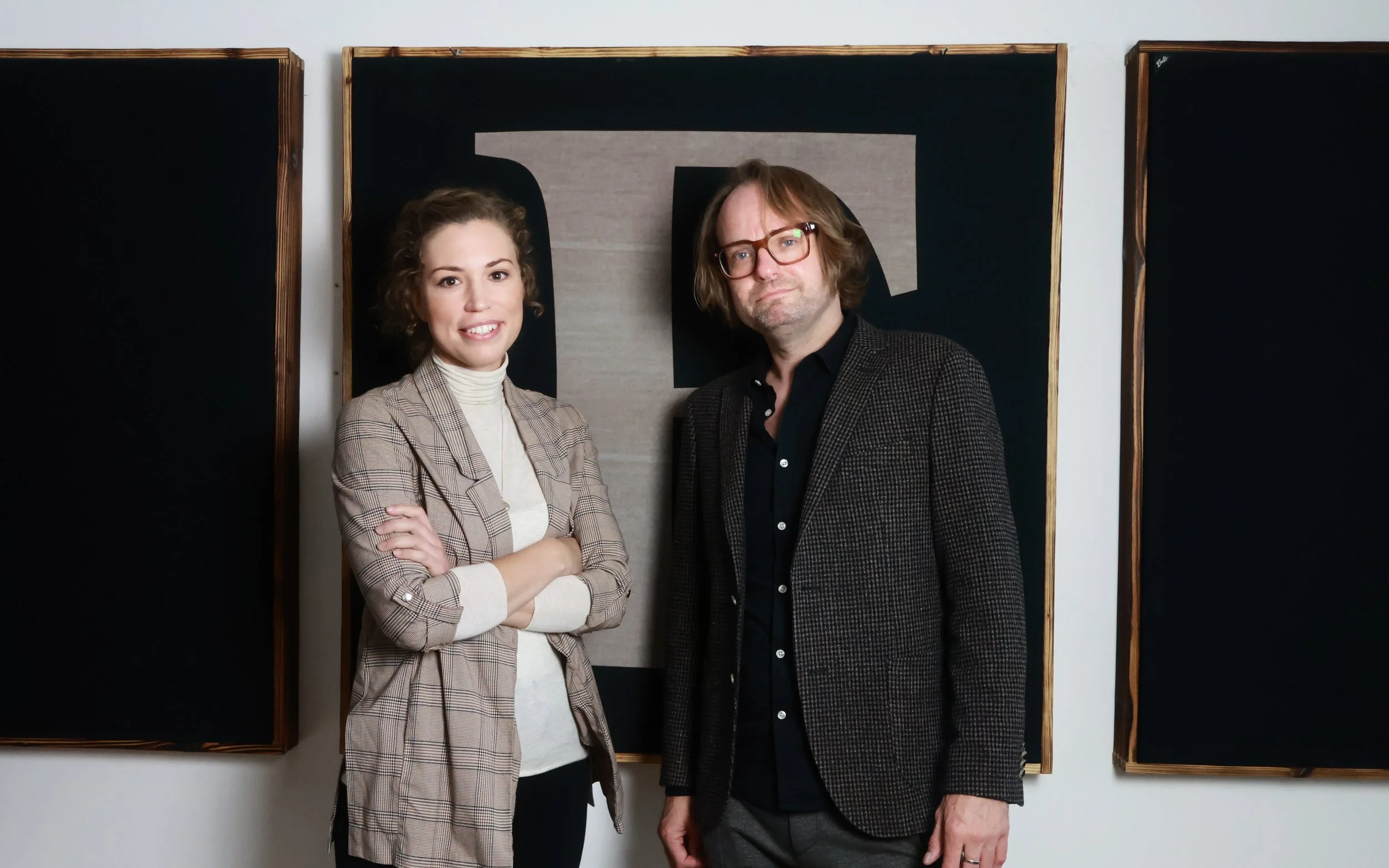
Oleg Vojtíšek recorded a Forbes podcast with Julie Mahlerová
"If we don't hold a funeral, the deceased will come back to haunt us," people used to say.
Don't believe in ghosts? You don't have to. The deceased can "haunt" our own souls. By telling ourselves, "I should have told them, now it's too late." By never truly saying goodbye, leaving an unwritten chapter inside us—a gaping wound that no one has stitched up.
That is what funerals are for. They are meant to help us bridge the period of life with a loved one who is suddenly no longer here.
But death needs a little love, too. And our Oleg Vojtíšek discussed how to do that with Julie Mahlerová from Forbes in the podcast How to Be Better.
So go listen to it, and feel better too :)
Where to find hope? Former Evangelical pastor Jaroslav Pechar and Oleg Vojtíšek
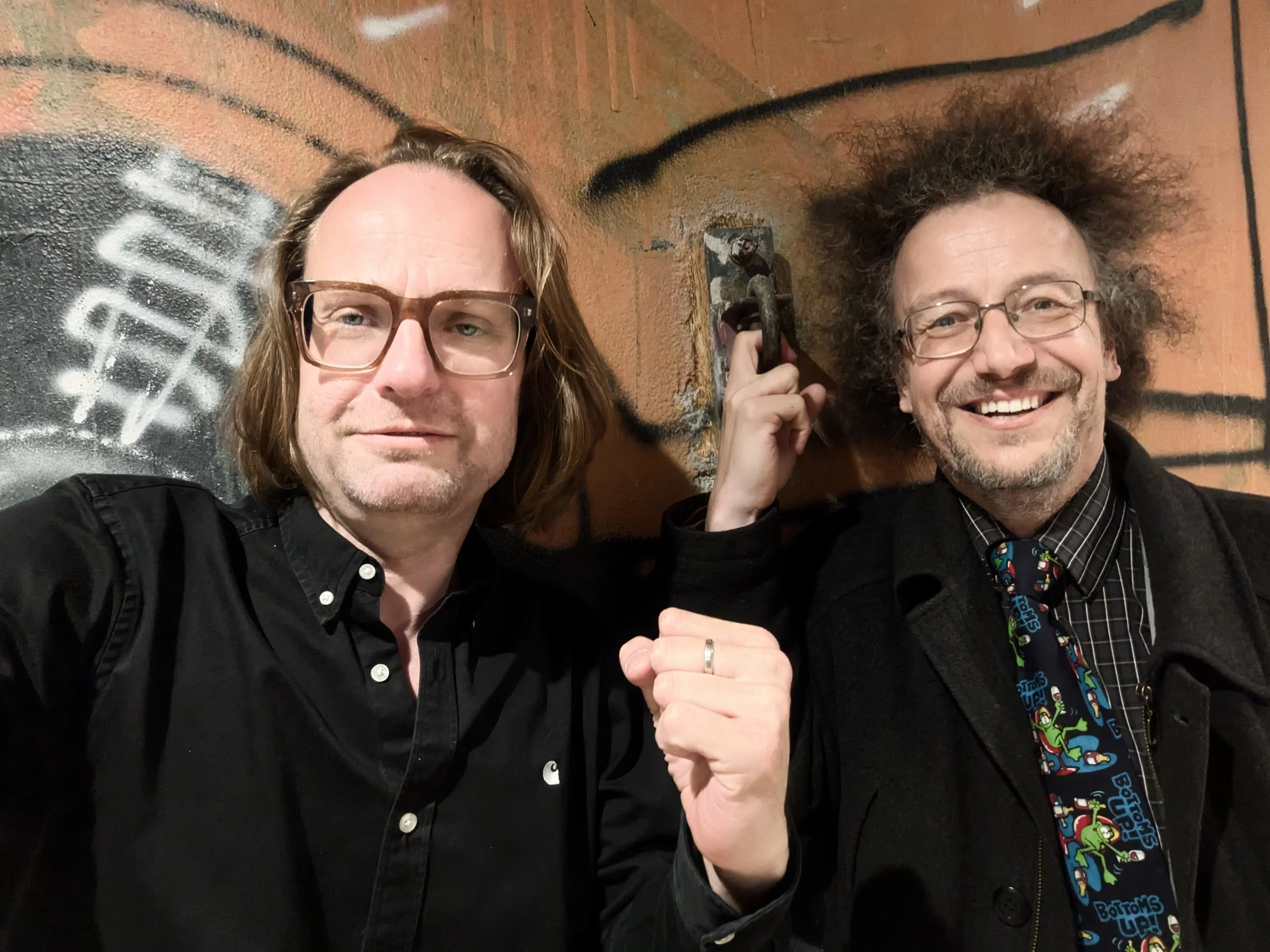
Former Evangelical pastor Jaroslav Pechar and Oleg Vojtíšek
"At our mother's funeral, the pastor preached about some whore."
Or, to put it another way, whether humor belongs in funeral sermons was just one of the topics we discussed with former Protestant pastor and priest Jaroslav Pechar.
Is a funeral for the person who died, or for those left behind? Should we plan it the way the deceased would have liked? Or in a way that helps the grieving family? Or should it focus more on God and the hope of eternal life?
Many of us imagine that if a eulogy makes even the toughest guys cry, it's the highest form of praise. But... what if it brought you a sense of relief instead? What if it made you feel lighter, lifted the weight of guilt, or even brought a smile to your face? Is the goal of a funeral to break down and cry over death, or to celebrate a life? What does Father Pechar say? (Spoiler: at his funerals, people share stories, play the guitar, and stay long after the service ends!)
"Death is an enemy that wins battles, but never wins the war."
Where do we look for hope when we are dying? Especially if we aren't particularly religious?
Father Pechar can't answer what comes after death, and neither can any church, but he does know what isn't there: there is no darkness and emptiness, because a helping hand is waiting. That is the greatest hope the church offers after death.
And just as God, according to the church, extends a hand to the deceased, priests like Father Pechar extend a hand to the bereaved. Not with holy water or a magic wand. But with words and stories. And sometimes by answering the phone at one in the morning.
Listen to his stories and jokes in our podcast on Spotify.
"In heaven, we'll be surprised by three things: who is there, who isn't there, and how on earth we managed to get in ourselves."
What needs to happen so that quality palliative care becomes the standard rather than a matter of luck? Jiří Krejčí from Pallium shares his thoughts.
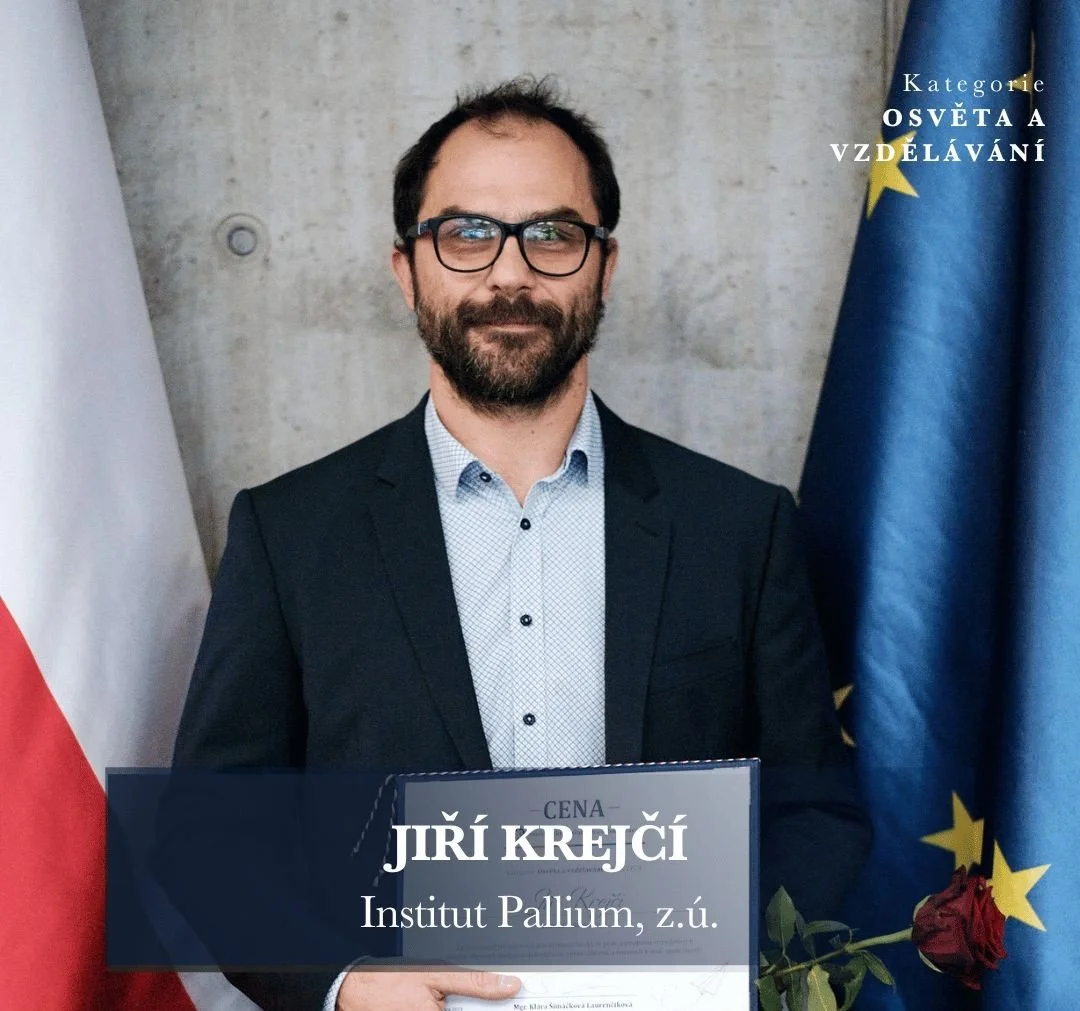
Jiří Krejčí, founder of the Pallium Institute
"Let's change the reality for people facing serious illness and grief, so that life feels more bearable for them" – this is the vision of Jiří Krejčí from Pallium.
Ten years ago, almost no one in our country focused on palliative care. Yet in another decade, we might even have a system that truly cares about the needs of the dying and responds to them.
And this is happening thanks to Pallium, an organization that supports palliative care professionals and strives to make it better. Their goal is to ensure that quality palliative care is a standard, not just a matter of luck.
But how do we achieve that?
For instance, hospital palliative care teams often lack anyone dedicated solely to the bereaved: everyone tries to help in some way, but it falls outside their primary specialization and usually exceeds their available time.
Police crisis support workers are not allowed to recommend paid services – such as grief counselors, therapists, and the like. As a result, many people don't even realize that support is available to them.
One solution is to find a way to fund grief support through public resources. Another is to involve volunteers who could facilitate self-help groups for the bereaved.
How can people who are grieving help others?
Do people even know what options they have when facing the end of life?
And can we truly provide effective support to palliative care patients and their families?
This episode of our podcast is aimed primarily at professionals. So, let's see – how many listeners do we have working in palliative care? Join our host Oleg Vojtíšek and Jiří Krejčí from Pallium on Spotify!
PHOTO: 2nd Annual Awards of the Government Commissioner for Human Rights
Death can be calm and peaceful, says funeral guide. I talked about death with my grandmother
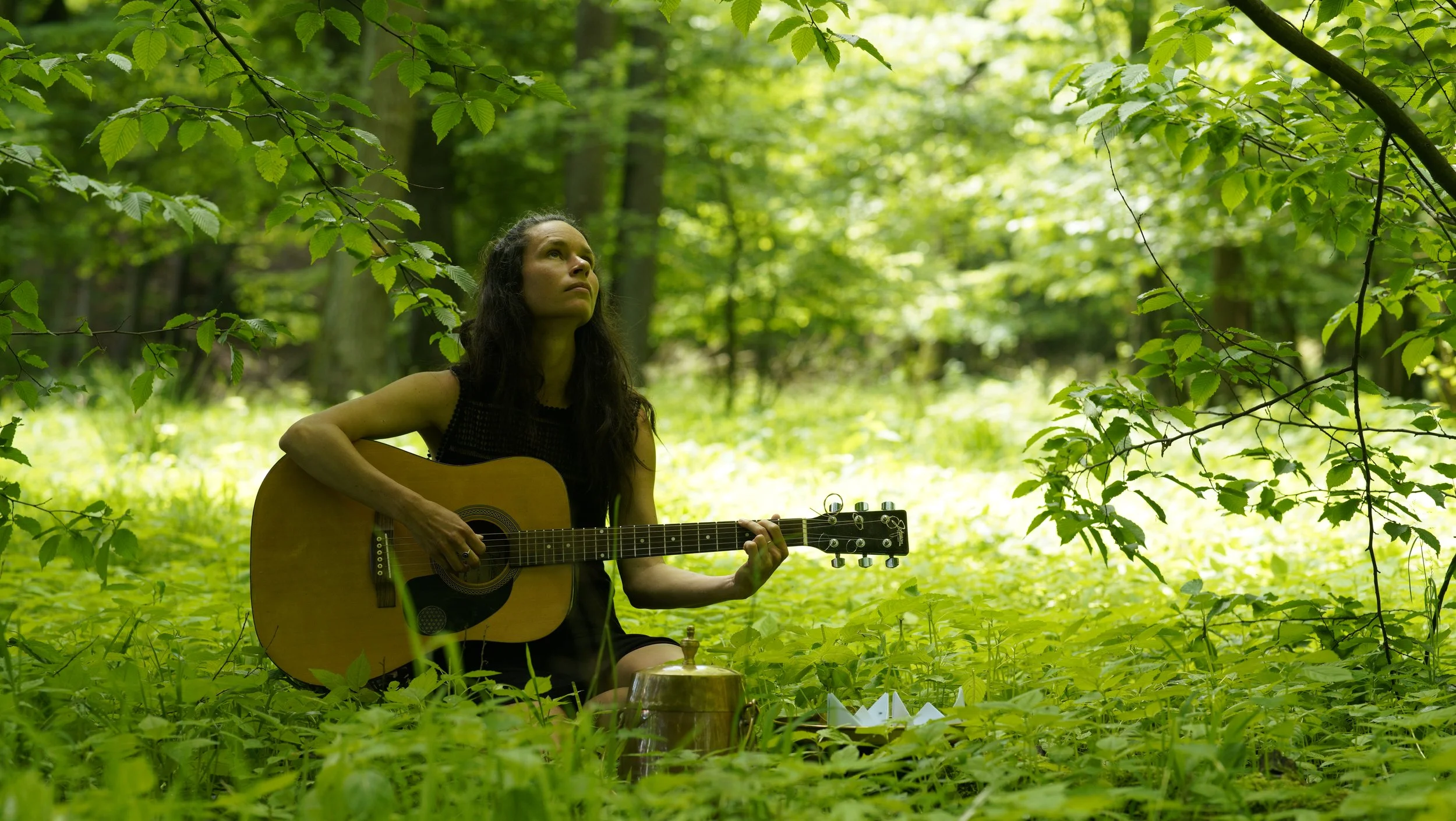
Funeral guide Renata at the forest cemetery
Death can be calm and peaceful, says funeral guide. I talked about death with my grandmother
"A terminally ill man in his fifties reached out to us, and together with him and his family, we are preparing for the end of his life. I am in contact with him, writing a speech that he approves. It is an amazing story. When I visited them, I was fascinated by the humility and acceptance with which they embrace their destiny."
Renata Svoboda, our Ren, started working in the funeral industry because the experience of guiding her grandmother opened the door to a completely new life.
A life where she wanted to dedicate herself to the dying and those they left behind. Accompanying a family from the moments before death through the funeral and often even beyond is simply part of the work Funeral Guides do, and we are so glad Ren took this on with such care and compassion.
If you are interested in her story and her profession, read about it in a new article on Flowee. It also touches on whether our profession can turn into a cold, insensitive business centered around death.
Klára Brázdová and Oleg: Is grief chaos? Or is it wandering through a forest? And is a funeral a dialogue?
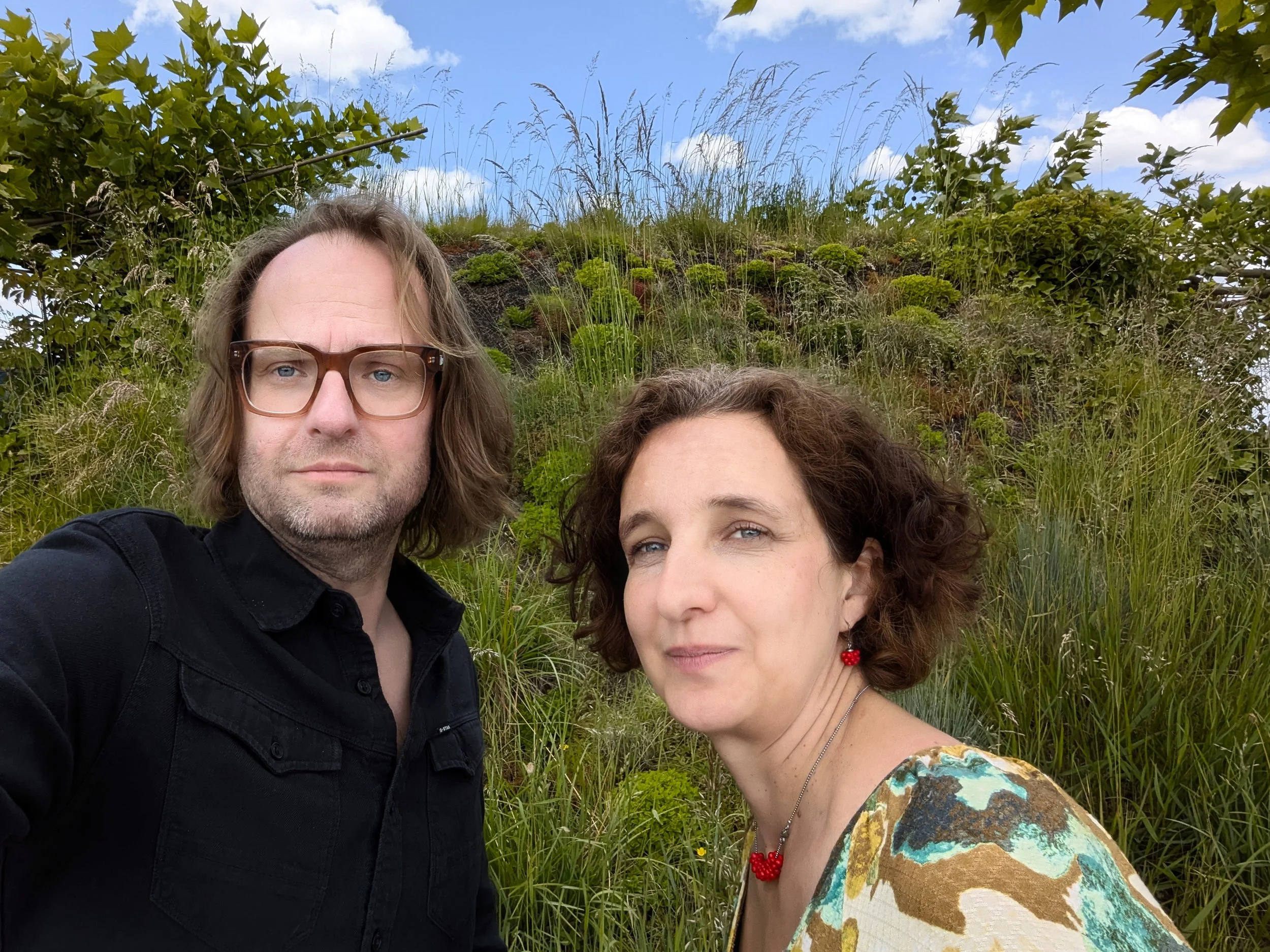
Klára Brázdová and Oleg Vojtíšek recording a podcast on a green roof above Prague
The deafening silence after someone passes away.
And we don't mean suddenly finding yourself home alone. We mean the silence that creeps in gradually: when, after the death of a loved one, you receive countless messages, so much attention, questions, and love... and then it suddenly fades away.
Suddenly, those around you decide it is time to move on. But you are not there yet.
As a psychotherapist, Klára Brázdová frequently works with the bereaved, and both our work and hers have a lot in common!
As a funeral service, we often weigh how much we should do for our clients: as a service provider, we want to deliver as much as possible. However, grief is a very specific matter. People need to be guided so they can step into their grief themselves - such as by helping prepare the funeral. Therapy works in a very similar way.
Klára says she appreciates that we maintain a dialogue with the bereaved. A dialogue about what they want and how they want it. What is actually possible. A dialogue about the deceased, what they would have wished for, and what the family desires. People are often afraid to talk to them about this. Grieving people are fully competent, and we should not treat them like children.
Why is it not a good idea to follow "expert" stages of grief?
How are grief and wandering through a forest similar?
And why is it nice to take a trip to Nepal after a funeral?
In our podcast, Oleg discussed grief with psychotherapist Klára Brázdová, and if this relates to you, you will definitely want to listen!
Our colleague Renata shares with Květy magazine how she accompanied her grandmother on her final journey

From the stories of our clients, we know that spending their final moments with loved ones is a gift ♥️ that changes people's lives.
🛤️Our colleague Ren Svoboda accompanied her grandmother on her final journey surrounded by family 👫
And that is what later motivated her to become a funeral guide 🏡
You can read more about how she handled the situation with her grandmother in Květy magazine 🌺
Barbora Steinlauf: Do you have the right to a peaceful death?
"I don't want to live anymore, just let me die…" Has a dying person ever said this to you? Do they have the right to die in peace? Can you answer that?

Barbora Steinlauf and Oleg Vojtíšek recording a podcast at dusk over Prague
Probably not. And most doctors probably wouldn't either.
The healthcare legal system is lagging far behind when it comes to dying: for a long time, it was built primarily to protect doctors and support them in case of unlawful actions. However, Barbora Steinlauf, as a healthcare lawyer, is going in the opposite direction—she protects the rights of the dying and strives to raise awareness about what a person is entitled to during the dying process.
If you cannot answer these questions, you should definitely listen to the podcast recorded by our Oleg with Barbora Steinlauf:
What should you do if someone is dying in the hospital and you feel they are not being treated well? And what if you suspect they died due to a hospital mistake?
Is a signed piece of paper really enough for informed consent?
When you refuse medical care, do you also lose access to palliative care?
And overall... where does euthanasia (assisted dying) stand in the context of Czech law?
And we're still not done: Barbora has also newly launched the End of Life project. Let your family know how you wish to die when you can no longer make decisions for yourself. Or take a look there to see how to even approach having a conversation about this with someone who is dying.
What to say and not to say to parents after the death of a child
Do you know someone who has lost a baby or an older child? Would you like to comfort them somehow, but don't know how? Prepare yourself for the fact that you simply cannot take away the pain of parents who have lost a son or daughter; it is beyond human capability. On the other hand, words can be powerful, and you can either bring comfort to a grieving parent's soul or deeply wound them.

Adriana Kábová on the banks of the Vltava River, on Střelecký Island
When my own baby died, I was surprised by many of the reactions from people around me. Some were kind, others unpleasant. What shocked me the most was how many people pulled away and pretended nothing had happened. I realized they probably didn't know how to react. But avoiding me, or at least avoiding the topic of the child's death, is what hurt me the most.
After a child's death, parents often find themselves in a strange vacuum and feel very lonely. This happens simply because those around them don't know what to say or do, so they prefer to pull back and avoid reacting to such a difficult life situation. Fears of bringing up the deceased child are misplaced; for the first few months, parents can barely think about anything else.
Alongside ignorance, a common type of reaction is a desperate effort to come up with something positive—something to cheer up parents with empty arms. But that simply cannot work. The parents can sense the effort to comfort them, but it completely misses the mark.
Sometimes I was amazed by what people said to me. I understand they probably felt the need to comfort or cheer me up. But more than once, it ended up making me feel sorry for *them*, struggling as they were and not knowing how to act around me.
I recommend focusing instead on sentences that acknowledge the death of the child and the weight of the parents' grief. A simple “I'm sorry”, “I am so sorry” is sometimes completely enough. “My deepest condolences” might be seen by some as a stiff phrase, but it actually holds deep meaning and certainly belongs among the most welcome expressions of sympathy.
Words that can support grieving parents:
I am so sorry.
I am deeply sorry.
My sincere condolences.
If you know each other very well, offering a hug can be a source of support for parents after the death of a child. It is always best to ask first if it is okay and if the parents would be comfortable with it at that moment. Respect their answer without judgment if they decline your offer; not everyone is a "hugger."
I am here for you and will listen whenever you need.
Don't hesitate to write to me anytime; you will never be a bother.
It is very important to know how to listen to parents after the loss of their child. Often, they need help sharing their burden, but very few people want to hear about dying. Hold back on sharing stories about what happened to people you know and what helped them. Instead, focus on the story or insight that the grieving person might want to share with you, but often find no space to do so. Let the parents know that you are ready to listen. You can say something like "I am here for you and will listen whenever you need" or "don't hesitate to write to me anytime; you will never be a bother."
Would you like to tell me something about (child's name)?
And when you are figuring out whether parents are in the mood to share their grief with you, it is good not to be afraid to mention the name of the deceased child. Many people tend to stop saying the child's name, as if it suddenly became forbidden. Yet, for the parents, they are still their beloved son or daughter, even though they are no longer here. And when no one wants to talk about them or even say their name anymore, it feels as though those around them suddenly refuse to acknowledge that they ever existed.
I was always touched when someone among my acquaintances was not afraid to speak my son's name. It warmed my heart that at least someone remembered him, even though he was here for such a short time.
Words that usually rub salt in the wound:
Be glad you still have another child.
You are still young, you will have more.
You just have to think positively.
Worse things happen to people.
I know how you feel because...
Nature wanted it this way. It was meant to be.
Your child is in a better place now.
At least they weren't older.
Are you thinking about having another one?
Sentences starting with "at least."
Aside from the group of people who worry about hurting the parents with their words and prefer to stay silent, there is another group that doesn't think before speaking at all and simply blurts something out, believing it will lessen the parents' sorrow. If the parents have other children, someone will always make sure to mention it. "Be glad you still have another child." Yes, parents are certainly glad to have another child, but that does not lessen their grief in any way. Similarly ineffective are virtually all sentences that begin with "at least…" At least you are okay, at least it didn't turn out even worse, at least everything else is going well for you, at least you can still have more children, and so on.
And then there are those who feel they know exactly what parents go through after the death of a child. Because someone they know went through something similar, they know what helped them and what the parents should or shouldn't do, and what they need. Never say the sentence "I know how you feel because…" because you simply do not know. Every grief is deeply personal, and no one can give parents a precise guide on how to navigate it.
"When our Oliver died, I wasn't able to speak to anyone except my husband. After returning from the hospital, we stayed at his parents' house for a few days. Everyone acted as if nothing had happened. On the third day, my mother-in-law sat down next to me in the living room and said she knew exactly what I was going through. She apparently had a miscarriage once. She started giving me advice on what I should and shouldn't do now. I just stared at her. And I told her she had absolutely no idea what I was going through. I walked away in tears, and we didn't speak to each other again until we left."
An experience from our client Eva B.
Well-meaning judgments like “nature wanted it this way”, “it was meant to be”, or don't help either
“your child is in a better place now”. If these statements are meant truly seriously, they contain a reference to spirituality that the parent may not share with the speaker.
And because grief shown in public is generally not very common in our society, people around parents sometimes do not know how to handle it. That is how remarks like “don't cry, it won't bring him/her back anyway” or “above all, you have to think positively” come about. Similarly, the remark “other people have it even worse” is not supportive at all. The pressure to smile and encouragement to suppress grief deny the parents' experienced emotions and their need to mourn.
A sentence that can hurt parents of babies who died stillborn or were born very prematurely goes: “at least it wasn't older”. Watch out, direct comparison does not apply here. The parent simply lost a child. Period.
When it comes to babies, spare yourself the frequently heard sentence “you are still young, you'll have another one”. Parents are experiencing indescribable pain, grieving precisely for that unique baby they have just lost. This sentence feels like a slap in the face. Furthermore, you may not know the exact reasons for the baby's death, and sometimes procedures occur after which another pregnancy is no longer possible. And if you haven't stood by the parents' side throughout their grief and aren't among their absolute closest, completely avoid asking such questions when you bump into them so that you don't end up having to talk about: “And are you already thinking about another one?”
So we recommend definitely not ignoring a child's death or passing over it in silence. It's just that in such a case, less is sometimes more, and “I'm sorry” and " I am so sorry" as a first reaction are completely enough. And then you can ask the parents what practical things you can help them with, or perhaps suggest some directly. What is valued most is being able to listen to the parents and everything they want to share, perhaps even repeatedly.
The author, Adriana Kábová, is a grief counselor and funeral guide who lost her first baby.