
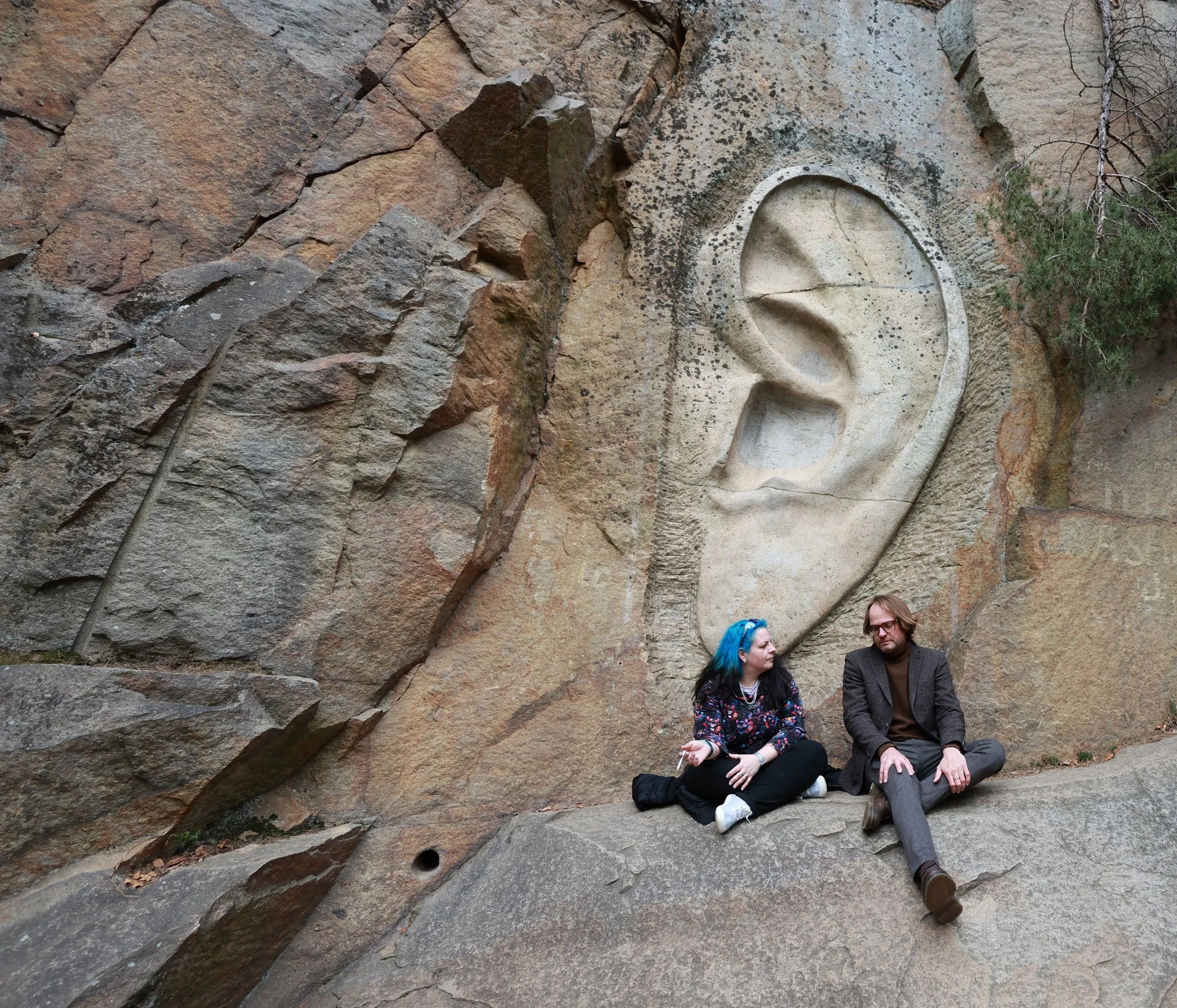
Veronika Effenbergerová and Oleg Vojtíšek recording a podcast at "Ucho"
"When they are still able to perceive the world around them, the moment I pick up a syringe and open the tube of artificial nutrition to prepare it, they already turn their eyes away so they don't have to see it."
Such is the reality of people who spend their final days bedridden, hooked up to tubes. Being unaware, or perhaps even in a coma, might be the better option. Some of them, while they still can, even attempt suicide: yet families insist on resuscitation, even when the heart begins to fail naturally.
Why? Because they want to keep them alive for another month or two. In life, a person only has to do two things: be born and die. "Forgetting how to die" is perhaps the worst nightmare of us all.
Nurse Veronika Effenbergerová has witnessed countless such cases in nursing homes. She is the very person who might one day care (or perhaps already cares) for your parents. And she herself asks families, "Why won't you let him die?"
What drives families to keep a person on life support when there is no longer any chance of recovery and a return to an active life?
Where does love for another end and self-love—that overprotective kind—begin?
Is death healthy?
We discussed this with nurse Veronika Effenbergerová in our podcast. You definitely shouldn't miss this: it's not often you get a glimpse behind the scenes of what happens in nursing homes, especially since many people are afraid to even walk through their doors.