

List of Natural Cemeteries
This list originally included only our own natural cemeteries. Gradually, however, we discovered that people are unaware of many of these places. Some didn’t even have a single person buried there. So we’re gradually adding them all here. There are more options than it might seem at first glance, and each offers a slightly different experience. If you have any additions, corrections, photos, or links regarding these cemeteries, please send them to us—we’d be happy to add them here.
Forest of Memories: Ďáblice Cemetery
The cemetery is operated by the Cemeteries and Funeral Services of the City of Prague
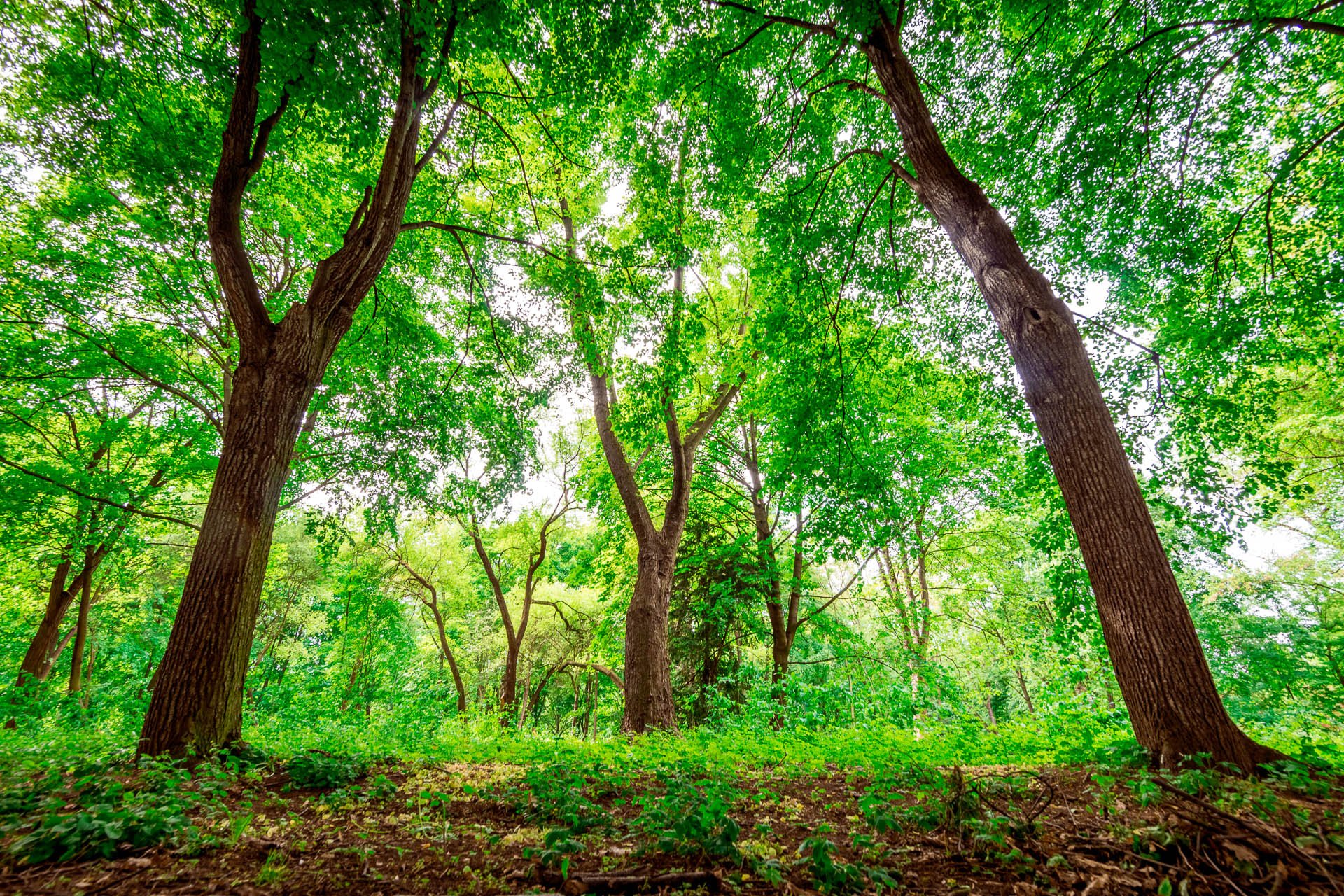
The Forest of Memories, the Ďáblice Cemetery, is the first natural cemetery in the Czech Republic where the ashes of the deceased are placed at the roots of mature trees.
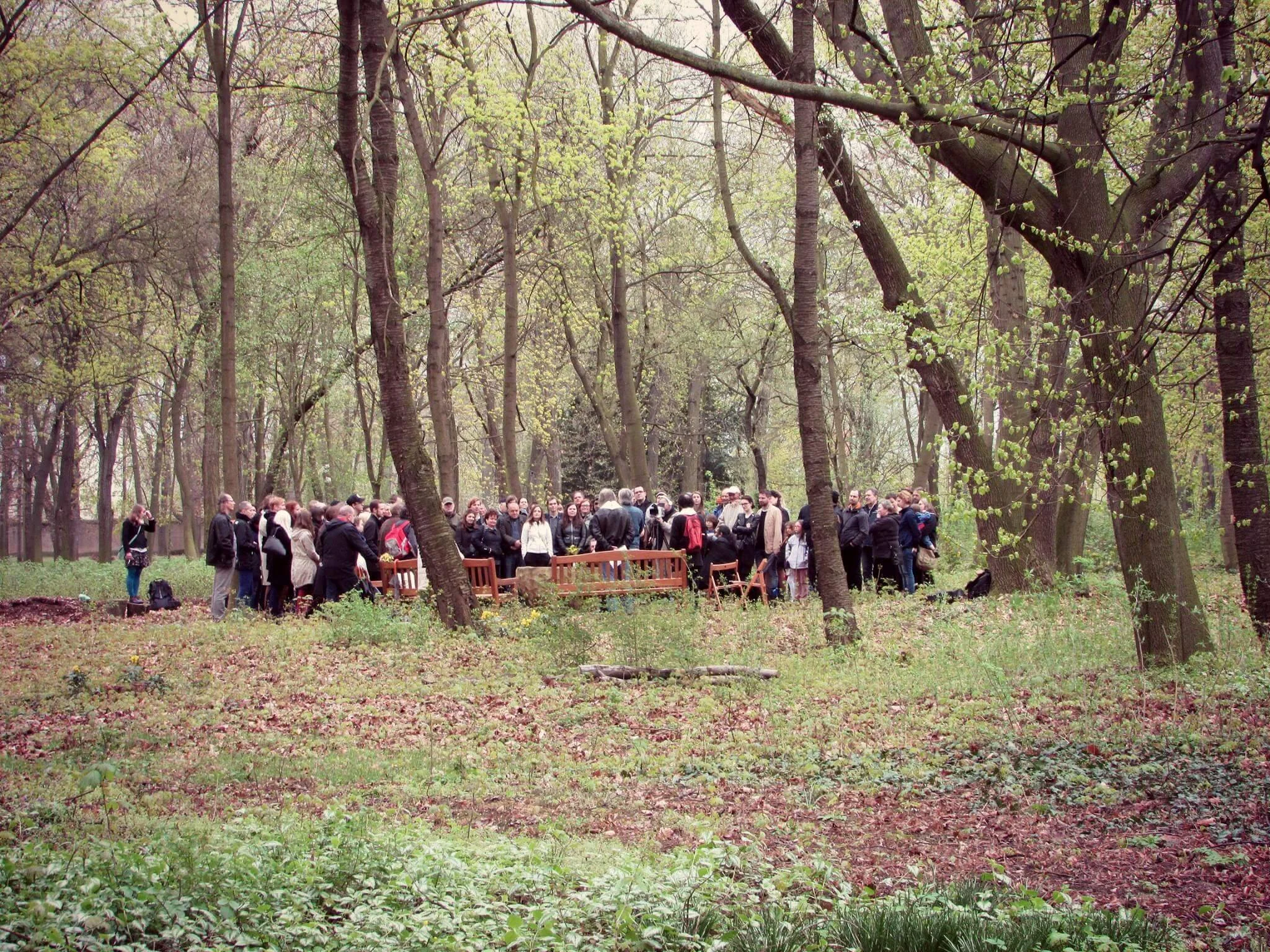
It was established in 2015 as part of the Ďáblice Cemetery in Prague and was a joint project of the Prague City Cemeteries and Funeral Services organization and the Ke kořenům organization. There are no headstones in the Forest of Remembrance; instead, there are mature trees—such as maples, lindens, and wild cherries. The ashes are placed in a small pit near a tree, either scattered or placed in an eco-friendly, biodegradable urn.
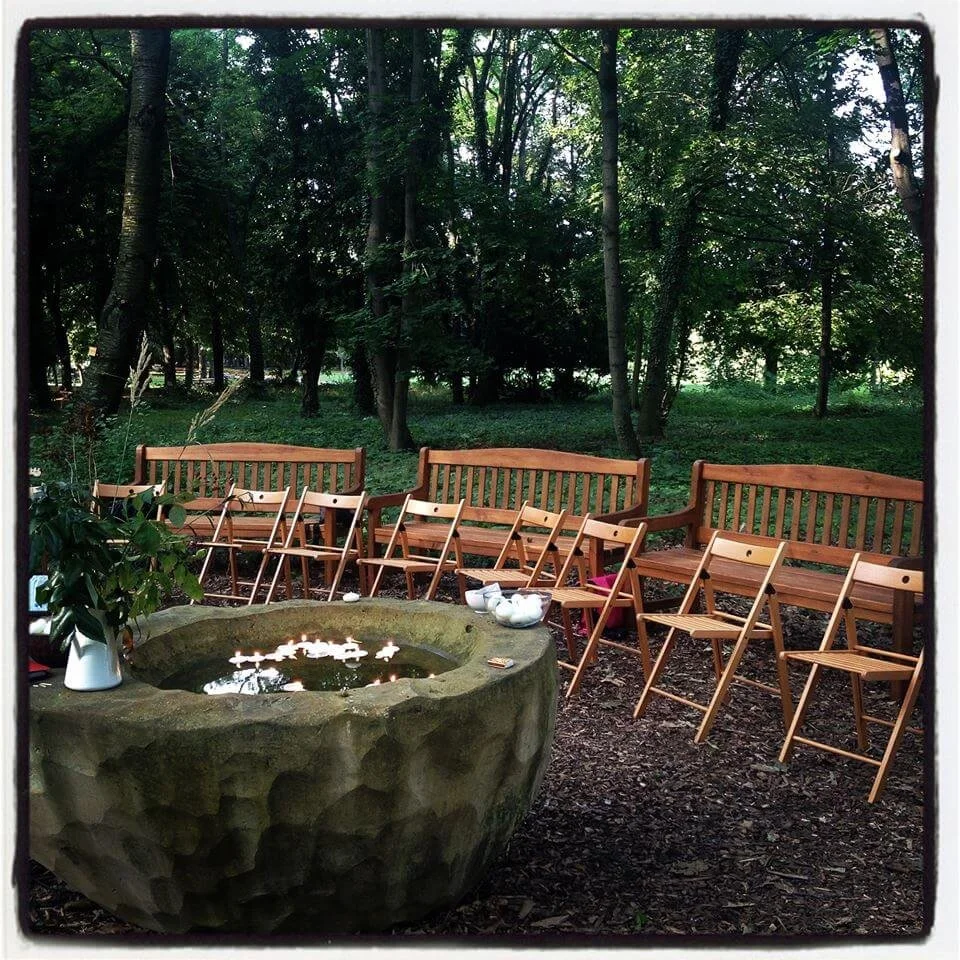
In this forest, there is a beautiful ceremonial site that uses a container of water, known as a “shell,” and there is also the option to use a fire.
Right next to the Forest is another beautiful ceremony site—a circular seating area in the Meadow of Memories. Or perhaps the lovely pseudo-Cubist traditional ceremony hall.
A major advantage of this Forest of Memories is that it is accessible by public transportation and makes use of the facilities at the Ďáblice Cemetery, of which it is a part: many visitors will appreciate, for example, the opportunity to use the restrooms near the main gate.
Photo: http://lesvzpominek.cz/
The Forest of Memories: The Hallstatt Fortress Site
Operated by Funeral Directors
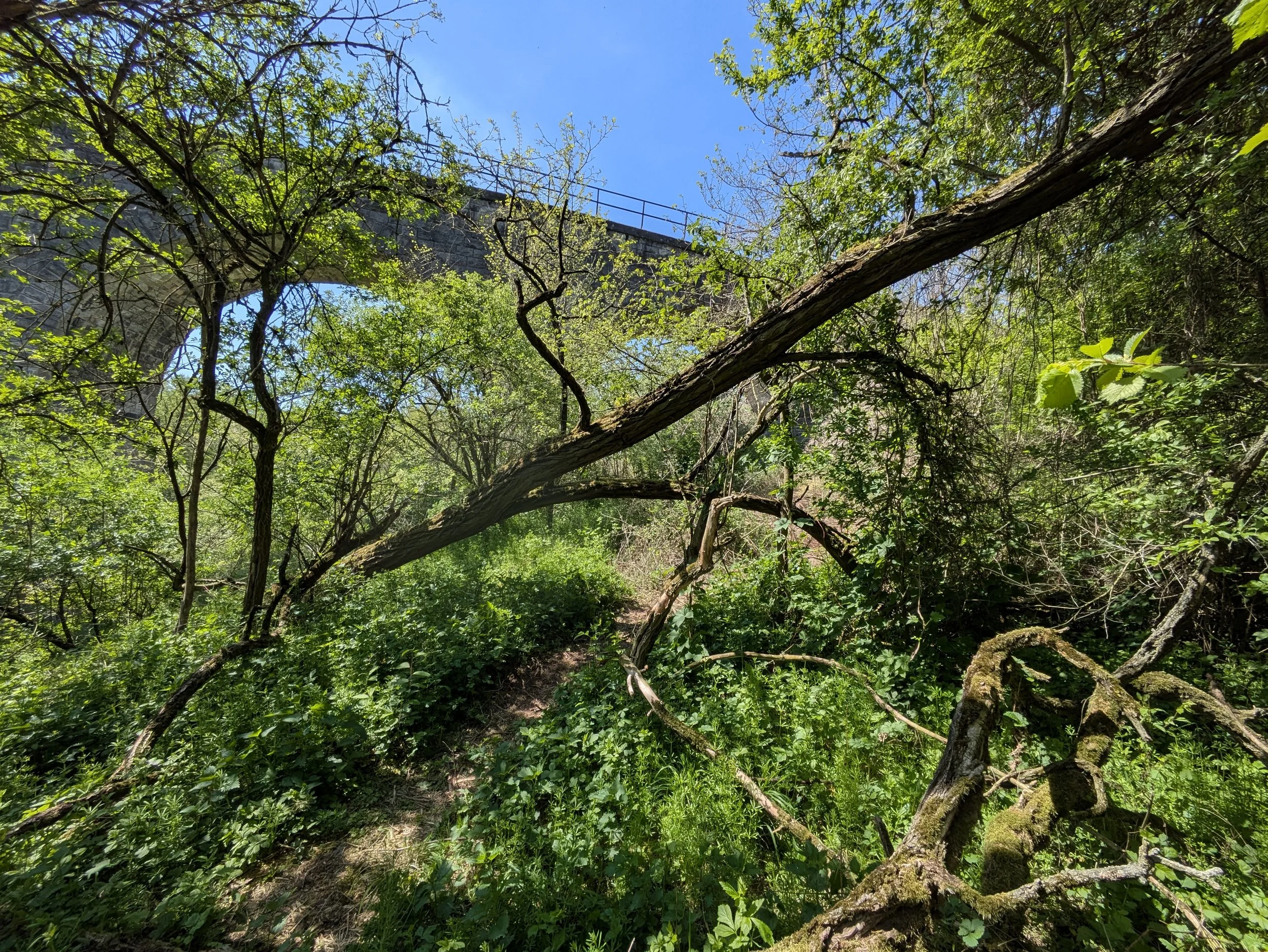
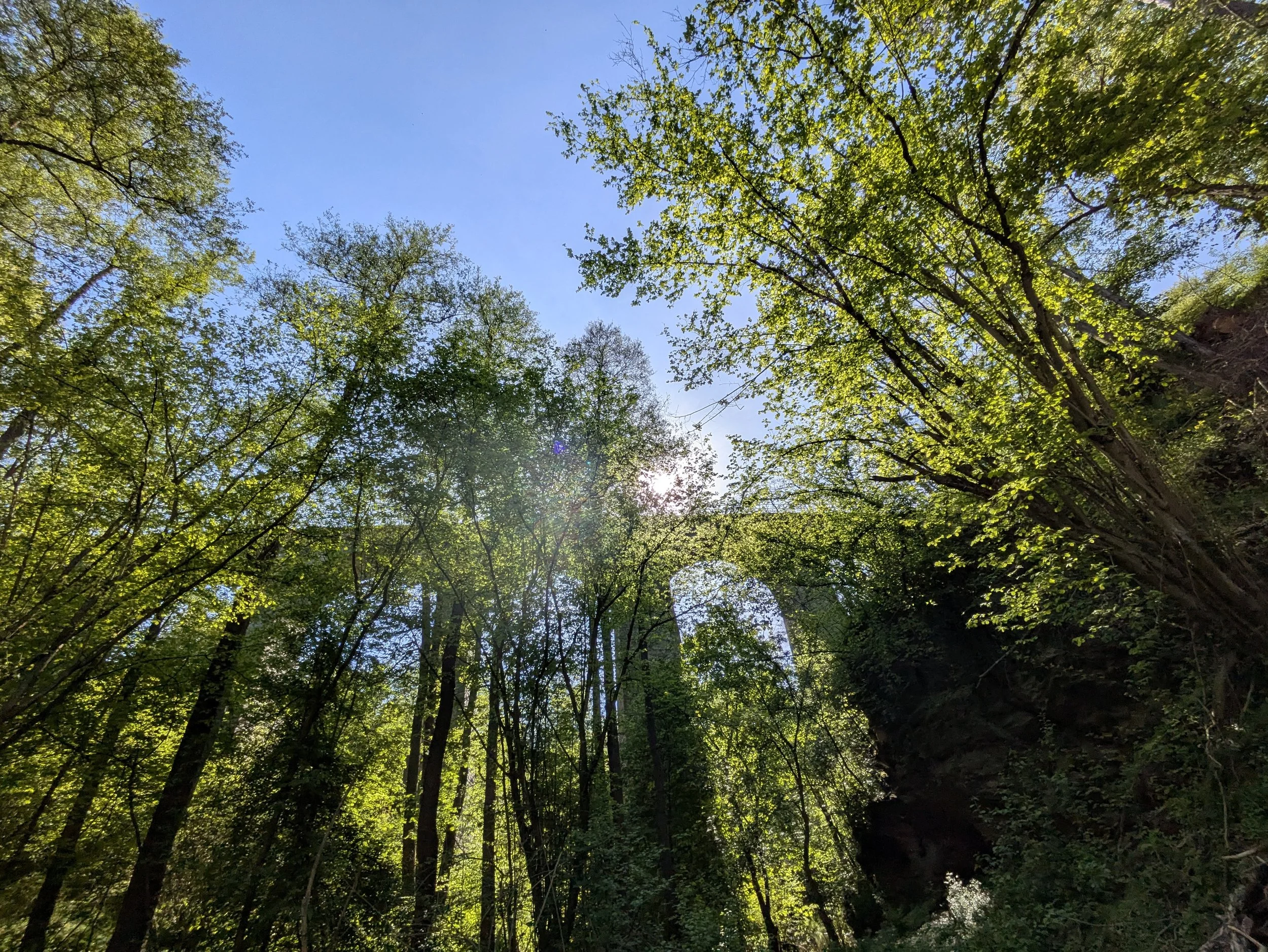
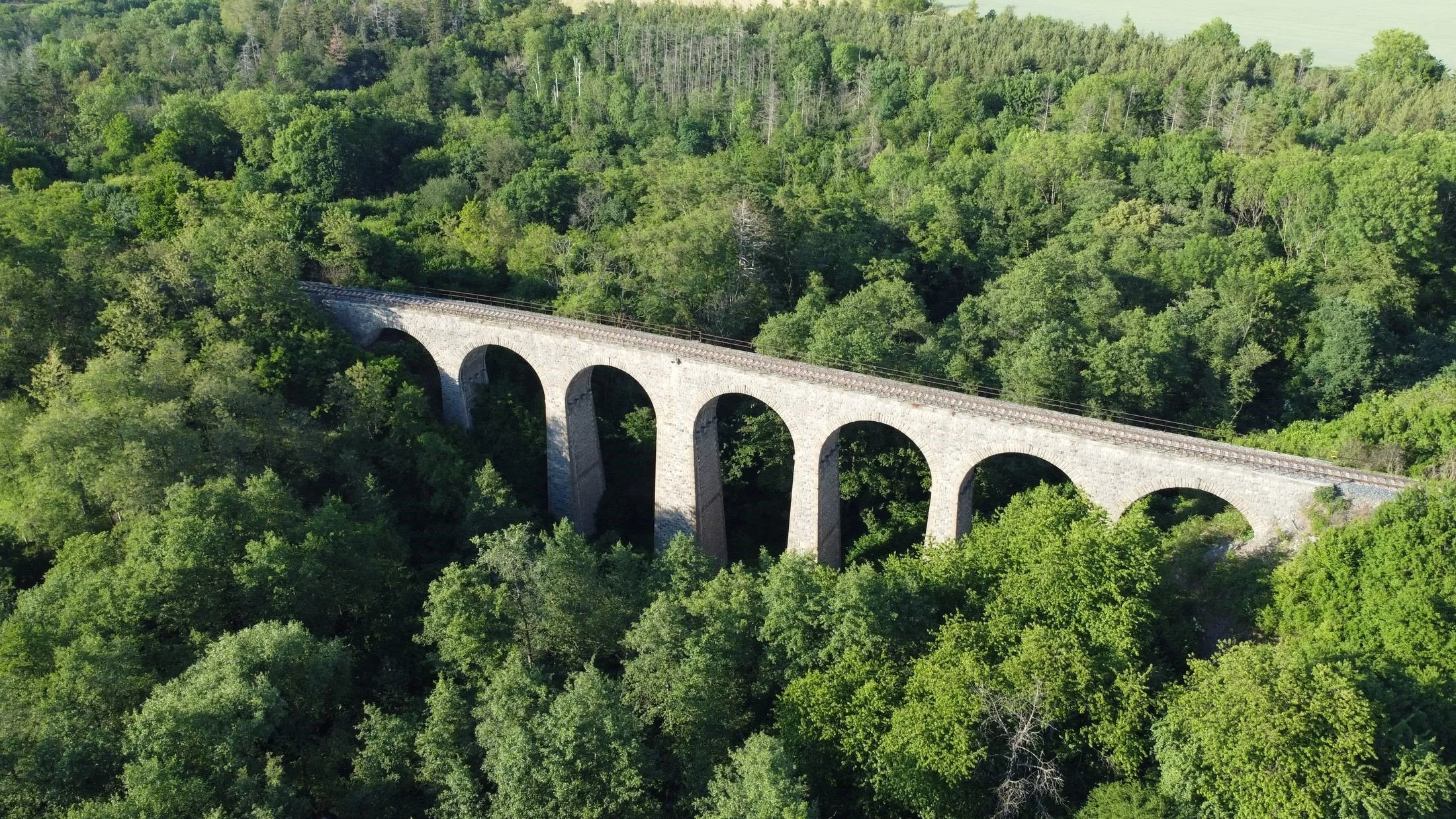
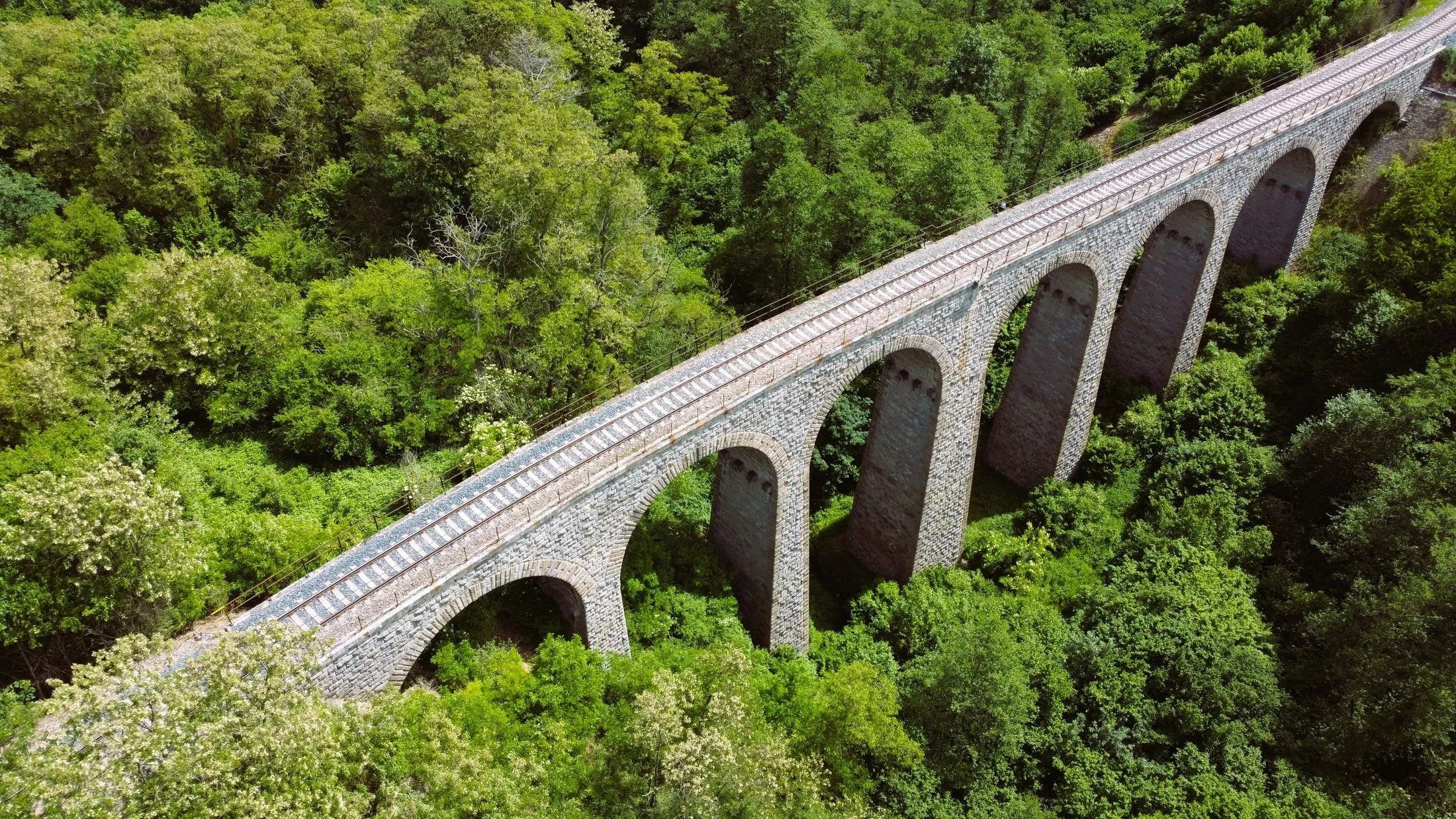
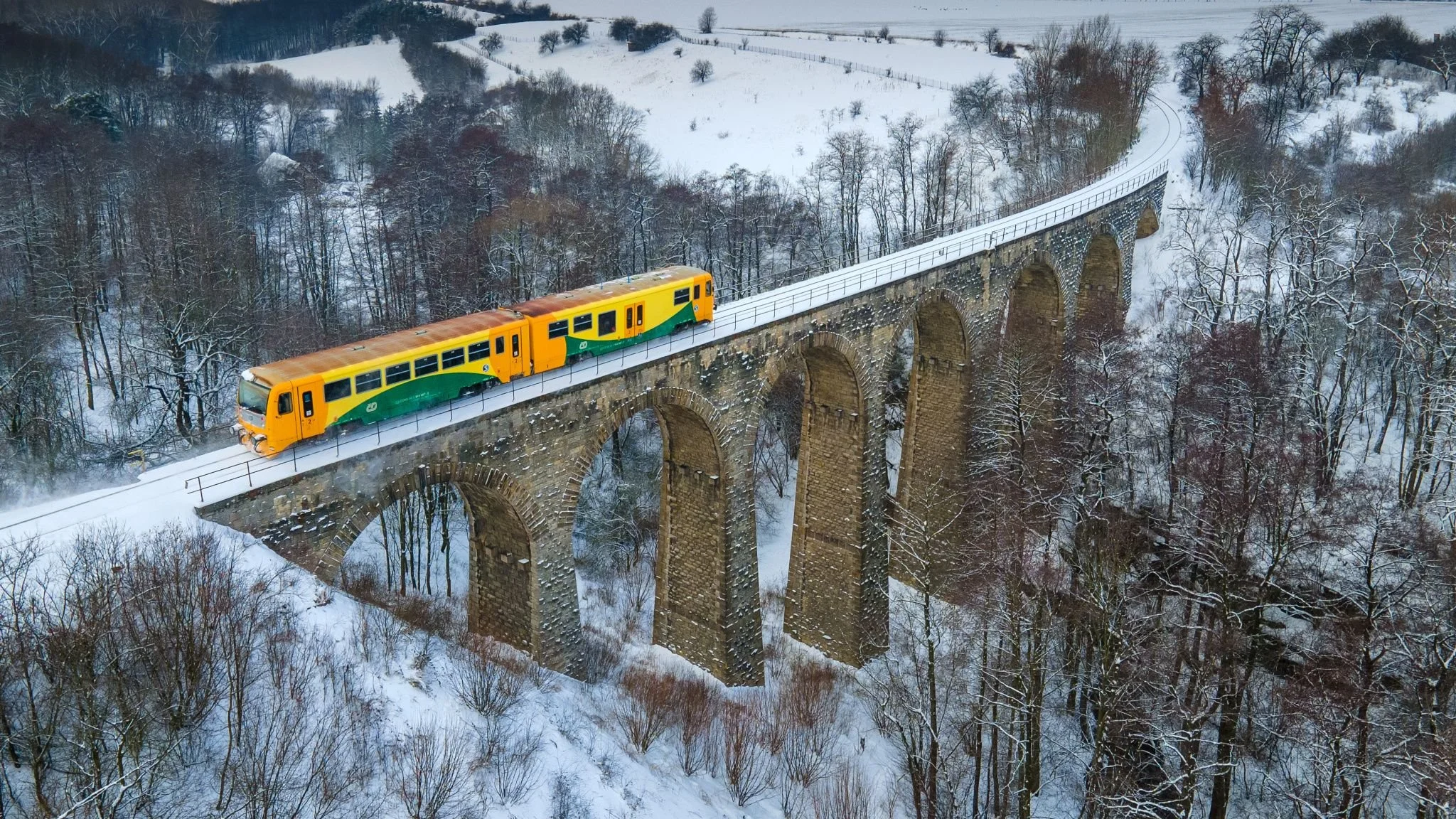
Between Kutná Hora and Kolín, we unexpectedly come across a romantic rocky valley. The Polepka River carved it out over millions of years. Above its left bank, 3,000 years ago, stood a Hallstatt-era hillfort with an urn burial ground. Our forest cemetery is located directly on the site of the fort. Today, a modern engineering monument arches over both the fort and the burial ground: the Hranice Viaduct.




About the Fortified Settlement
The Hallstatt-period fortified settlement “Na Homoli” stood on a rocky hill above the left bank of the Polepka River. The massive rampart of the settlement consisted of a stone structure and an earthen embankment, the foundation of which was formed by a layer of ash containing fragments of Hallstatt pottery. We still find this pottery here today, even at shallow depths and even in the fields. Field surveys were conducted here in the 1930s by František Dvořák and in 1998 by PhDr. Naďa Profantová, CSc.
About the Urn Cemetery
In 1936, František Dvořák uncovered two graves here that were enclosed by a stone circle. Inside the graves, beneath a stone cone, were urns containing the remains of the deceased from cremation burials of the Lusatian Culture of the Urnfield People, dating from approximately 1300–1000 B.C. The grave goods included six small bowls, one flowerpot, one larger bowl, and two ritual vessels. These are on display at the museum in Kolín. For that period and for a fortified settlement, this is a very meager set of grave goods; therefore, it can be assumed that there are other, larger graves nearby with richer grave goods. However, it is possible that the graves were significantly disturbed during the construction of the railroad viaduct in 1900.

About the Railroad Viaduct
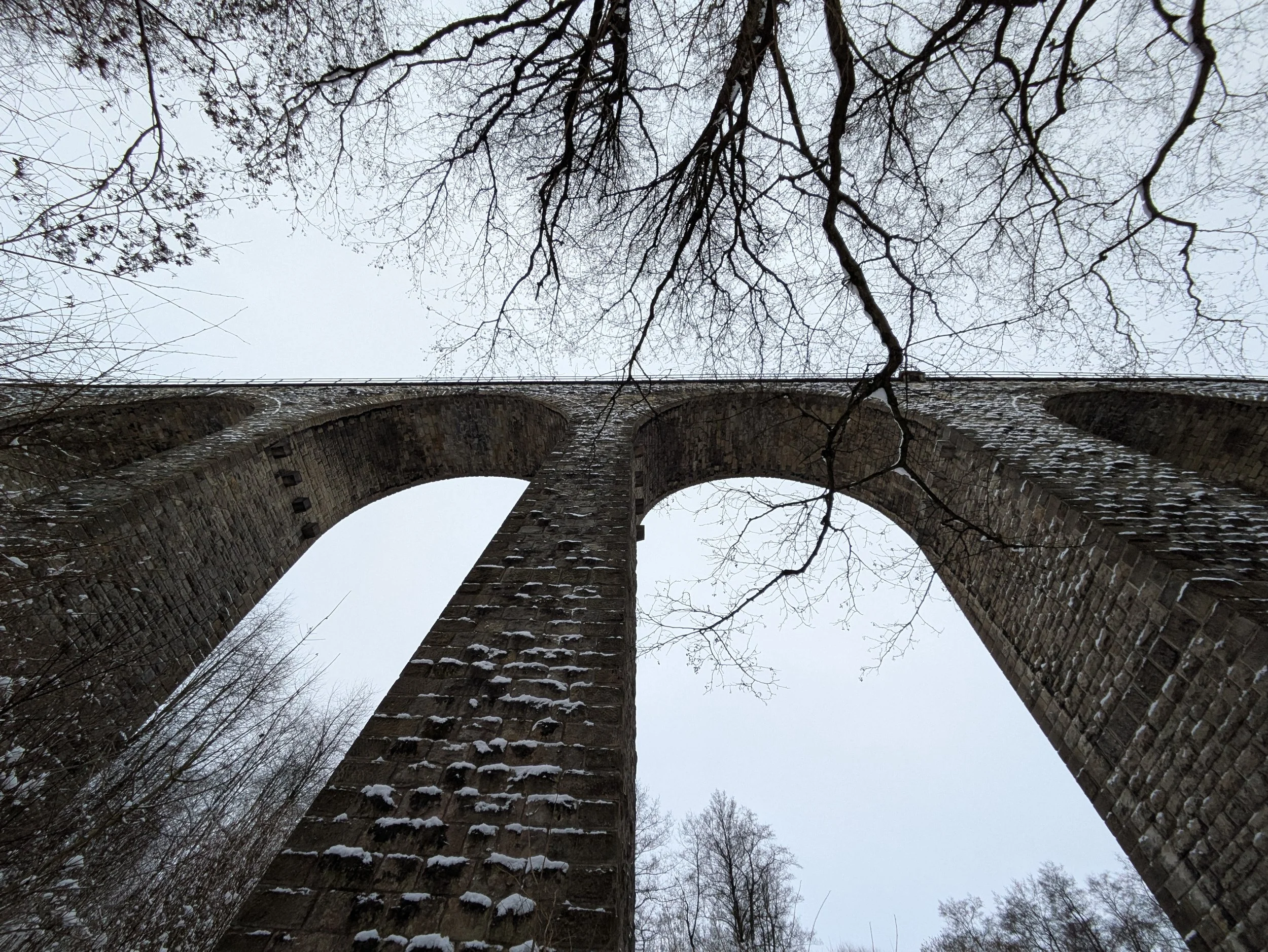
A stone railway viaduct built in 1900 in just five months on the Kolín–Rataje nad Sázavou line by the firm of Ing. Osvald Životský. The total length of the bridge is 109 meters, and its maximum height above the floor of the Polepské Valley is 31 meters. It is constructed of carefully dressed sandstone blocks from Kutná Hora and granite blocks from quarries near Lipnice nad Sázavou. The railing is still the original iron one. The bridge has been preserved in its entirely authentic form, without any modern upgrades or renovations, and remains in good technical condition. A renovation of the viaduct is planned for 2026, but it will not affect our cemetery in any way—we are in communication with the Railway Administration and are finalizing the details.
On January 2, 2009, the railway viaduct was designated a cultural monument by the Ministry of Culture and entered into the Central List of Cultural Monuments of the Czech Republic under number 103404.

About František Dvořák
František Dvořák (born November 28, 1896, in Červené Pečky – died June 10, 1943, in Dresden), originally a physician, later a prominent archaeologist. In 1924, he became the official curator of the archaeological collection at the Kolín Museum, although he had already helped organize it as an 18-year-old student in 1914. His unique archaeological discoveries in the Kolín region earned the museum the status of a respected archaeological center outside of Prague, and the Kolín Museum’s significance during the interwar period extended far beyond the city and region. From 1926 to 1930, he served as mayor of the town of Červené Pečky.
During the war, he became involved with the Kolín branch of the Domestic Resistance (also known as the “Prstýnkáři”). He even provided the group with space in the Kolín museum. Before his arrest by the Gestapo, he was warned and managed to hide in a secret hiding place in the basement of his house in Červené Pečky. However, hunger and the stifling air forced him to leave the hiding place after two days. He fell into the hands of the Gestapo on September 4, 1941. He was imprisoned successively in Kolín, Kutná Hora, Terezín, the Pankrác Prison in Prague, and finally in the Dresden prison on Georg-Bähr-Strasse. There, on January 14, 1943, he was sentenced to death and executed on June 10, 1943.
Rules for the Halstatt Fortress Burial Ground (downloadable)

The Forest of Memories Below Chlum Castle
Operated by Funeral Directors
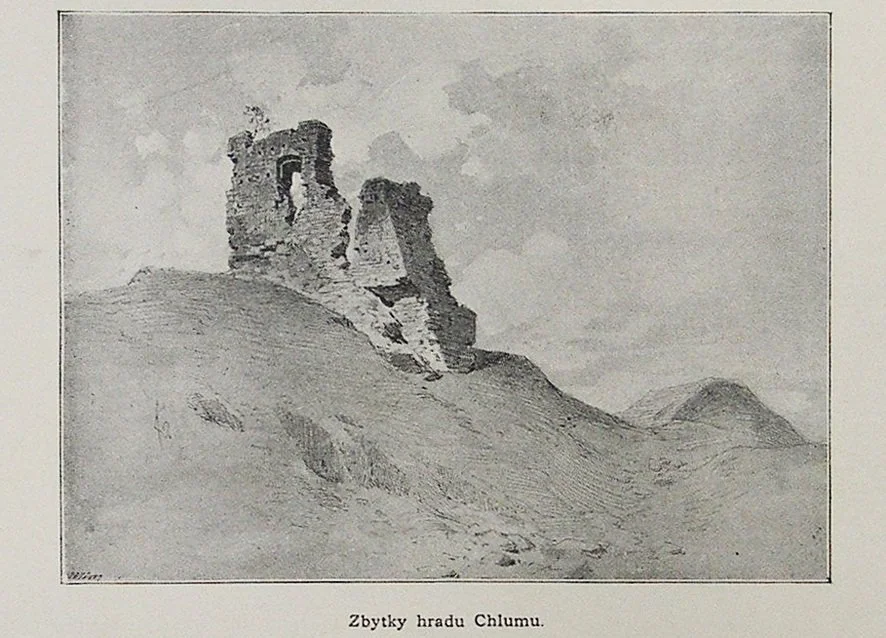
Chlum Castle was founded on the site of an ancient fortified settlement after 1276 by Lord Bleh, whose family—the Slavat family of Chlum and later of Košumberk—went on to become one of the most powerful noble families in Bohemia. The family appears quite frequently in Czech history: for example, in 1415, Lords Vilém Diviš and Jan of Chlum affixed their seals to a petition against the burning at the stake of Master J. Hus. 203 years later (May 23, 1618), a member of the same family, Imperial Viceroy Vilém Slavata of Chlum and Košumberk, was one of three people thrown out of a window at Prague Castle during the Second Defenestration of Prague, following a decision by the Czech estates.
During the Thirty Years' War, the castle was damaged several times by imperial troops and subsequently fell into disrepair. Local residents used stone from the castle as building material when rebuilding the village.
Photo: Steel engraving by J. Farka from F. A. Heber’s book *Böhmens Burgen, Vesten und Bergslösser – České hrady, zámky a tvrze IV.* (Bohemian Castles, Manors, and Fortresses IV), Prague 1844

Below Chlum Castle is a pond that feeds into the Chlumský Stream.
And our cemetery is located along the meandering Chlumský Stream. It is about 200 meters from the castle, and a scenic walking path connects the two. We can hold the funeral service at Chlum Castle and then proceed to the cemetery to lay the deceased to rest, but the cemetery itself may be an even more beautiful setting for the service.
The cemetery is located in a valley where there is true privacy, but still plenty of sunshine. When we were preparing the cemetery, we usually didn’t see a single person all day. But we regularly came across large herds of roe deer, hares, woodpeckers, owls, and even a fox.
Photo: A view of Chlum Castle. Painting by Karel Liebscher from A. Sedláček’s book, *Castles, Palaces, and Fortresses of the Kingdom of Bohemia, Vol. XII*, 1900. Castle XII, p. 210
On one side, the cemetery is bordered by the meandering stream; on the other side are the meanders of a backwater that comes to life only when the snow melts in the spring. Both are lined with trees ranging from 80 to 200 years old. The most common trees here are ash and alder, followed by hornbeam and oak, and, rarely, pine.
Among them is a large, partially sunlit open area that also features the Tree Chapel. It is a spiritual space created by trees whose trunks form a colonnade and whose branches create a canopy. It offers an opportunity to pause, reflect, and find inner peace, as well as to rest during a walk or bike ride. And, of course, it is a venue for funeral services.
The scattering meadow is right next to it—and is full of wildflowers.
For example, in the spring, thousands of snowdrops bloom in the cemetery—which is why the Velká and Malá Olšina Nature Reserve was established near the cemetery in 1982.

Valley of Memories in Brno-Líšeň
Operated by the Brno City Cemetery Administration
When visiting your ancestors in Brno-Líšeň, you can also explore a section of the cemetery that, in addition to columbariums and extensive areas for additional graves, includes a remarkable section dedicated to more environmentally friendly alternative burials called the Valley of Memories.
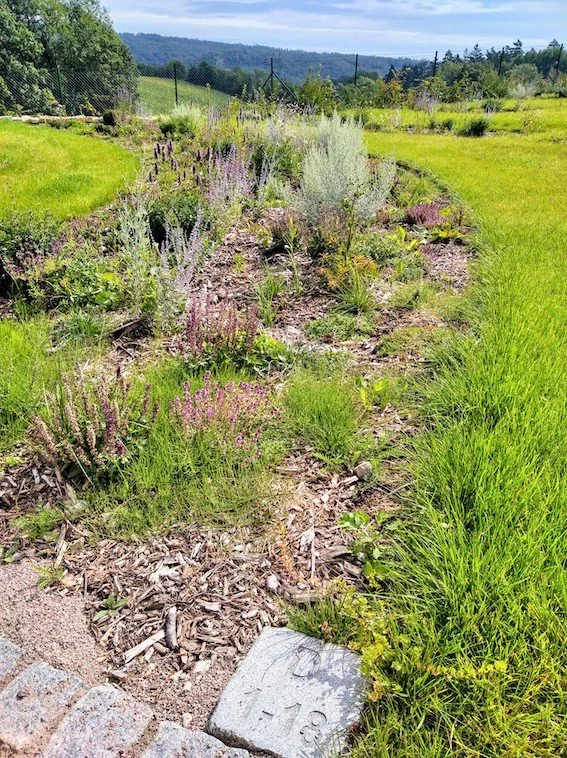
It consists of several planted trees and flower beds, which are marked with stones along the edges. The central part is dominated by the so-called Tree of Remembrance, where bereaved family members can light candles for their deceased loved ones.
The trees haven't fully grown yet, but it's clear that the space was designed with care and has an overall pleasant atmosphere.
Urns made of eco-friendly materials or containing ashes are placed in pre-prepared holes around flower beds or trees after the ceremony. The bereaved also have the option of having a nameplate made and hanging it on the designated fence.
Using the unique number assigned to each flower bed or tree, people can locate the burial site of the deceased using the GIS Brno app.
With its charming setting, the Valley of Memories is the perfect place for gatherings where people can sit together and later lay their loved ones’ ashes to rest.
Photo source: https://www.brno-lisen.cz/udoli-vzpominek-nabizi-alternativni-moznost-pohrbivani/t8524
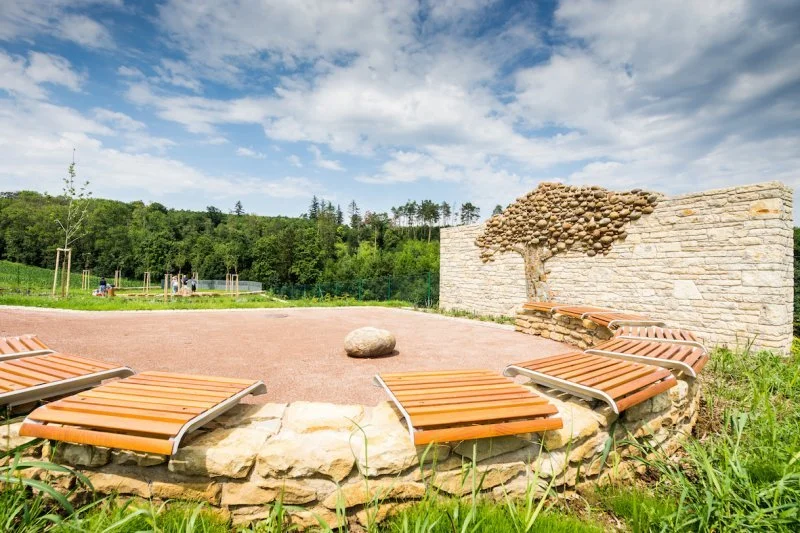
Forest of Memories: Olomouc – Neředín
Operated by the City of Olomouc Cemeteries
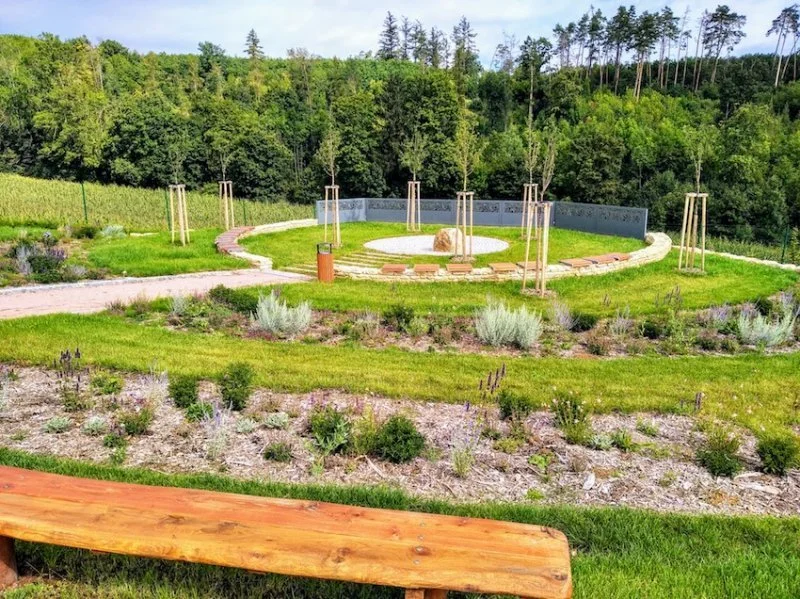
At the Central Cemetery in Olomouc, covering an area of approximately one hectare, there is a memorial space for natural outdoor ceremonies. The project was funded by the investment fund of the Olomouc City Cemeteries, a subsidized organization, as a complementary addition to the Jewish cemetery.
Thanks to sculptor Ondřej Oliva, who has experience in creating spaces with a spiritual dimension, and landscape architect Ing. Olga Žáková, this natural cemetery is unique for its artistic elements and beautiful landscaping, which invites visitors to take walks and engage in quiet reflection.
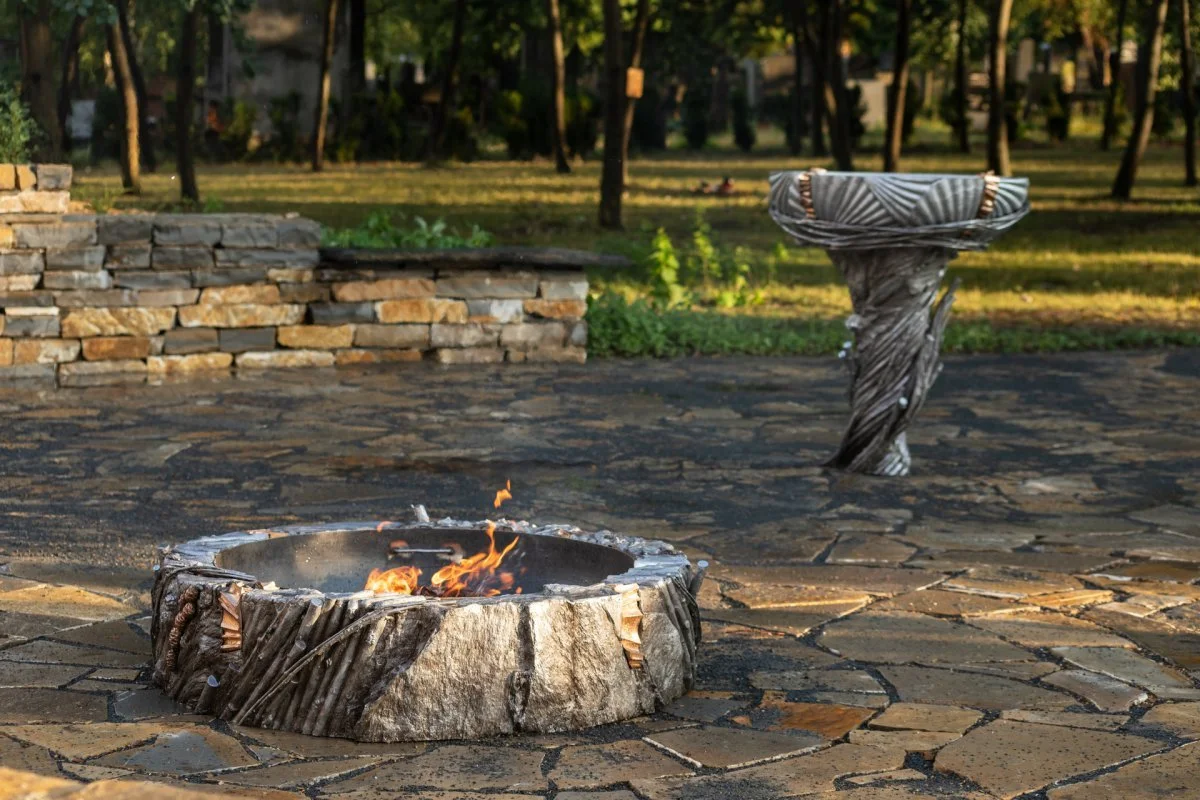
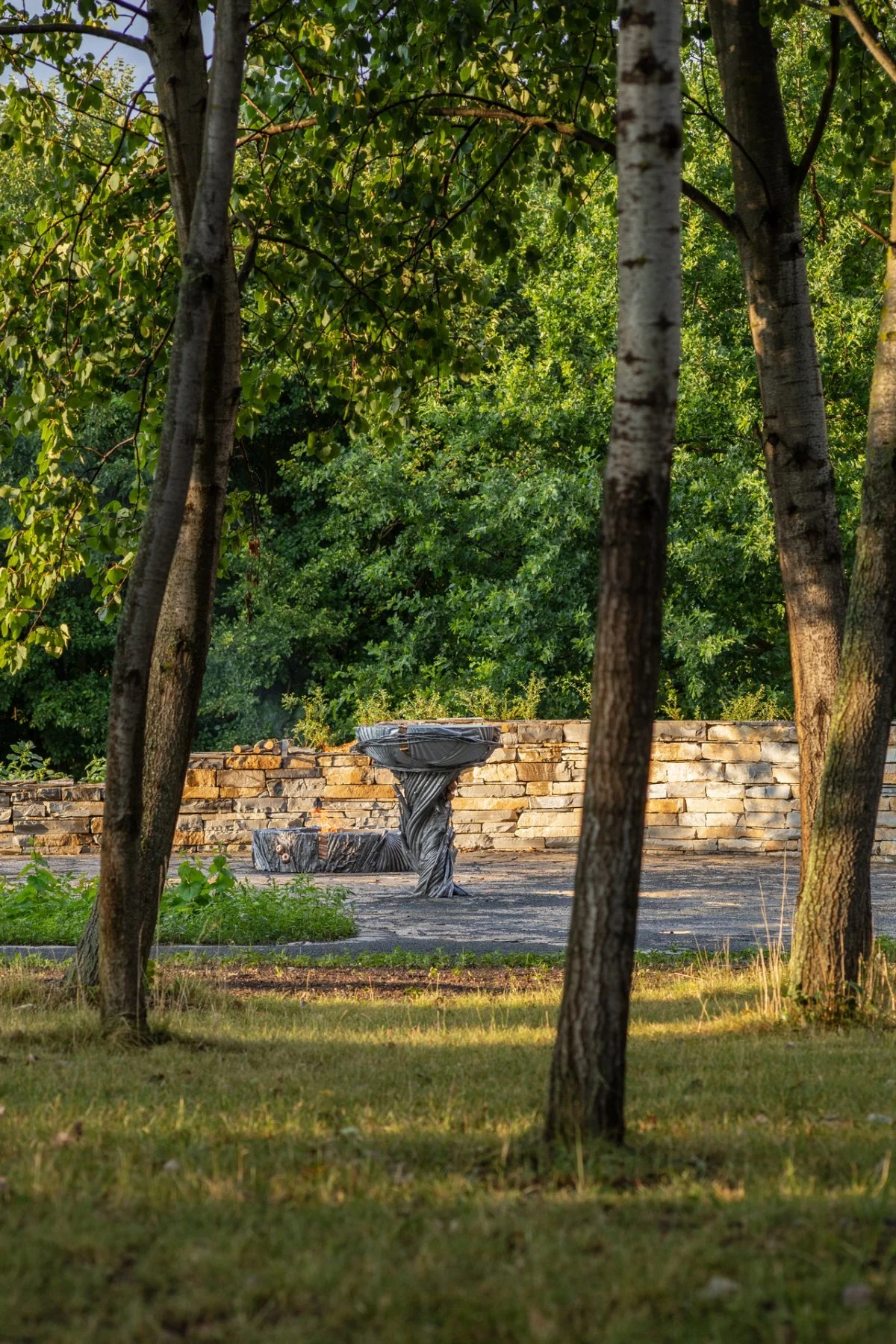
The ashes of the deceased are scattered at the roots of trees in the Forest of Remembrance. This memorial site can be rented in its entirety for funeral services in a setting where the elements of fire and water are present in the form of unique monuments, complemented by earth and air—symbolizing that a person’s physical body once again becomes part of nature.
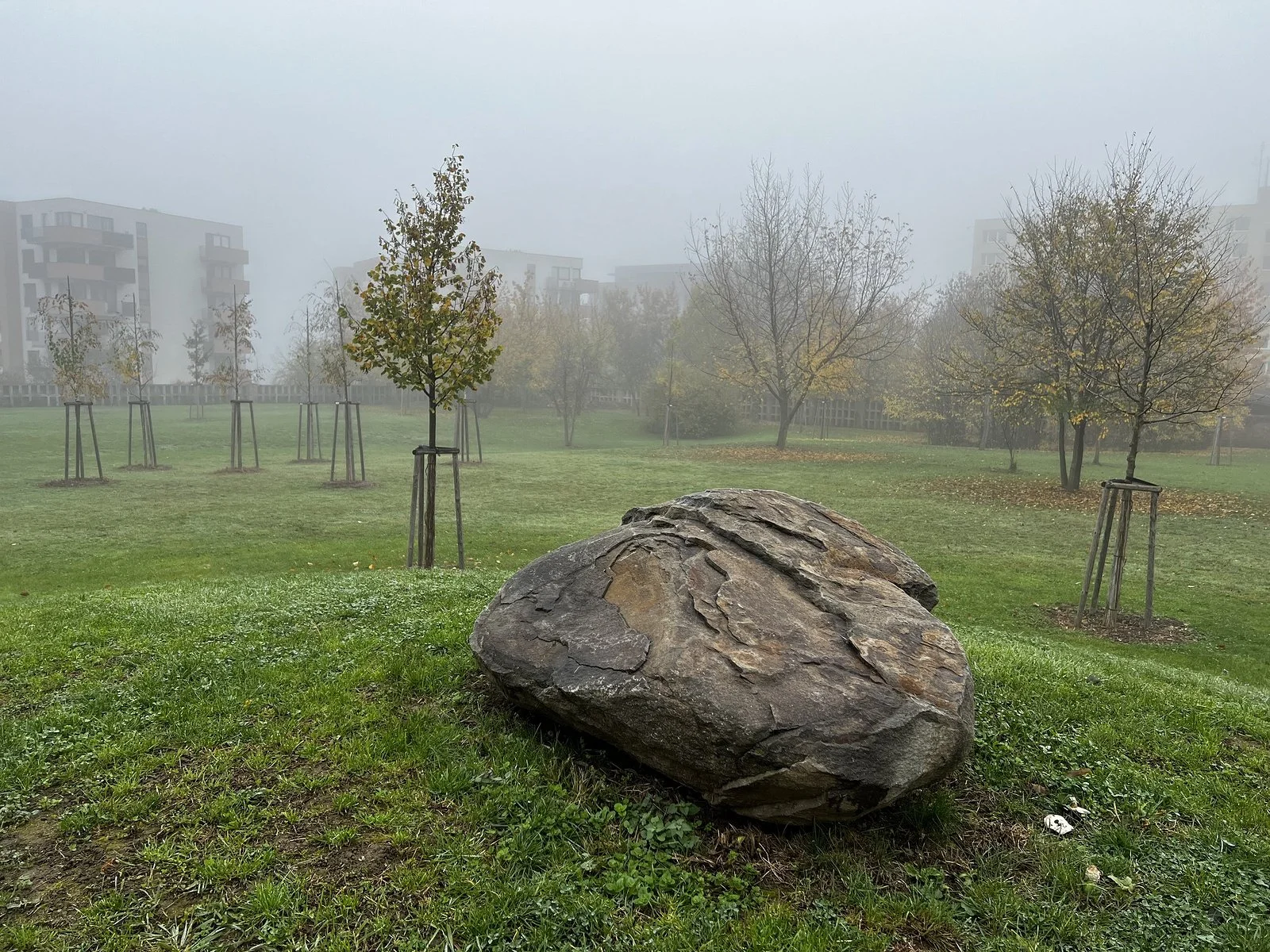
We continue through a forest of white poplars, a flower-filled meadow, and scattered trees alternating with shrubs and grass. We arrive at a hill surrounded by seven small-leaved linden trees, at the top of which stands the so-called “Stone of Forgiveness.” And when we look around, we’re treated to a view of part of the forest, a picturesque drop-shaped clearing, and a gravel path.
Photo source: https://www.hrbitovyolomouc.cz/les-vzpominek
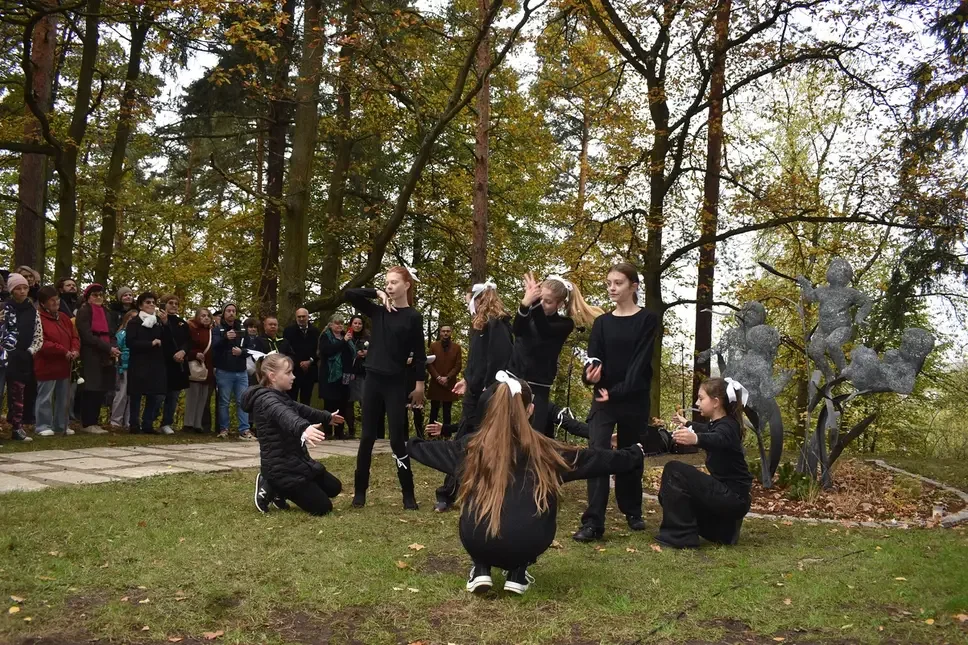
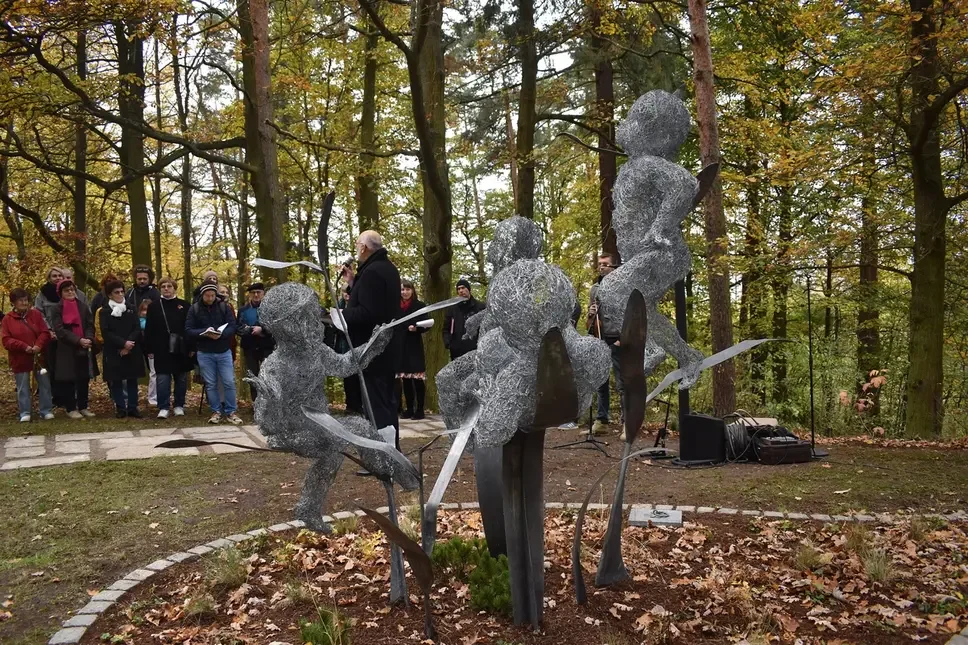
A Place in the Heart of Písek
Operated by: Eva Záluská and the City of Písek
Within the grounds of the forest cemetery, located in hilly terrain on the outskirts of town, we find the Memorial Site in the Heart.
It is a place dedicated to honoring the memory of children who died during pregnancy, at birth, or shortly thereafter. It offers a place for quiet reflection and the opportunity to make room in one’s heart for all these babies. It invites us to pause, to remember them in silence, or to pray for the children and their close relatives.
This space allows you to say goodbye, to let go in your heart, and to honor a child who is no longer physically in this world. It aims to be a place that offers support during the difficult time of mourning and grief following the loss of a loved one, providing an opportunity to bring love and comfort to the pain of an irreplaceable loss.
The project was created on the initiative of citizens who had personally experienced the loss of an unborn child, as symbolized by the 2,000 blooming flowers, one for each family. It was designed by local architect Martin Zborník.
The founders also emphasize the social significance of the site: the taboo subject of child death is being brought into the public sphere. Everyone is invited to remember the children and their families and, in doing so, to become more sensitive to the pain of others.
Photo (courtesy of the administrator): https://pisecky.denik.cz/zpravy-region/pisek-pietni-misto-nenarozene-deti-potrat-lesni-hrbitov-dite-v-srdci/
Memories Beneath Lysá
Operated by the " Na druhý břeh" association
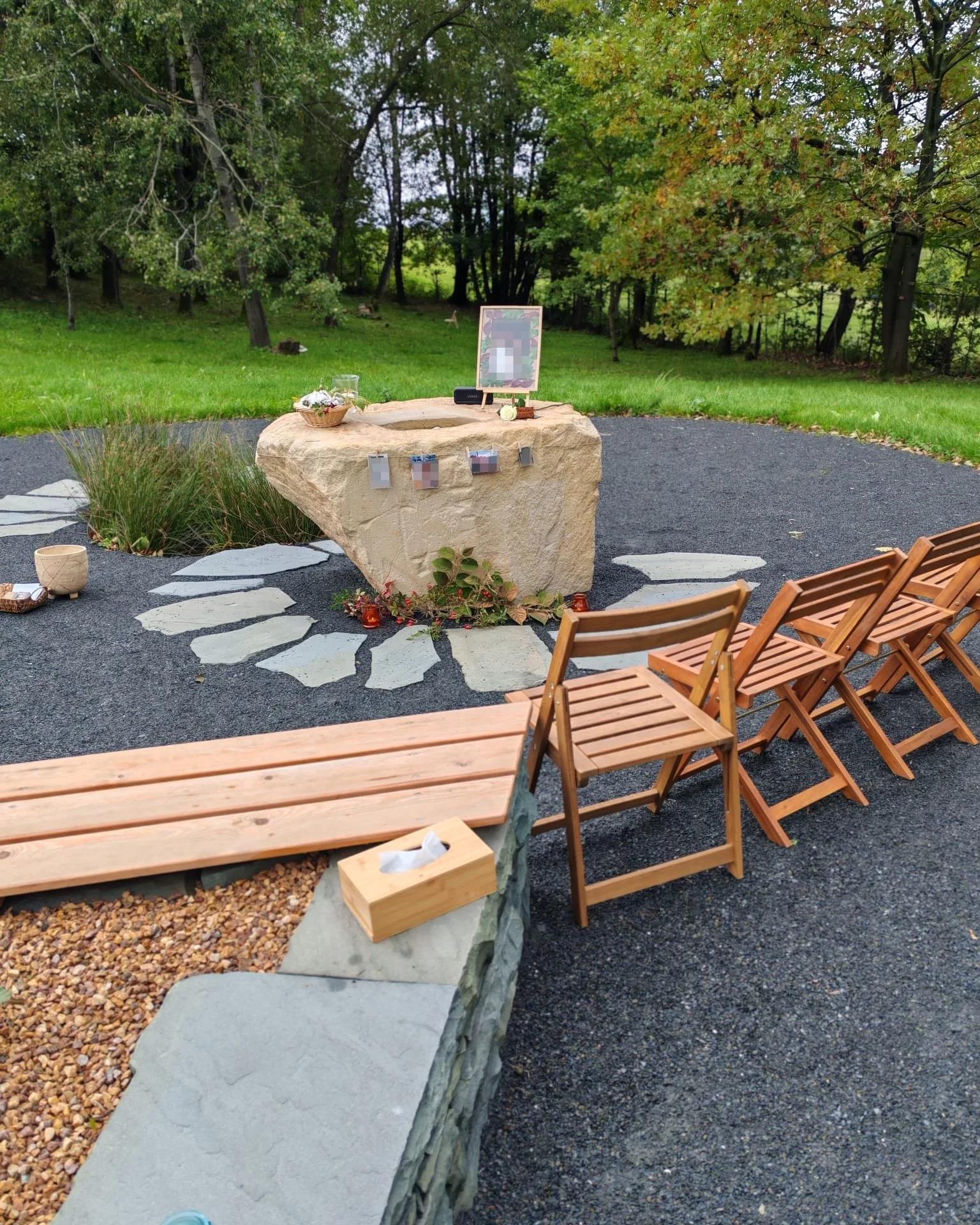
Thanks to a collaboration between the City of Frýdlant nad Ostravicí and the “Na druhý břeh” association, a natural burial ground opened on April 1, 2023, at the public cemetery in Lubno. It was the first natural burial ground in the Moravian-Silesian Region.
The women of the association wanted to breathe new life into funerals and give them a new form. Instead of the cold and impersonal spaces of churches and funeral halls, they wanted to make use of the atmosphere and beauty of the outdoors to naturally bring the cycle of human life to a close.
In this 2,000 m² natural burial ground, we find a memorial grove nestled in peaceful natural surroundings, offering views of the magical Beskydy Mountains and Lysá Hora. Currently, the cemetery is regularly maintained not only by the association but also by volunteers, who prepare the site for ceremonies as well.
Biodegradable urns for the deceased, made of sturdy paper, unvarnished wood, wicker, or unfired clay, are placed in flower beds or at the roots of a memorial tree (in addition to urns, direct scattering is also an option). These sites are marked with wooden plaques on tree trunks or with pebbles in flower beds.
Under the canopy of deciduous trees and surrounded by nature, the bereaved can bid a dignified farewell to their loved one and pause for a moment of quiet remembrance.
Photo source: Na druhý břeh association http://nadruhybreh.cz/
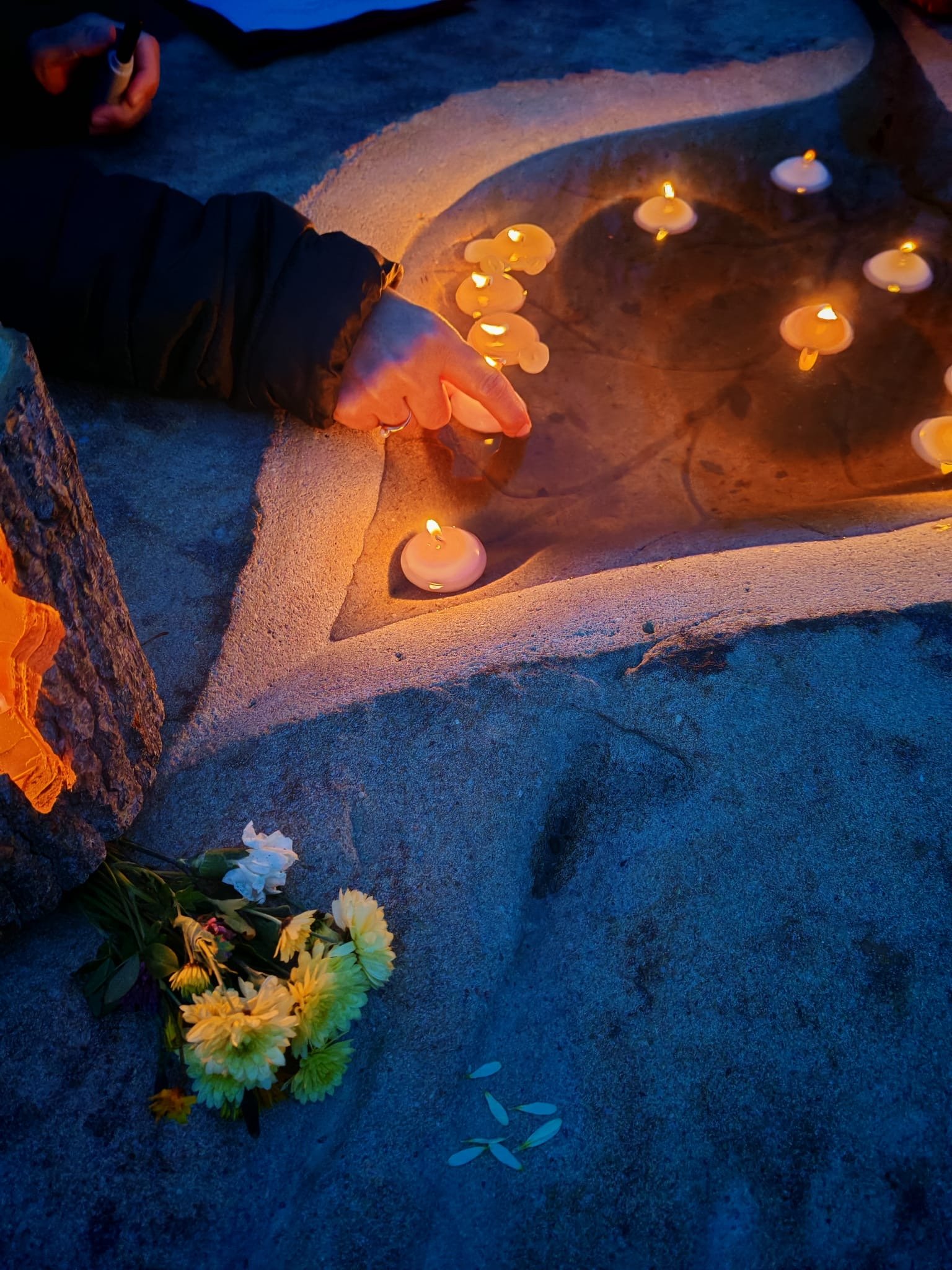
The Forest of Memories in Jindřichovice in the Ore Mountains
The cemetery is operated by: Jakub's Funeral Directors
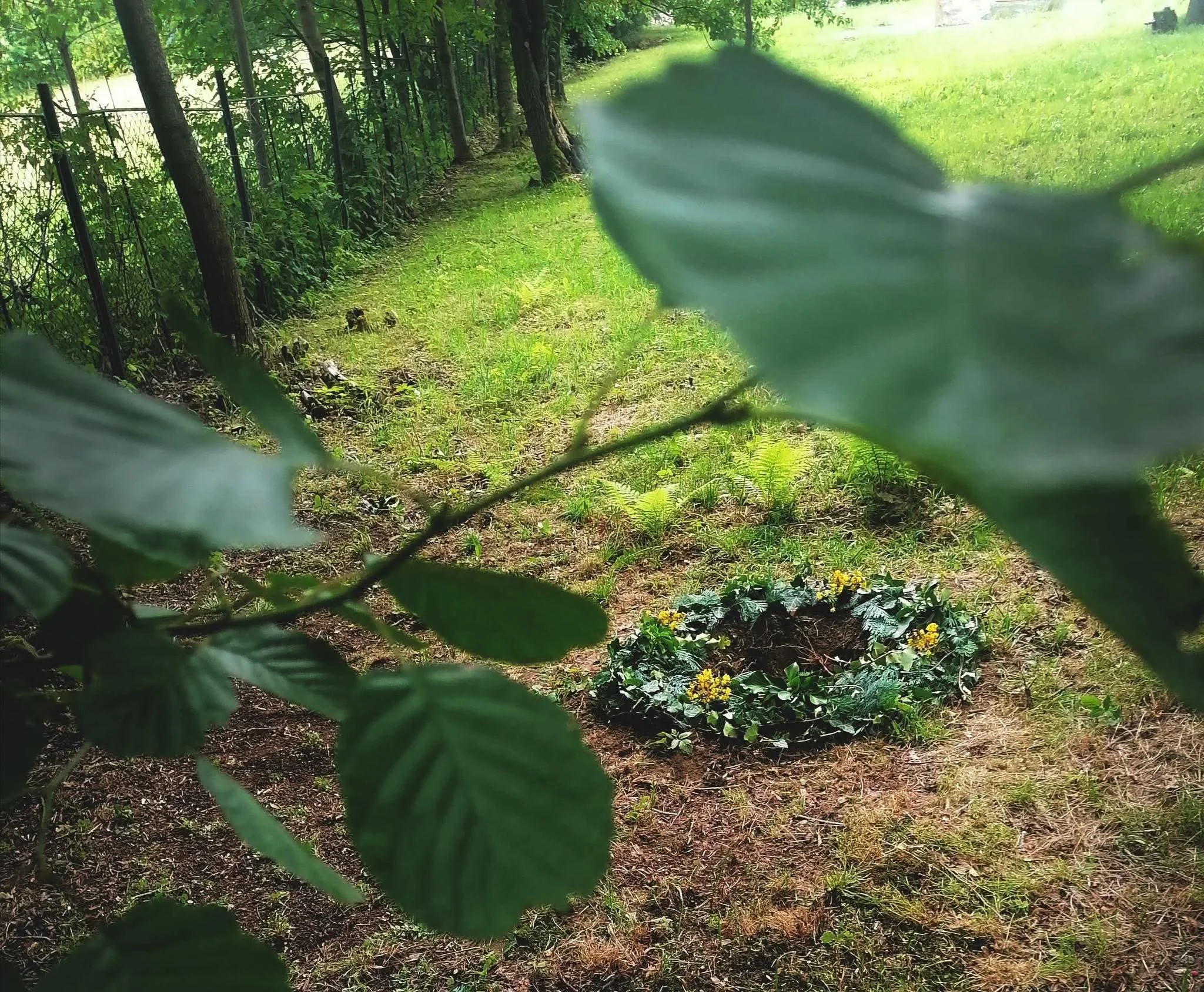
In 2025, the Forest of Memories was established in the Ore Mountains on the initiative of the Jakub Ceremonialists. It was the first of its kind in Western Bohemia.
This forest of remembrance offers the opportunity to inter the ashes of the deceased at the roots of the trees. Each tree bears a wooden plaque with the name of the deceased as a gentle reminder that life and death are part of the natural cycle.
It also offers a space for a final farewell—and for remembrance and connection with nature.
Visitors can come here to light a candle, sit in silence, relax, or simply take a deep breath and become part of the natural community that the Forest of Memories creates.
Photo source: https://sokolovsky.denik.cz/zpravy-region/les-vzpominek-v-jindrichovicich-prinasi-novy-pohled-na-posledni-rozlouceni-20250/
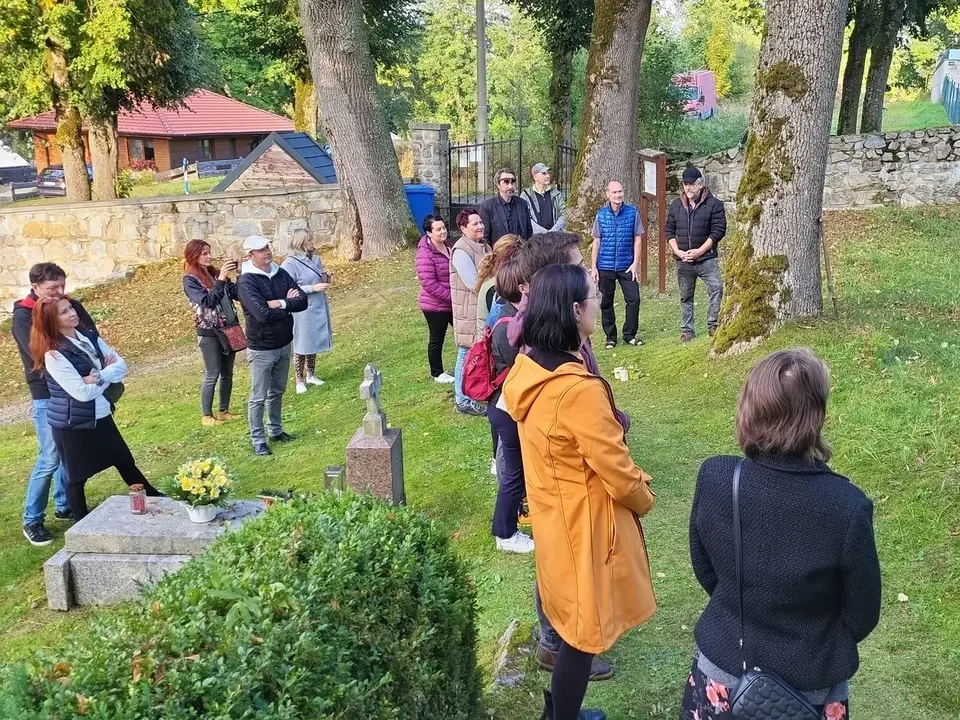
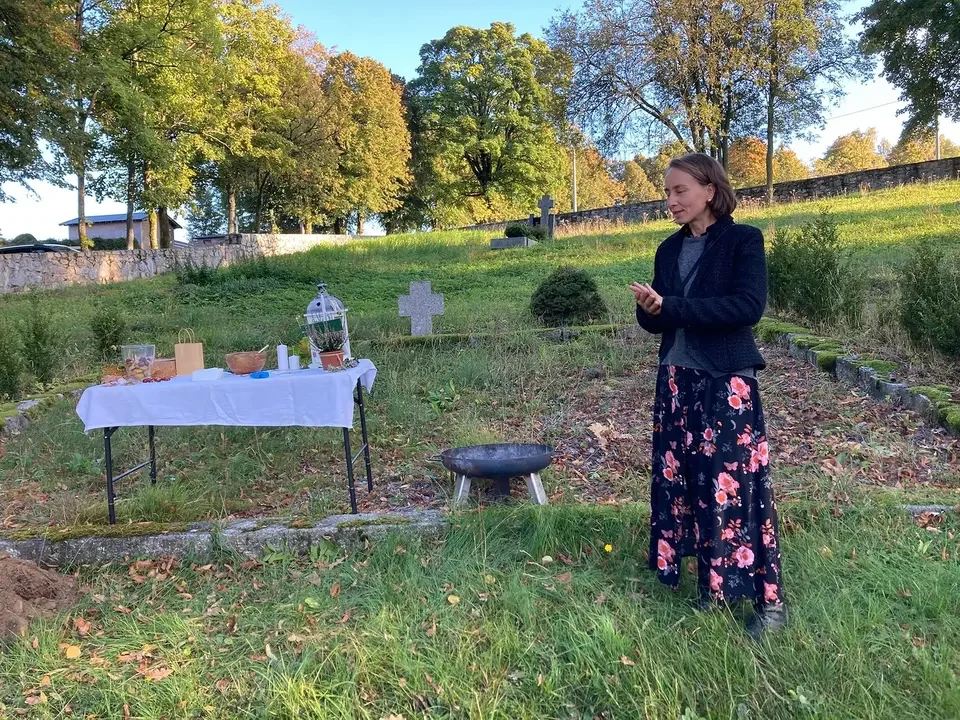
Meadow of Memories: The Red Meadow
Operated by Pohřební průvodci (this natural cemetery is currently under development)
"...there, a snake sheds its old, shiny skin, and the elves use it to make coats."
William Shakespeare: A Midsummer Night's Dream, translated by Martin Hilský, 2008
The Lišanský Stream winds through the Rakovník Basin, where it is joined by the Olešná River. Along the stream lies an almost fairy-tale-like meadow, surrounded on all sides by trees. The Red Meadow offers us an open space, yet at the same time complete privacy and the shade of centuries-old trees. The nearby stream keeps it moist, and here and there you’ll come across an abandoned tree stump where you can rest. It’s a bit of wilderness, yet it’s perfectly accessible by car right to the spot, or by train, with the option of staying at a cozy guesthouse right next door.
In the meadow, we offer the option of scattering ashes, placing ashes in a grave, and selecting your own burial plot, as well as the opportunity to plant a tree in memory of the deceased.

We borrowed the name “Červená louka” from the nature reserve established in 1989, which directly borders our meadow. Here, we protect rare and endangered plants and animals. You’ll find a diverse array of plant species in the meadow: it’s adorned with May lily-of-the-valley, blue knapweed, dyer’s rocket, medicinal bugle, Siberian iris, gray thistle, green thistle, marsh geranium, Davall’s sedge, three-leaved bogbean, and European globeflower. We can also spot the rare marsh snail and many species of butterflies here.
Towering above Červená louka are the ruins of the royal castle of Hlavačov (originally known as Starý Hrádek), from which the Přemyslids administered the Rakovník region and the hunting grounds in the Berounka River basin. The castle was the predecessor of Křivoklát. Unfortunately, it burned to the ground in the 13th century and was never rebuilt, as by that time the new and larger Křivoklát Castle had already been built and had taken over its function. Today, all that remains of the castle is a deep moat, a rampart, and the occasional remnants of masonry. Even so, it is listed as a cultural monument under number 45255/2-2771.
However, this place was teeming with life long before the Přemyslids. During the Early Iron Age, there was a prehistoric settlement here belonging to the Hallstatt culture. The well-known archaeologist Tomáš Durdík conducted an archaeological excavation here in 1974 and uncovered the remains of a palisade fortification as well as an area paved with boulders. The oldest ceramic shards found belonged to the Beilan culture, which dates from the eighth to the early sixth century B.C. The most recent pottery found belonged to the Late Hallstatt period.
Photo: The Red Meadow in Full Bloom Author: Eva Požárová, CC BY-SA 4.0 license https://creativecommons.org/licenses/by-sa/4.0
The Forest of Memories at Žižka's Oak in Myšlín
Operated by Pohřební průvodci. (This natural cemetery is currently under development.)
The Story of the Žižkov Oak
This oak tree has stood here for over 650 years, and its story dates back to the Hussite era. In 1421, during the campaign toward Český Brod, the priest Petr of Cimburk met with Jan Žižka here and interceded on behalf of Mnichovice, asking Žižka to spare the village. Žižka, however, accused him of being a spy, condemned him on the spot, and hanged him from the oak tree. It is said that it eventually turned out that the spy was actually a soldier who had incriminated Cimburk. Mnichovice, however, was spared from raids.
The TV show *Memory of Trees* also featured the Žižka Oak in Myšlín in Episode 7: “The Trees of Žižkov.”
The oak is listed in the AOPK ČR Register of Memorable Trees.
Photo: Tomáš Kubelka, Čarokraj: https://carokraj.cz/lokace/zizkuv-dub-myslin

Landscape and Surroundings
The rolling Baroque landscape of Central Bohemia, with meadows, pastures, small woods, and animals—especially goats and sheep. This is the Zahrady Myšlín eco-farm, where the cemetery is located.
The ceremony site is right next to Žižka’s Oak, by the memorial cross. The forest cemetery is right next to it, on a gentle slope leading down into the valley toward the Myšlín Stream.
About 50 meters from the cemetery is the Zahradní Bistro, where you can grab a bite to eat or even hold a reception after the funeral, as well as Koloniál, where you can buy farm products from a local organic farm.
You can drive to the cemetery year-round, almost right up to the oak tree.

Řevnice Natural Cemetery
Operated by: Gabriela Doubek and Šárka Sodomková (this cemetery is currently under construction)
After visiting the Ďáblice Cemetery in Prague, a group of women from Řevnice came up with the idea of establishing a similar cemetery in their town. They were particularly struck by the contrast between the rows of granite headstones adorned with artificial flowers and the natural cemetery with its unobtrusive wooden plaques on the trees. As a result, an area was set aside at the local cemetery—which includes a funeral hall—for a natural burial ground.
The project was presented at the “To the Roots of Death” art festival on October 12, 2024. Šárka Sodomková says: “We want to expand the existing cemetery and funeral home in Řevnice to include this alternative. In collaboration with city architect Daria Balajová, we are working on a more detailed study. We are pleased that the project has caught the mayor’s attention, and we believe the number of supporters will continue to grow.”
Photo: https://hlasticha.com/prirodni-hrbitov-do-kazde-dediny/
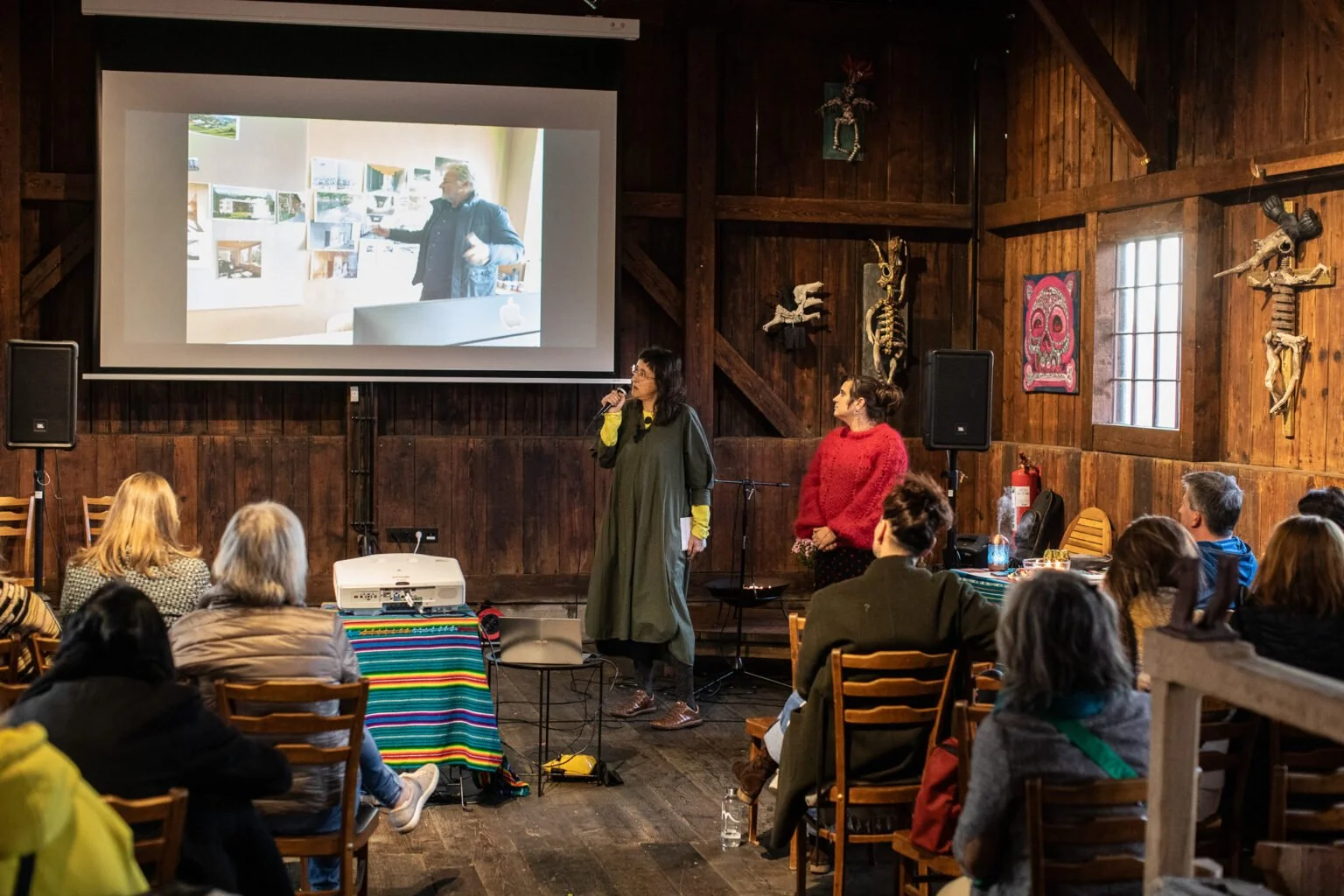
Questions and Answers About Forest Cemeteries from Funeral Guides
-
Funeral directors are establishing forest cemeteries at historically significant sites, where people can say goodbye to a deceased loved one or a beloved pet by interring or scattering their ashes. There are no headstones or crosses here—the ashes are placed at the roots of trees, and the spot is marked only by a discreet plaque on the trunk.
The cemetery’s unique atmosphere is created not only by the forest itself, but also by the surrounding landscape, such as the castle ruins and the historic viaduct. Nature itself provides the decoration—colorful leaves, mosses, ferns, wildflowers, frost, ice, and snow. These are accompanied by birdsong, the rustling of tall trees, and the murmur of a small stream. The forest’s changing appearance throughout the seasons reminds us of the natural cycle of life.
-
Some of us are drawn to nature itself. For others, history and our connection to it are important. Some are looking for an alternative to marble headstones and impersonal ceremonies. And perhaps we simply long for a beautiful place where birds sing and a stream murmurs. A place that is much more than just a cemetery—a place where we can go for walks and discover something new every time, just as we do in our memories of our loved one.
-
We establish cemeteries in locations that have historical and cultural significance, feature a notable landscape element (such as castle ruins), are part of a nature reserve, and, where possible, are near water (such as a small river or pond). We manage the forest so that it retains its natural character, while also protecting the notable landscape elements that make the cemetery so unique.
-
At our cemeteries, we bury the ashes of the deceased—both people and pets. The ashes can be placed at the roots of a tree in a designated grave site, scattered in a scattering meadow, or released into water. We can either pour the ashes into a pre-prepared hole or place them in a biodegradable urn. We do not bury bodies in our cemeteries—all of our cemeteries are located near a body of water where the groundwater level is high, making traditional burial impossible.
-
The grave site is yours for ten years, with the option of unlimited renewal for additional ten-year periods. The scattering site is yours forever—and at the same time, it belongs to everyone else whose ashes are scattered there.
-
The location where the deceased’s ashes are interred is marked by a name tag on a tree. We do not erect any headstones, crosses, or other grave markers.
The forest cemetery remains part of nature, and we strive to preserve the forest’s natural character. Nature itself tends to the natural beauty of the place—green ferns, mosses, and flowering plants; colorful autumn leaves; delicate frost; sparkling ice crystals; and a blanket of snow. The area comes alive with birdsong, the rustling of tree canopy, and the peaceful murmur of water. The forest transforms with each season, reminding us of the constant cycle of life.
-
Candles or any open flame may be lit in the cemetery only during ceremonies or events, and always under the direct visual supervision of participants (controlled burning). To protect the forest and prevent the risk of fire, it is not permitted to light candles or start fires outside of these specific situations.
-
Of course, you can leave flowers there, but please keep in mind that we will remove them later to preserve the forest’s natural character.
-
Yes, we have designated spots for new trees in our forest cemeteries, but the number of spots is limited, which is why the prices are higher (we set them on a case-by-case basis depending on the specific location). However, we’d be happy to help you arrange for a tree to be planted in another forest or in your community, which may even be completely free of charge.
-
A forest is a living ecosystem that is subject to natural cycles, weather, diseases, and unexpected events. If a tree dies, we’ll plant a new one in its place. If a tree is damaged (for example, during a storm), we’ll try to treat it so that it heals properly, and then prune it to rejuvenate it so that it sprouts new growth and becomes well-balanced and attractive. All of this is guaranteed in the contract.
Above all, however, we strive to prevent damage to the trees. We regularly treat and care for the trees. The trees are inspected by a dendrologist and a forest manager.
-
The bark beetle infests spruce trees (its scientific name is also the spruce bark beetle), and there are no mature spruce trees in our forests. Our forests are mixed, but most of the trees are deciduous and vary in age, typically ranging from 80 to 200 years. The bark beetle prefers monocultures and commercial forests. We select forests in such specific locations that no one has ever established a commercial monoculture forest there.
-
We establish forest cemeteries in secluded locations, shielded from prying eyes—thus offering a space for peace and quiet in nature. Our cemeteries are easily accessible by regular car, including, for example, cars with lower suspensions or vans, and parking is always within 100 meters of the cemetery; however, you should expect to walk along a forest trail and occasionally navigate minor obstacles, which are a natural part of walking in the woods. We recommend avoiding high heels or completely open-toed shoes (such as flip-flops).
We see a big difference between our forest cemeteries and the so-called “forests” being created in urban cemeteries (such as the Forest of Memories or the Valley of Memories). These places are located within the city, are often frequented by many people—even during ceremonies—and have restricted access. Furthermore, ashes are not interred there year-round. We speak from personal experience, as we also conduct ceremonies and inter ashes at these cemeteries—they are beautiful places, but they offer a different experience than interring ashes in a forest cemetery.
Access to our forests is not restricted—you can come here and reminisce at any time. The forest is not fenced in (under Czech law, forests may not be fenced in; only game preserves may be).
-
We always communicate with the local community, help one another, and look for ways to accommodate each other. We understand that not everyone likes having a cemetery in the woods, but we strive to do everything we can to minimize disruption and ensure that the cemetery enriches the surrounding area. Residents of nearby communities can take advantage of a “neighborhood rate” for burials in our woods, which is significantly lower.
It is very important to us to maintain good relations with the local community. Therefore, we ask visitors to avoid activities that might inconvenience local residents, such as reckless parking, noisy arrivals or departures, allowing pets to run free, or damaging the area around the entrance, information signs, or rest areas.
We manage our forests in a way that does not endanger the forests of neighboring landowners and protects them from pollution. We maintain forest records in accordance with the forest management plan, working in collaboration with a professional forest manager.
-
The price of a grave for 10 years is 10,000 CZK. The fee for using the scattering meadow to scatter ashes is 5,000 CZK. The fee for interring ashes, including site preparation, or for scattering them, is 9,000 CZK. We determine the price of a tree in the forest cemetery on a case-by-case basis.
A grave in a forest cemetery can be less expensive than one in a regular cemetery: you don’t have to purchase a headstone or grave markers (the typical price for a small urn grave is 20,000 to 50,000 CZK). You also don’t have to tend to or maintain the grave, because it is part of the forest, and we take care of it.
-
Of course, you may use an urn from any funeral home, whether from us or from abroad. However, for burial, you must use a biodegradable urn, which we will be happy to provide if needed and transfer the ashes into. We would also be happy to arrange the entire funeral for you.
-
The entire interment can be accompanied by a ceremony, which the funeral guides will be happy to help you prepare. The interment itself takes place as follows: the funeral guide prepares the grave in advance and decorates it with greenery. The mourners can then place the urn in the grave themselves or with the guide’s assistance. They may also scatter the ashes themselves using a small shovel (the director will offer a shovel to each person), or the director may do so. Finally, the director will offer each person a shovel with soil so that everyone can contribute to the deceased’s final resting place. And at the very end, the grave will be smoothed over, and mourners may place flowers, for example.
-
Yes, we at Pohřební průvodci can also store the urn for you and provide you with a photo album, a video, or even a livestream.
-
Of course, you can arrange the ceremony on your own or through any other funeral home or organization. We must always supervise the funeral, but we do our best to accommodate your wishes as much as possible. We typically organize funerals on weekends, or at sunrise or sunset.
-
We organize regular tours of forest cemeteries. Contact us and we'll let you know the dates of the next tours in the forest you're interested in.
-
Absolutely, and you have our full support. More than half of our clients make arrangements for their funeral and burial plot while they are still alive (or their loved ones make these arrangements for them). The burial plot contract, of course, remains valid even after the person’s death, and if we are burying the person named in the contract, there is no need to make any changes to the contract.
-
You’ll choose a specific forest and a specific spot, sign the contract, and then we’ll agree on a date for the interment and, if applicable, the ceremony.
All of this can be done in person during a forest tour, but also remotely online.
Sources:
[1] ČTVERÁK, Vladimír; LUTOVSKÝ, Michal; SLABINA, Miloslav, and SMEJTEK, Lubor. Encyclopedia of Fortified Settlements in Bohemia. Prague: Libri, 2003. ISBN 8072771736, https://www.digitalniknihovna.cz/mzk/uuid/uuid:52e2cf80-d982-11e5-ac59-005056825209
[2] Wikipedie, Železniční viadukt (Červené Pečky) [online], Wikipedie: Otevřená encyklopedie, c2024, Datum poslední revize 1. 10. 2024, 10:38 UTC, [citováno 29. 04. 2025] <https://cs.wikipedia.org/w/index.php?title=%C5%BDelezni%C4%8Dn%C3%AD_viadukt_(%C4%8Cerven%C3%A9_Pe%C4%8Dky)&oldid=24280600>
[3] HLUŠIČKOVÁ, Hana. Technical Monuments in Bohemia, Moravia, and Silesia. Vol. I, A–G. Prague: Libri, 2001. ISBN 807277042X. https://books.google.cz/books/about/Technick%C3%A9_pam%C3%A1tky_v_%C4%8Cech%C3%A1ch_na_Morav.html?id=eDkhAQAAIAAJ&redir_esc=y
[4] Interview with Jaromír Kupre, a native of Červené Pečky, a longtime train engineer, and author of the book *Local Railways: Kolín–Ledečko* (České dráhy, 2000) https://kolinsky.denik.cz/zpravy_region/predstavujeme-nominovane-na-rad-srdce-jaromir-kupr-20151219.html
[5] National Heritage Institute, Heritage Catalog, cultural monument reg. no. ÚSKP 103404—railroad bridge between the Červené Pečky and Ratboř stations: https://www.pamatkovykatalog.cz/zeleznicni-most-14325804
[6] Biografický slovník českých zemí, DVOŘÁK František 1896–1943 [online], , c2024, Datum poslední revize 16. 09. 2024, 15:19 UTC, [citováno 29. 04. 2025] <https://biography.hiu.cas.cz/index.php?title=DVO%C5%98%C3%81K_Franti%C5%A1ek_1896%E2%80%931943&oldid=414828>
[7] Wikipedie, František Dvořák (archeolog) [online], Wikipedie: Otevřená encyklopedie, c2024, Datum poslední revize 5. 08. 2024, 21:25 UTC, [citováno 5. 05. 2025] <https://cs.wikipedia.org/w/index.php?title=Franti%C5%A1ek_Dvo%C5%99%C3%A1k_(archeolog)&oldid=24146044>
[10] Wikipedie, Chlum (hrad, okres Kutná Hora) [online], Wikipedie: Otevřená encyklopedie, c2024, Datum poslední revize 10. 02. 2024, 11:42 UTC, [citováno 5. 05. 2025] <https://cs.wikipedia.org/w/index.php?title=Chlum_(hrad,_okres_Kutn%C3%A1_Hora)&oldid=23645935>
[11] National Heritage Institute, Heritage Catalog [accessed May 5, 2025], Record ID 146651: Chlum Castle, ruins. https://www.pamatkovykatalog.cz/hrad-chlum-zricenina-16390197
[12] DURDÍK, Tomáš, Vlastimil DURDÍK, and Marie ZÁLESKÁ. Encyclopedia of Czech Castles. Prague: Libri, 1996, c1995, p. [1a]. Entry “Chlum,” pp. 208–209. ISBN 80-85983-03-6. Also available at: https://www.digitalniknihovna.cz/cdk/uuid/uuid:3808d81b-ea20-4246-a2aa-a58824a622b3
[13] ČERMÁK, Kliment. “Monuments from the Castle near Chlum.” *Archaeological and Topographical Monuments*. 1902, vol. 20, no. 3–4, pp. 215–220; Table XXXII. Also available at: https://kramerius5.nkp.cz/uuid/uuid:0f189400-d880-11e4-97af-005056827e51
[14] KROBOVÁ, Adriana. Chlum: The Cradle of the Powerful Slavat Family [online]. Český rozhlas, October 21, 2012 [cited September 10, 2017]. (In the Footsteps of Ancient Castles and Fortresses of Central Bohemia). Embedded audio featuring quotes from August Sedláček and commentary by Tomáš Durdík: https://plus.rozhlas.cz/chlum-kolebka-mocneho-rodu-slavatu-6639053
[15] Vysočina Region Regulation No. 1/2017, on the establishment of the Velká and Malá Olšina Nature Reserve. [Cited October 4, 2017]. Available online: https://ftp.aspi.cz/opispdf/kraje/2017/kv02-17.pdf
[16] AOPK ČR, Small-Scale Specially Protected Areas, Velká and Malá Olšina Nature Reserves: https://drusop.nature.cz/ost/chrobjekty/zchru/index.php?SHOW_ONE=1&ID=719
[17] Wikipedie, Velká a Malá olšina [online], Wikipedie: Otevřená encyklopedie, c2025, Datum poslední revize 17. 03. 2025, 21:35 UTC, [citováno 5. 05. 2025] <https://cs.wikipedia.org/w/index.php?title=Velk%C3%A1_a_Mal%C3%A1_ol%C5%A1ina&oldid=24754911 >
[18] Kutnohorský Deník: In the forest near Velká and Malá Olšina in the Kutná Hora region, nature has created a paradise of snowdrops: https://kutnohorsky.denik.cz/zpravy_region/bledule-jarni-rezervace-velka-a-mala-olsina-chranbozsky-les-kutnohorsko-20240304.html
[20] NĚMEC, Jan. Memorable Trees in Bohemia, Moravia, and Silesia. Illustrated by Karel VÁVRA and Jan ZOUL. Prague: Olympia, 2003. ISBN 80-7033-781-8. Chapter “Central Bohemia,” p. 53.
[21] Wikipedie, Žižkův dub (Myšlín) [online], Wikipedie: Otevřená encyklopedie, c2023, Datum poslední revize 21. 10. 2023, 07:56 UTC, [citováno 5. 05. 2025] <https://cs.wikipedia.org/w/index.php?title=%C5%BDi%C5%BEk%C5%AFv_dub_(My%C5%A1l%C3%ADn)&oldid=23285935 >
[22] Wikipedie: Otevřená encyklopedie: Hlavačov (hrad, Lužná) [online]. c2024 [citováno 23. 10. 2025]. Dostupný z WWW: <https://cs.wikipedia.org/w/index.php?title=Hlava%C4%8Dov_(hrad,_Lu%C5%BEn%C3%A1)&oldid=24169077 >
[23] Wikipedie: Otevřená encyklopedie: Červená louka [online]. c2025 [citováno 23. 10. 2025]. Dostupný z WWW: <https://cs.wikipedia.org/w/index.php?title=%C4%8Cerven%C3%A1_louka&oldid=24792429 >
[24] Biolib: Profil místa: PR Červená louka [citováno 23. 10. 2025] Dostupný z WWW: <https://www.biolib.cz/cz/locality/id2467/ >
[25] KOČKA, Václav. History of the Rakovník Region. Rakovník: Agroscience, s.r.o., 2009. 724 pp. ISBN 978-80-85081-28-2.
[26] BEDNAŘÍK, Tomáš. Historical Monuments of the Rakovník Region. Rakovník: Raport, 1997. 178 pp. ISBN 80-902190-2-0.
The bibliography is currently being revised; we apologize for the varying citation styles—we will standardize them later.