
Our book is out! What's it about?
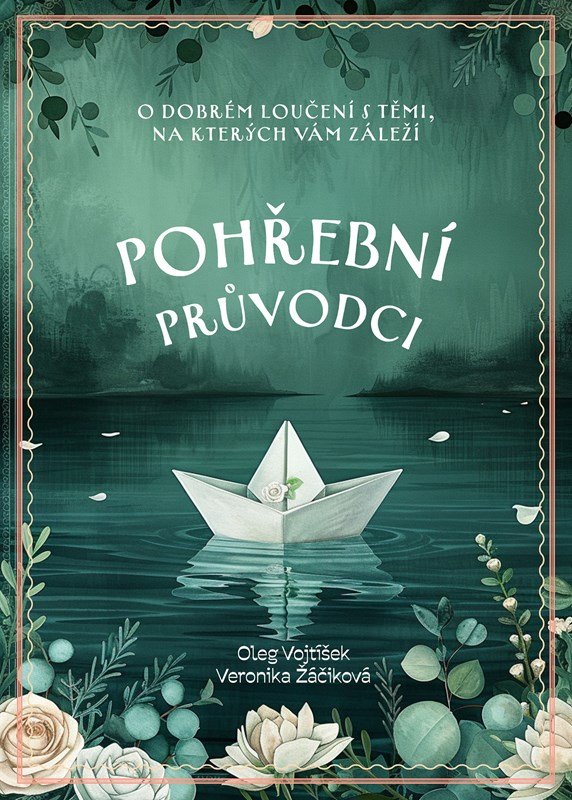
Did you know that a good funeral can protect your mental health?
Are you losing someone close to you? Or - purely theoretically - are you planning on passing away yourself one day? Have you ever attended a funeral that was cold, impersonal, and simply dreadful?
This book is not about caskets and wreaths. It is about why we need funerals, even when we think we don't. It is about stories from the underworld (literally) that will leave you wondering whether to cry or laugh.
What is fact and what is a myth?
Can a funeral be a celebration of life?
And what all can we do during it?
Read it. Because you will die too.
Is that all? No, it isn't! Here are the worksheets for the book.
We wrote the book Funeral Guides – On Saying Goodbye Well to Those You Care About as a practical handbook for anyone wanting to prepare for the death of a loved one. As you read through it, you can pause after each chapter and take a moment for quiet reflection. The book provides not only factual information on what is truly possible and what is not, but also invites you to think deeply in many places.
The questions in the worksheets help turn this "reflection" into concrete answers. You can fill them out together with someone who is dying, or simply prepare them as a "guide" for when death actually occurs. So, whether you are planning a funeral, thinking about one, or have just been thrown into the whirlwind of events right after a loss – these will help guide you through.
Last but not least: not every chapter has to apply to you. Likewise, you don't have to fill out all the worksheets. You might not have the answers to the questions yet. It is simply a tool to help you start thinking about these topics at all. So – are you brave enough?
And here are the worksheets:
How long after death should the funeral be?
Where should the funeral take place?
Farewell with a casket or an urn?
What is the point of a funeral anyway?
What to do with the ashes of the deceased?
FACTS – about funeral planning.
Children belong at funerals. But how do you talk to them about death?
Flowers at a funeral are more than just decoration
Is it mandatory to wear black to a funeral?
A farewell without a body – when the coffin and urn are missing, or symbols and items at a funeral
Forest and meadow burial grounds
A funeral without a funeral home: it is possible, but...
Aquamation and terramation: a dream of water and earth
What to do when it happens?
When a loved one passes away, no matter how unexpected (or expected) it was, it always hits us hard. We might not immediately know who to turn to or what to do. Therefore, it is good to think about it in advance. What will help us in those moments between the death and the start of funeral arrangements?
Do you remember any moment from your childhood, or from stories told by your parents or grandparents, connected to a death in the family? Did your family have a ritual, gesture, or custom that left a deep impression on you? If you can still ask your grandparents, now might be the right time – what did they do?
Perhaps you have a ritual of your own. What do you do in difficult times that makes you feel better? Maybe you like to go for walks or listen to music...?
Besides what needs to be done after a death, there are also many things you do not have to do. But perhaps you already know that you will pressure yourself into them: whether it is cleaning, calling the whole family, or even just answering phone calls. Write down at least 3 things here that you know you do not have to do immediately, and remind yourself of them whenever you feel like you “have to”:
Many people are afraid to touch a dead body. Imagine your loved one has passed away – what would you like to do for them as a final service? Would you like to touch them, stroke them, wash them, dress them? Do you find it important and healing, does it feel right to you?
If this is too complicated for you, try to think about what it would be like if you were the one who died. How would you want your loved ones to care for you?
Who is the main person you will call when the death occurs? It should be someone who will support you, someone you can call even at three in the morning knowing they will be there for you. It should not be someone who starts organizing everything for you – but rather someone who will listen to you, understand you, and perhaps come over to make you a cup of tea.
And now, once you have thought through both the practical and spiritual matters: write down, step by step, what you will do when your loved one passes away.
How long after death should the funeral be?
In the Czech Republic, a funeral usually takes place within 5 days of death. Most people want to “get it over with” as quickly as possible, but preparing a funeral can actually be very healing. However, the bereaved might be afraid of “prolonging the pain.” The departed is in no hurry – and neither do you have to be. Let's think about what timeline feels most comfortable for us.
When you imagine the funeral being in just 3 days, what do you feel in your body? And what do you feel if it were in two weeks? Or in half a year? There are no right answers; everyone is wired differently. We just want to explore within ourselves where our boundaries lie.
How are your relatives doing? Do you feel they will pressure you into something that is uncomfortable for you – for example, a funeral within three days (or the opposite)? What will you tell them if a situation arises where you have to deal with this?
Is there someone who likely couldn't attend if the funeral were on a Tuesday, but would definitely come if it were on a Saturday, for example? Alternatively, is there someone we should definitely wait longer for?
If you had a week to go through the belongings of the deceased, what would you want to bring to the funeral? Where is their photo album, which closet do they keep old records and CDs in, or will you be able to access their Spotify? And if you didn't have a week, but just three days: write down 3 things that are personal to the deceased and without which the funeral shouldn't happen. A hat in the coffin, a Beatles song, and blue flowers?
If the first funeral didn't help, would you hold a second one? When and where? How would it be different?
Now that you've thought about everything you want to do before the funeral, how much time do you think you'll need? Be realistic: factor in the initial shock, but also the workload and your own capacity (if you're looking for things in the deceased person's apartment, you might need to go there several times..).
Where should the funeral take place?
Sometimes it happens that we plan a lovely, personal ceremony with clients, but in the end, it gets cancelled because a grandparent shows up who wants the "classic" option. You know, a 20-minute ceremony hall slot and three songs. That's their idea of dignity, and we don't fundamentally mind it: but the younger generation often feels they'd want it differently, somewhere else, where they don't feel "squeezed" by a marble ceiling. Grandfather has the final say, though, so they give in to him. Yet maybe it would be enough if people had more time to show them that it can be done elsewhere and that it can be pleasant for everyone. And maybe in the end, they'll come up with their own idea.
Where would you like people to say goodbye to you? Is there a place that is personal to you? Even if it feels "indecent" or "unrealistic" – sometimes it's just about the "essence" of that place, whether it's the outdoors in nature, an indoor club, or a grand villa with a garden...
Let's think now if such a place existed for the deceased. Where do you picture them the most, where did they "belong"? If the funeral couldn't take place right there, could a place with a similar essence be found elsewhere?
If nothing has come to mind yet, or you're still hesitating, let's approach it from another angle: where do you want to go to remember them? Imagine two years have passed. You're having a terrible day and a huge need to talk to the deceased. Where will you automatically head? Do you need a classic grave for your peace of mind where you can bring flowers, or will it be a specific park bench, a forest path, or perhaps a bar?
Is there anyone among the guests who has limited mobility? Grandma with a cane, a cousin in a wheelchair? Would such a person be able to reach the place we choose? If not, what is the alternative? Another place with a similar essence? Two farewells, each for a different group of people? Participating remotely, perhaps online?
Is there anything you are afraid of during the funeral? That someone will argue, that there will be a heavy silence instead, that the children will be bored and screaming or terrified? Sometimes these worries overwhelm and stress us so much that it might be better to sacrifice the specific personal place and choose one where we can prevent these things. But it doesn't have to be any less beautiful – it could be sacred, for example, or on the other hand, very cozy and homey.
By now you probably have a few places in mind. One last exercise: close your eyes and try to feel the place of farewell. What does it smell like? Is it the scent of trees and soil, of floor polish, does it smell like food and coffee? What do you hear? If you took off your shoes, what are you standing on? Whatever you are picturing, is it "the one"? Is it the right place? Would you want to stand there hand in hand with the deceased?
Flames or earth?
At least on this fundamental question, many people are clear before they die: either they want to be buried in the ground, or they want to be cremated. But there are many follow-up questions that usually aren't so clear anymore. If you have time to talk about them with the deceased while they are still alive, that is by far the best option, because the question of cremation or burial is not only logistical, but mainly spiritual: it is the last thing a dying person should decide about their own body. Therefore, we recommend that, if possible, you try to put this chapter together with the dying person, or at least try to put yourself in their shoes.
The main question is what the dying person wishes for after their death. When they imagine a traditional burial in a coffin in the ground, do they feel a natural sense of peace, tradition, and a return to nature, or are they more terrified by a claustrophobic coffin and the thought of worms? And conversely, cremation: is it a cleansing, fast, and liberating process for them, or does fire terrify them and are they afraid of the myths surrounding cremation? If they are only afraid of myths, can you manage to clarify and dispel them for them (we cover this in depth on our social media, although some myths do contain a grain of truth – like the fact that the ashes really can contain a tiny, minuscule part of someone else, leftovers remaining after cremation in the cremulator), or is it simply a dealbreaker?
Do you already have a family grave where relatives have been laid to rest for generations? Answer completely honestly now (again, there is no right answer): is it a safe harbor where everyone eventually arrives, or a poisoned chalice where you scrub moss every All Souls' Day? Do you feel that the deceased will be "hugged" and welcomed by previous generations, or conversely, that they will be "isolated" from the current generation?
If you don't have a family grave, but would like one: do you have enough time to arrange it, the financial resources to set it up, and the time capacity to take care of it? Will you have space to change old flowers, plant and water live flowers, go light candles, visit it? Is it a comforting or, conversely, exhausting idea for you?
If you didn't have a chance to talk about this with the deceased, ask yourself: do you need a place to remember, or do you need a feeling?
If you answer a place to go, complain, place a candle – then a cemetery is a good option. If you also have a family grave or tomb, you can lay the deceased in a coffin, or just an urn if it's an urn grave. If you don't have a grave, it would be high time to start arranging one.
In case cemeteries terrify you and a photo, a walk in nature, and talking to the deceased "inside" yourself are enough for you to remember, then an urn and the subsequent freedom in handling it is probably the right choice.
So – is the final resting place at least a little clearer to you now?
Farewell with a casket or an urn?
Even before you lay the deceased to rest for eternity, there is the farewell. And here, it is more up to you than the dying person to decide what you want to say goodbye to – whether still with the body, or only with the ashes (if you choose cremation). First, we will explore your relationship to the coffin and then to the urn.
Some people are terrified by a coffin and the idea of a dead body. How about you? If you had a closed coffin with a loved one in front of you, what would run through your head? Would you have a compulsive need to open it and see them one last time, touch them, check that everything is as it should be, or would that idea paralyze you and would you rather remember them "the way they were"?
Imagine how other guests would react if you opened the coffin and left it open. Would they be terrified? Or would they come to say goodbye? Are you able to handle children who are curious and want to see, in a way that won't traumatize them? Can you answer their questions – perhaps sometimes inappropriate for us – without scolding them? Or would you prefer, as a compromise, to open the coffin only before the ceremony and make saying goodbye to the body voluntary?
Perhaps it's not the coffin that terrifies you, but simply the sight of a dead body. So when you imagine the coffin closed, does it bring you greater peace?
"What would you "gift" the deceased for their journey if you were saying goodbye with a coffin? If you could write or draw something on it with a marker before they disappear forever, what kind of message would it be? Would it be a single word, a favorite quote, or maybe just your handprint? Would you gift the deceased something right into the coffin, like their favorite items, photos, or stuffed animals and keychains?
The idea of someone hammering together their own coffin or having it made to their own design might sound inappropriate. But if you could: what would the coffin for your loved one look like?
Final logistical questions regarding the coffin: will you manage to plan the ceremony the way you want within seven days? And the place you chose – will it be feasible to get the coffin there, will they accept it?
Now for the urn: what do ashes and the cremation process represent to you? Is it a cleansing ritual? What is your relationship with the remains, the ashes afterwards – are they still "them"?
Ceremonies with an urn don't have those "big" moments: like lowering the coffin into the grave, carrying the coffin out, or the final closing of the lid. On the other hand, such ceremonies tend to be intimate and can be very spontaneous and even joyful. What exactly do we want to achieve, what mood should accompany the farewell?
Are there any disagreements within the family about what the farewell ceremony should look like? Would we be okay with dividing the ashes, or perhaps lending the urn to a part of the family for their own private farewell?
What is the point of a funeral anyway?
If you bought our book and are filling out this worksheet, you have probably already figured this out for yourself. However, you might have family members who feel differently. This section is therefore meant for both you and them, to help sort out your priorities and answer whether you actually need a farewell ceremony for the departed, and why.
What will help you (and those around you) realize that your loved one is truly gone if you do not hold a funeral? Perhaps you were not sitting by their side in the hospital, or if they passed away suddenly, you might find many of their friends reaching out to you. How will you let them know?
If your loved one told you they did not want any funeral at all – how would that feel to you? When you imagine that your loved one will one day leave and that is the end of it, how does that make you feel? Is it more important to you to fulfill their "last wish," or do you have a strong need to bring a sense of closure?
Imagine you have the chance to write one last, completely honest letter that will then vanish forever with the casket or the urn. No one else will read it. Is there something you need to get off your chest and want the departed to know? An apology, an expression of love, or perhaps just anger?
Do you feel like you "could have done more"? If you could do just one physical, personal thing for the departed, what would it be? Perhaps if you could knit a wreath for them, build a wooden bench with their name on it, or give away their book collection to those who would appreciate it?
Are there old family grievances that make you afraid to arrange a funeral? Do you think the death of a family member could help overcome them, and that a funeral could bring you together, even if just for a little while? Or, if the departed was the source of those grievances, would you be able to forgive them?
Do you know of any final wishes that the departed had? Are you able to fulfill them?
Which relationships around you are likely to change the most after your loved one's passing? What will you do about it? Will you try to maintain those relationships, cut ties, or how will you navigate this new reality between you and those people?
What to do with the ashes of the deceased?
If you have chosen a traditional burial in the ground, this section does not apply to you. However, since the Czech Republic is a country of cremation, with over 80% of funerals being cremations, there is a very good chance that Grandma is currently "watching over you" from a shelf. The rule that urns can only be kept in a cemetery is long gone, so let's take a moment to think about the resting place that feels most comforting to you.
Has the time come to let go of the departed? Many people keep the urn at home on a shelf, in the garage, or in a closet for years. While this can help in the early stages, over time it can cause complications. What stage are you in right now? Can you imagine "letting go" of the departed?
A traditional grave or columbarium offers immense certainty – it is a fixed point, an anchor we can always visit. Scattering ashes in nature, on the other hand, tells a different story: that person is no longer in one specific location, but is instead all around you. What brings more peace to your soul? Do you need exact coordinates for your grief, or do you feel safer knowing you can talk to them in any forest or by any river?
Try to imagine your loved one as one of the elements. Which element would they be closest to? Does their soul need to merge with flowing water that washes away all pain and carries it out to sea? Or should they be scattered on the wind high up in the mountains to gain absolute freedom? Or do they instead need to sink their roots deep into the earth, at the foot of a tree in a quiet forest?
Dividing ashes is a beautiful symbol for some: love and memories are not tied to a single place and can exist in multiple realities at once. For others, it is an unacceptable idea of "fragmenting" a person – though it also depends on the amount; some couldn't bear a fifty-fifty split, but can manage a small portion, perhaps to be set into a piece of jewelry. What does your body feel when you think about this?
Sometimes, where we place the ashes is our very last gift. Perhaps it is fulfilling a dream they didn't manage to realize during their lifetime. Is there a place, even thousands of kilometers away abroad, that the departed used to talk about all their life? Does it make sense to take them on their final journey right there, even if it means saying goodbye to them there on your own and not having them "just around the corner"?
Scattering ashes is a deeply definitive step. It is the purest, most profound act of "letting you go, you are free." Close your eyes and imagine the moment when the ashes slip through your fingers, or are slowly carried away by the current. Are you ready for this now that you've thought about where? Does it bring you relief and liberation, or does the absolute loss of control over what happens next terrify you?
TRUTH – about preparing a funeral.
In the chapter on TRUTH, we provide very clear guiding questions for choosing a funeral service and preparing the ceremony. Let's try to truly answer them in these exercises.
If you already have or are still choosing a funeral service, write down the TRUTH principles here and consider whether the funeral service you selected meets them.
T
R
U
T
H
U
If the person in question could look at the planned ceremony, would they recognize themselves in it? Does it match who they truly were? Or do you feel in your heart that you are simply putting on a polite performance for distant relatives so they won't talk behind your back? What single completely authentic element should be included?
If there is still time, it is also helpful to think about who in the family will take care of what. Who is the practical person that will keep a clear head and handle the paperwork, and who is the one you can cry with over old photos at midnight? And let's be honest – who should you probably keep away from the decision-making process altogether to protect your own nerves? Above all, who should have a say in what happens to the body? Do you agree? If not, how will you resolve it? And who should be involved in shaping the farewell? How can they help you (or you them)?
What to do at a funeral?
"Traditionally," ceremonial halls involve listening to a few songs and reading a eulogy. But perhaps you feel that you want to honor the memory of the departed a little differently, more personally, and tailored to both you and them. Maybe you still have something to say, to give, or to show them. Ultimately, that is what a funeral is for – to resolve whatever remains unresolved. So let's think about what will truly help you during the funeral.
After the death of a loved one, people often describe feeling paralyzed, in shock, as if they cannot move. What kind of activity would help you get through this initial state? Do you need to grip something tightly, tear something up, burn it, stroke the wood of the coffin, or sink your fingers into the earth? What kind of activity brings a sense of relief when you imagine it?
Unfortunately, going through the belongings left behind is unavoidable. Many people dread this: it often means entire apartments full of things that need sorting through, distributing, selling, or throwing away. This task is not only physically exhausting, but primarily emotionally draining. Yet, try to approach it as part of the healing process: what are the main items that symbolize the departed for you, the ones you definitely won't throw away – and might bring to the funeral? Did they collect anything, and can you gather those items to give out at the funeral?
Music is a very powerful trigger for memories. At the same time, it puts us in a certain mood. Try to make a list right now of at least 5 songs you would like played at the ceremony. They can be songs that help you remember the departed, songs they used to listen to on their own, or best of all, songs you listened to together. They can be sad, dramatic, or even cheerful.
Will the funeral be attended by friends of the departed? Or family members you haven't seen in a long time? They may have a lot to say, carrying many stories in their minds that they can share. Do you want to give them the chance to speak out loud? Often, it helps to coordinate with the first "early bird" who will start and give the others the courage to join in. Can you think of someone like that?
Photos are another important reminder of the departed and, above all, of your life with them. Do you have them stored somewhere, and do you know where to look? Will you display them there? Or perhaps put together a photo slideshow? Let's also not forget that nowadays everyone has hundreds of photos – perhaps some you have never seen before, and unless you ask people to share them for the funeral display, you might never see them. Who will you ask to select some and send them to you?
When you picture the departed, what activity suits them best? Were they more of an artist, an athlete, or primarily a homebody? Can you narrow this down to a single activity that you can use to remember the departed? For instance, dancing, painting the coffin or urn, or planting a tree?
Do you feel like you still have things to say to the departed? Do you need to write them down and somehow "send" them? Through which element would you prefer to send them – so that they are carried by the smoke of a fire, balloons in the wind, or paper boats on the water?
Having covered touch, hearing, and sight, we are left with smell and taste: is there any food or drink that is typical of the departed? Mint tea, Arabic coffee, a hearty beef stew with cream sauce (svíčková), or grandma's sweet buns that always turned out perfectly following her recipe?
Ideally, we want to "engage" all five senses at funerals because we experience life through them – and through them, we perceive the departed, allowing us to celebrate their life at the funeral. We also want the funeral to help us on the other side: with our feelings and problems. Try making a list of things that make sense to do at the funeral, both for the departed and for you. Then choose the 2 or 3 most important ones that you will actually carry out.
How to write a eulogy?
Many of us have grown accustomed to the idea that a eulogy is simply a biography. Corporate managers will have to forgive me, but I have never experienced a more awkward corporate eulogy than one where the company didn't forget to mention its sponsors and the name of the new director, who proudly and bravely "takes the baton" to lead the company to even higher profits. That completely strips away the human element: people make mistakes and are not perfect. It is good and healing to admit that someone wasn't perfect, that they didn't always do the right thing. Yet we loved them anyway: and that is what a good eulogy should be about. The story of a human life. So how do you describe it?
At the very beginning, the most important question is who will write and read the eulogy. Will you leave it to the funeral home? To a priest? Who all should contribute – who knows the stories, the personality, the history of that person? If you want to handle the whole thing on your own, will you be up to it?
Now moving on to crafting the content: yes, we mentioned that a standard biography doesn't quite fit here. But it is still worth considering whether there will be anyone at the funeral for whom that biography might be enriching. Friends or colleagues for whom this information might be new. Will anyone like that be there?
If you had to describe the person to someone who had never met them at all, using three stories (rather than character traits!), which ones would they be?
What always reminds you of the departed? Did they have a motto, a typical joke, a catchphrase, a hobby? Was their life tied to a specific place or person?
What made the departed human? Where did they make mistakes, what could they have improved, what annoyed you about them? Is there anything you truly won't miss? Are there any funny stories associated with these flaws that highlight them in an endearing way?
Is there something the family has kept quiet about for a long time (an addiction, a complicated personality, old grievances)? Would it bring you relief if someone finally spoke about it clearly yet kindly? The funeral might be the only opportunity to talk about it and use it to set things right, perhaps bringing together estranged parts of the family.
If the passing of the departed was tragic, what do you yourself need to hear? What would help you, bring you relief, or prepare you (in the sense that you perhaps didn't expect how hard it would be to get behind the wheel again...)?
What is the most important thing the departed taught you without even realizing it? What are you taking away from their life, what legacy did they leave behind? And it doesn't have to be just "the good stuff" – there are certainly things you definitely do not want to repeat after them.
Once the eulogy is over, what should people take away in their hearts? A feeling of peace, reconciliation, or the urge to have a drink in honor of the departed and share a laugh?
Try writing down one paragraph of the eulogy here just for practice. Whichever one you like – the introduction, a specific story, or the conclusion. What is it like to describe the departed (and if you haven't experienced a loss, try imagining it for yourself)? Can you bring yourself to use the words "died" and "death"?
Finally, write down 5 main things that you believe must be mentioned in the eulogy. Whether it's a story, a trait, an activity, a catchphrase, a person, or a thank you. What truly is the "essence" of the departed person's life?
Children belong at funerals. But how do you talk to them about death?
On our social media, the presence of children at a funeral always sparks a major debate. Some argue that it traumatizes them (often stemming from their own traumatic experience), while others maintain that death is a natural part of life and children see it all around them all the time (think of Disney movies). Sooner or later, children need to have death explained to them. But how to go about it?
What is your very first childhood memory of death? Was it the death of a pet, a relative, or a scene in a movie? How did adults talk to you back then? Did you feel they explained it well enough and gave you enough attention? If you were left with a traumatic experience from it, what do you think could have changed it (and what can you do differently so you don't do the same to your own child)?
What are you most afraid of when you imagine your child at a funeral? Are you worried they won't know how to behave, that they will take it badly, or that they will ask questions you feel uncomfortable answering? Can this be avoided?
Try to imagine attending a funeral with your child. The child asks: "Why did [the deceased] die? Will you die too? Will I die too?" Think about how you would answer and try practicing explaining the difference between "alive" and "dead" without using metaphors.
What euphemisms (e.g., "fell asleep," "left us," "taken by the angels") do you tend to use? Break them down literally – what fears might arise from them? For example, a fear of falling asleep, or the feeling that grandpa didn't love you when he left you...
Have you noticed any moments in nature or fairy tales recently that could be used to talk about dying? A withered flower, a dead bug on the path, autumn leaves... how would you talk about these to a child in relation to death?
If a child decides to attend a funeral, what role could they have to feel useful? Choose something suited to their age and abilities.
Flowers at a funeral are more than just decoration
Some people know right away how they feel about flowers, while for others they are a completely minor part of the farewell. However, bringing gifts to the departed is an age-old tradition, and flowers are the "smallest" thing we can offer them on their journey. For instance, irises are said to guide the soul of the deceased until they reach the other shore; marigolds, shining like the sun, are said to lead the soul back to the family so it can watch over and protect them. Whether you believe the legends about flowers or not, one thing cannot be denied: looking at them makes you feel at least a little bit better.
Did the deceased have a favorite flower or at least a favorite color? Grandma probably grew something, and grandpa maybe collected something. Can any of that be incorporated into the floral arrangement?
If you could place only one flower by the coffin or urn, what should it say? Perhaps not everyone speaks the language of flowers, but we all surely know that roses mean love and lilies mean innocence. Colors are similar – blue tends to represent peace and water, while orange represents joy and sunshine. Try describing here what you would like to express with a flower and look it up online accordingly.
Sometimes it's easier to think about what we don't want. Write down your floral "don'ts" here.
What about flowers from guests? Do you even want them? If not, is there a charity or other cause where guests could send money if they feel they "must" bring something or contribute in some way? Did the deceased contribute anywhere, for example?
Would you like to do something symbolic with flowers during the ceremony? Weave a wreath together, have the children make a flower out of Lego, send them down a river, or arrange them in a specific way?
What happens to the flowers after the ceremony? We also provide floral portraits – perhaps that's a way to keep a memory of them if the flower was truly special to you?
Now that you've thought about flowers, try putting it all together: has a more specific idea formed? Try writing down a brief for an (imaginary) florist (or a friend, or whoever you think should arrange the flowers).
Is it mandatory to wear black to a funeral?
In the past, people went to funerals in the very best they had. It wasn't unusual for someone to be buried in their wedding dress – because it was the most formal and special outfit they owned. Today we are moving away from that level of formality, yet funeral attire should still signify that this is something special. It is not and should not be just another ordinary day. But how do we achieve that if we don't want just a sea of black?
Think about how the deceased dressed. Were they old-fashioned or, on the contrary, extravagant? Did they wear a specific accessory or color? If you had to choose one element, what would it be?
Clothing serves as our armor; it helps us "feel" a certain way and belong to a certain "team" (you would probably feel very out of place wearing a suit at a rock concert). How do you want to feel at the funeral? Does formality and solemnity help because it shows respect and honor? Or would you rather wear casual floral dresses and sandals to "rise above" the heavy situation?
Often people don't know if the clothes they chose are appropriate for a funeral. So picture this: imagine the place you chose and yourself in that outfit, standing over the coffin or urn. Are you ashamed of what you're wearing? Now imagine everyone standing there dressed like that. What would the deceased say to you about it?
If you've come up with a way to honor the memory of the deceased through clothing (a color, an accessory, or even an overall style), try writing down how you will let the guests know.
A farewell without a body – when the coffin and urn are missing, or symbols and items at a funeral
The absence of the deceased's body at the ceremony doesn't mean they can't be remembered in another way. Some people even explicitly wish for this: they are afraid that the urn or coffin will be too upsetting, and they want to celebrate the life of the deceased rather than their death. Why not – so let's think about how to represent them there in a different way.
Close your eyes and picture the space where the farewell is taking place. There is no coffin, no urn. Just silence and you. Where does your attention drift in that space? What do you see there instead of a coffin?
Choose one object belonging to the deceased. Imagine that this object can speak and tell the story of its owner. What would it tell us that the rest of us don't know?
How do your feelings change when you look at an object that the person loved? Do you feel a greater closeness, or on the contrary, a greater emptiness?
A nice exercise is to imagine you know how to brew potions. What three ingredients (anything, objects, or even just scents) would you throw into the cauldron to summon the deceased?
Perhaps you would like the bereaved to help you build such an altar yourselves. For example, a photo wall where people can write messages, or a table with sweets where everyone brings something. What would best represent them?
Imagine "imprinting" all your feelings toward the deceased into a single object. Would it be love soft as a teddy bear, or hard as a stone? Do you perhaps feel a guilt that "stings like a knife"? How do you feel when you imagine bringing such an object to the funeral and leaving it there along with the heavy feelings that may accompany it?
No matter what is part of the farewell ceremony, what would you like to do with it afterward? Do you feel like keeping it close by, caring for it, or conversely, do you want it to be “somewhere else” – could it be donated somewhere, “returned” to nature, or perhaps destroyed?
A funeral in motion
Anyone who has ever experienced anxiety or depression knows very well that the hardest part is taking that first step – getting moving. The subsequent steps will follow on their own, but the decision to get out of bed and set out on the journey is preceded by constantly plunging deeper and deeper into our inner selves. That is why it is important at that moment to return to the body and focus only on what is automatic for us, namely breathing and movement. Whatever moves is alive and constantly pushes forward. How can this dimension be brought to a funeral as well?
Try to imagine the following situation: you have just learned that someone close to you has passed away (if someone close to you has already passed away, try to recall what that did to your body). Try to map out where you feel heaviness in the image. What color is it, what shape does it have? Is it a blue knot in your abdomen, a red gunshot wound in your chest, or black slime on your chest?
And then try the opposite: which parts of your own body do you perceive as “safe,” the ones you can “lean on”? Assign a color, location, and shape to them as well.
Now, once you have a bodily “map” of your grief (as well as safety), do you have any ideas on how you can help the parts affected by grief? What muscles around them can you get moving so that the knot untangles, the wound heals, or the slime washes away? Alternatively, are there positions in which you feel good during times of distress (for example, curled up in a ball)?
If you were to walk the “final route” with the deceased, where would it lead? What would you do along the way? Would it be a slow or fast movement? Alternatively, what activity would be your final one?
How can you “work through” your grief? Do you resonate with any of the ideas mentioned in the book?
If we have a funeral in motion, it is good to conclude the movement with something: walking up a hill, throwing soil into the grave, bowing. The curtain closes, the lights dim, the performance is over. Physically, you will feel how (at least a small) part of the grief washes away along with adrenaline, endorphins, and other hormones associated with physical activity. What final symbolic gesture should end the funeral?
A funeral in motion can take various forms: now try to write down which one would personally help you the most to get rid of the heaviness you identified in the first exercise. What would it all look like? For example: you might untangle the knot by having the funeral outside, where you can take a deep breath and move freely in all directions. You start healing the wound when your heart races a little and reminds you that you are still alive – perhaps during a procession. The slime, on the other hand, needs to be washed away: maybe it would help you to work up a good sweat doing something, or make something for the funeral with your own hands?
A funeral embraced by nature
You still occasionally encounter the belief that the ashes of the deceased may only be placed in a cemetery and that the coffin may only be in a ceremonial hall or church before being placed in a grave. That has not been true for a long time. This opens up a whole range of possibilities where we can say goodbye to the deceased and where we can go to remember them.
You won't manage this exercise until you go outside, but: try going into nature. Ideally a bit outside the city, but a city park is completely enough. If you have the courage (and the weather permits), try taking off your shoes in the grass. Close your eyes – perceive the gust of wind, the sun on your skin (or conversely, biting frost), the sounds around you. Imagine that right here, in this place, you are saying goodbye. Under these clouds, among these trees, feel free to even imagine that the deceased would be buried in this soil too. How does it all make you feel?
Which element is closest to your grief? How can you work with it at a funeral? Earth, for example, gives us flowers, stones, pinecones, something can be created from them to celebrate the life of the deceased. We can send something down the river so it washes it away from us. Fire burns our words that we might be afraid of, and into the wind, we can whisper what was previously unsaid..
How much do you dread the scenario that the weather won't be the best that day? Does the idea of it raining or a heavy snowstorm terrify you? Would some plan B calm you down – umbrellas, blankets, hot tea, or not even that?
Not every outdoor place is suitable for a funeral: if you don't have any specific one yet, try looking at a map and scouting out some nearby places (memorials, forests, or viewpoints are quite popular). Can you get there relatively easily? Is there enough space, and is it not too crowded?
So if you were to organize a funeral in nature, where would it be? How will you incorporate nature into the ceremony?
Funerals and ecology
Ecology is not just a topic for the younger generation. It's just that older people call it something else – “modesty.” When a grandmother wants to die “modestly,” she really can mean it ecologically (a paper coffin, without lavish flowers, without a cellophane wreath on the grave). Modern ecology does not always fully intersect with the idea of modesty (meaning the lowest possible prices), but there are ways to satisfy everyone with a little compromise: the laws, the modest grandmother, and the eco-conscious granddaughter.
Do you feel the pressure that a funeral has to be “eco” in order to be right? Where does this feeling come from in you, and how much does it correspond to the values of the person you are saying goodbye to? Isn't it just another whip to beat yourself up with guilt?
As we write in the book, the issue of what is truly eco-friendly, what is “eco on the surface,” and moreover what is legal and permissible for us is intricate. Nonetheless, it is always best to do something yourself and make sure for yourself that there is no plastic in it and that it didn't travel halfway across the planet. Is there anything (a coffin, flowers, clothing) that you can make yourself from materials that are truly ecological?
If your mother wished for a specific flower at her funeral that has to be imported from afar, would you allow yourself to buy it without feeling guilty? Can you apply this mindset to everything the deceased might have wished for? And what about the wishes of the survivors – what if part of the family doesn't want the most ecological solution? Can you come to terms with that, and communicate about it? How?
A completely ecological funeral in our landscape is not entirely possible (just like our whole life, a person can only try to minimize their own footprint): write down 3 things here now that you know are not the most ecological, and opposite them 3 things with which you will try to balance them (e.g., a varnished imported coffin – flowers from the garden).
Forest and meadow burial grounds
It is quite surprising that such a “pro-forest” culture like the Czechs has so few forest cemeteries. We believe that people simply and truly do not know about them – and yet we have so many great options ranging from conservative ones (a classic cemetery in the woods) to the wildest ones (natural burial grounds).
If we choose a forest or meadow cemetery, it is necessary to consider the needs of all survivors, especially the older ones (but let's not be afraid to divide the ashes, for instance, if it doesn't go against our grain). In the book, we offer four options ranging from the safest to the most natural. How far along this scale does your need for comfort reach?
Do you need to have the name of the deceased permanently written somewhere, on a tag or something? Or is it enough for you to know that “this is that oak tree”? It is also good to realize that without precise documentation of the scattering/burial site, the memorial place can disappear along with you, or at most your children – is that comforting? Alternatively, how will you handle it if there is no tag?
Are you at peace with the fact that the place will change over time? And if not the place itself, then many things around it (trees will grow, maybe some will be cut down, etc.)?
In accordance with everything you have just thought about, look for options. You can check our website for a list of natural burial sites. Which ones do you resonate with the most?
A funeral without a funeral home: it is possible, but...
Arranging a funeral today without a funeral home is a bit like going into battle. At the same time, it is the highest tribute you can pay to the deceased, and it is usually only possible for those who know the law well and know exactly what to do and how to do it. We can help you a bit, but essentially it will be mostly up to you (which is probably what you want if you are choosing this path). That is why these questions are only meant as a guide to help you do your own research beforehand. A funeral without a funeral service is definitely not something you want to figure out on the fly.
You might not need to dive straight into the deep end and arrange everything on your own: perhaps you will be fine just handling a few specific tasks yourself. Try going through the list and checking off what you actually want to do yourself.
[ ] I want to dress the deceased myself.
[ ] I want to prepare the deceased myself (makeup, hair, washing, etc.).
[ ] I want to keep the body of the deceased at home until the funeral.
[ ] I want to make the coffin.
[ ] I want to dig the grave.
[ ] I want to arrange the entire farewell ceremony myself.
[ ] I want to carry the coffin myself (with the help of family / friends).
[ ] I want to arrange the flowers myself.
[ ] I want to prepare and deliver the eulogy myself.
First comes handling the body: do you know what to do, what your rights are, what the physiological processes are, and are you prepared for them? How will you care for the body? If a hospital is involved, you will need to deal with them as well.
Documentation: what needs to be reported, where, and who is responsible for submitting it?
Perhaps you also want to hold your own farewell or ceremony. Whether it involves an urn or a coffin, it is a good idea to review our previous chapters and carefully think through how you will handle everything. Write down only your final conclusions here:
If you want a burial, you need a coffin – where will you get it? How will you transport the deceased (keeping the laws in mind)? Do you already have a grave, and how will you arrange the digging with the cemetery administration? How is a coffin actually placed into a grave?
If you choose cremation, do you know which crematorium you can contact? Is it even possible? Just like with a burial, you will need a coffin and will have to transport the body to the crematorium – how will you do that?
A funeral without a funeral service is far from easy. It is therefore wise to think about who can help you (physically, but also mentally, or by offering advice and support). Make a list of people and places (ideally with contact info) that you can turn to if you feel overwhelmed or have questions.
Aquamation and terramation: a dream of water and earth
Whenever we talk publicly about any of these methods, a passionate debate always starts between supporters and opponents. The reality, however, is that today in the Czech Republic these methods are more of a "statement" than actual environmental savings. They are not legal here yet (we are writing this book at the beginning of 2026). That doesn't mean a body cannot be transported to a place where it is legal. But that is the catch – the transportation wipes out any green savings you gained by doing it. For these alternative burial methods to truly live up to their claims, we still have to wait for local companies to emerge. And they won't grow until it is legal here. However, if you are young and living a relatively safe life, it might make sense to think about this for the future. Would you like to dissolve in water or become compost?
Let's think about future burial options.
Add your thoughts for each option:
My initial emotion / What appeals to me / What frightens me
Cremation (Fire)
Burial (Traditional Earth)
Aquamation (Water)
Terramation (Earth)
Can you accept the fact that these methods might not be available to you or your loved ones in time? Which "friendly compromise" among those that are legal here (such as a natural burial ground) is closest to your vision?
Is the idea of a "loved one turning into compost" acceptable to you, or does it cross all boundaries?
What would you do with the fertile soil created from the body of your loved one?
In the case of aquamation, what remains is "clean water" and bones, which are handled the same way as bones from cremation. With cremation, smoke is released into the atmosphere (and we all breathe it), while with aquamation, it returns to the natural water cycle through purification plants (so it is quite possible that someone might drink water that once passed through your loved one). Is this acceptable to you?
Where to get the money for a funeral?
Money is often a taboo subject when it comes to death, but in reality, it’s one of the biggest sources of stress. Where can you realistically save money without feeling guilty? Where might there be money you don’t know about?
The first question is a bit tricky, but: do you really need to cut costs on the funeral? Are you truly in such a tight spot that you might even consider asking guests to contribute to the funeral?
Do you know if the deceased had life insurance, if their employer offers bereavement support, or if you are eligible for a state grant, final paycheck, or pension (remember widow's or orphan's pensions too)?
Where is your limit for "DIY"? Which task would financially please you (knowing you saved money), but completely drain you emotionally?
Which part of the funeral can you "pay for" with love by arranging it yourself – making something, baking, or transporting something?
How would you feel if, instead of floral tributes, you asked guests to contribute to the costs? Try formulating a message for your guests here to let them know.
Imagine completely canceling the funeral to save money (and yes, endlessly postponing it indefinitely is practically canceling it). How does that make you feel (now, but also imagine a year or two from now)?
Let's summarize everything:
Something I will not cut costs on:
Something I will arrange more cheaply or myself
Death as an opportunity.
As we write in our book, "A funeral is not just a period at the end of a deceased person's life. For those left behind, it is often a colon: what comes next?" So then... what follows in your life after saying goodbye to your loved one?
Which "wave" of grief for the deceased is pulsing through you the most right now?
Imagine consciously passing this trait or skill on to someone else, or spreading it further. Is that possible? And how? Or conversely, if you don't want to pass it on: how will you prevent it from spilling over from you, perhaps so future generations don't have to deal with the same negative things you carry from the deceased?
How has the death of your loved one changed you? What single thing will you do differently starting tomorrow as a tribute to this farewell?
What would you change in your own life if you knew you had only one year left to live?
Is there anything you haven't yet forgiven the deceased (or yourself in relation to them)? You can confide in someone who will understand and perhaps offer you closure and absolution.
Is there someone alive in the family whom you should call and forgive beforehand, before it's too late? Or generally, are there any topics in the family (or among friends) that remain unopened for some trivial reason, and perhaps it's time?
Write a single word or short sentence that you want to remember whenever sadness overcomes you. Something that will give you the strength to keep living courageously and with the awareness that we are not here forever.