
Death can be calm and peaceful, says funeral guide. I talked about death with my grandmother
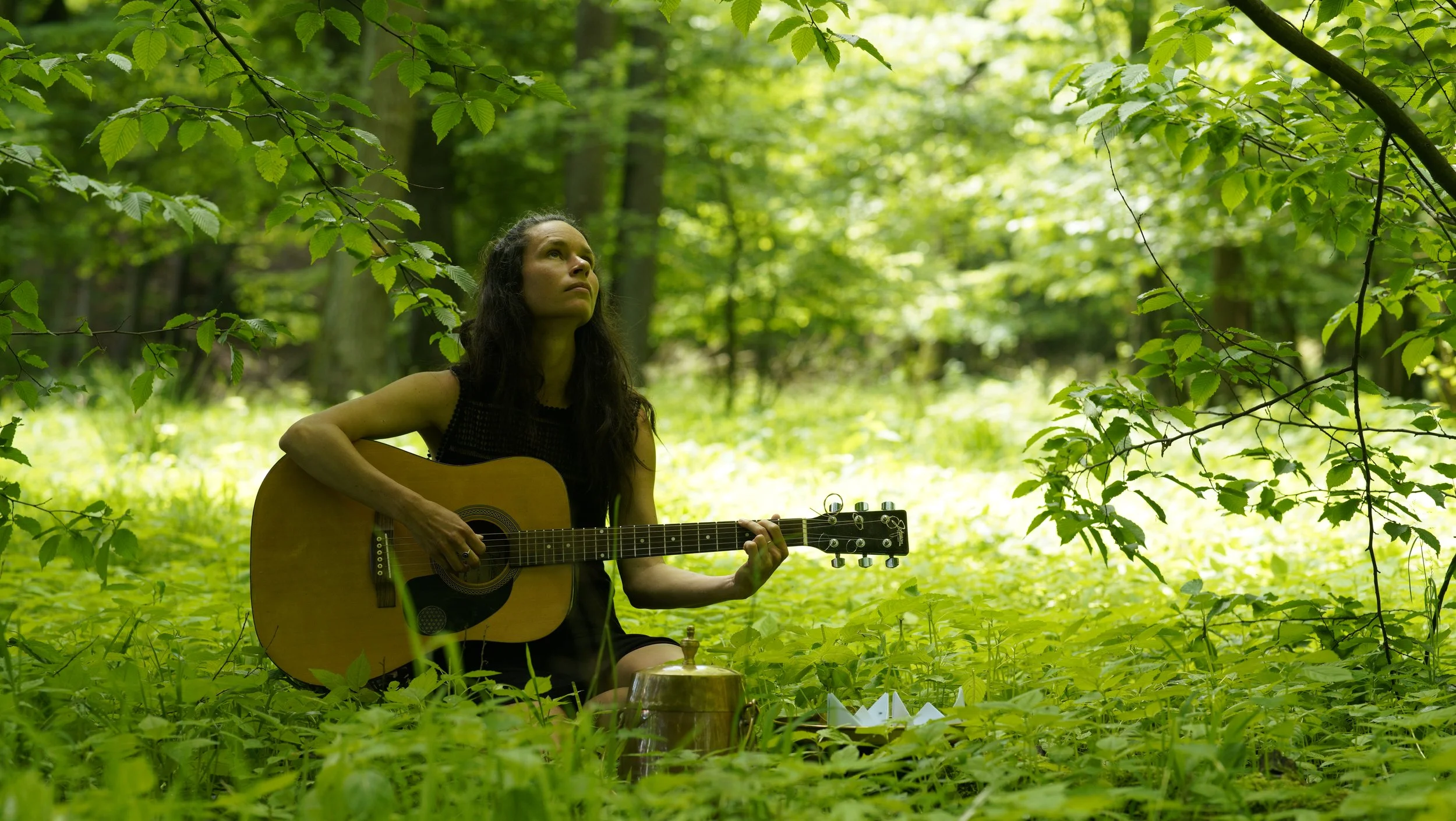
Funeral guide Renata at the forest cemetery
Death can be calm and peaceful, says funeral guide. I talked about death with my grandmother
"A terminally ill man in his fifties reached out to us, and together with him and his family, we are preparing for the end of his life. I am in contact with him, writing a speech that he approves. It is an amazing story. When I visited them, I was fascinated by the humility and acceptance with which they embrace their destiny."
Renata Svoboda, our Ren, started working in the funeral industry because the experience of guiding her grandmother opened the door to a completely new life.
A life where she wanted to dedicate herself to the dying and those they left behind. Accompanying a family from the moments before death through the funeral and often even beyond is simply part of the work Funeral Guides do, and we are so glad Ren took this on with such care and compassion.
If you are interested in her story and her profession, read about it in a new article on Flowee. It also touches on whether our profession can turn into a cold, insensitive business centered around death.
Our colleague Renata shares with Květy magazine how she accompanied her grandmother on her final journey

From the stories of our clients, we know that spending their final moments with loved ones is a gift ♥️ that changes people's lives.
🛤️Our colleague Ren Svoboda accompanied her grandmother on her final journey surrounded by family 👫
And that is what later motivated her to become a funeral guide 🏡
You can read more about how she handled the situation with her grandmother in Květy magazine 🌺
DVTV: A funeral should begin on a sad note and end on a happy one. Oleg Vojtíšek in an interview with Daniela Drtinová

The Czechs have pushed death aside.
When we appear on various media outlets, we get asked similar questions over and over again by the hosts:
Are most deaths really without a funeral? (A large percentage are.)
What does a traditional Czech funeral look like? (There isn't one.)
How Do Funeral Services Work? (Some Are Better, Some Are Worse)
What can you do with ashes? (Basically anything, but with respect and with permission)
Everything points to the fact that death is a taboo subject in the Czech Republic; there are plenty of myths circulating about it, and in reality, most people have no idea what happens after a dead body is discovered.
That’s why we’re glad to see Ms. Drtinová on DVTV genuinely seeking the truth, discussing ethics in the funeral industry, and helping us unravel this great mystery that surrounds death and burial.
“No one is afraid of getting pregnant just by talking about sex, but when people start talking about death, everyone is afraid they’ll bring it on,” said our Oleg.
So if you, too, don’t want everything to just run its course after the death of a loved one, start preparing now. For example, by watching us on DVTV.
Close Encounters: Tereza Kostková and Oleg Vojtíšek, Czech Radio: We’ve Shielded Young People from Death

😱“Are most deaths here really without a funeral?!” Tereza Kostková asked in astonishment on the program *Blízká setkání* on ČRo Dvojka, where our Oleg was a guest.
We often see people who still break down in tears even twenty years after the death of a loved one.🥀 Without a funeral, you won’t be able to find closure, and it will torment you for the rest of your life—especially if the death was sudden and unexpected.
The reasons vary: from traumatic experiences at the crematorium to financial considerations. And sometimes it’s also due to a well-intentioned idea that actually leads to disaster—so as not to traumatize children 👶. We’ve raised an entire generation of people who have completely blocked out the idea of death. And when it does eventually hit them, the impact is all the worse and more profound. 🔪
So how can we conduct funerals with integrity?
🏡A beautiful spot that will lift your spirits.
👨👨👦👦On a day that works for everyone who should be at the funeral and wants to be there.
💌So that it can help you let go of your guilt or finally say what you’d otherwise keep thinking about over and over again.
Burning messages or sending them via balloons or paper boats is not esoteric at all. On the contrary, it is a very tangible and easily understandable way to bring our relationship with the deceased to a close and then watch as they leave us—because that is the reality. ⚫
👂If you want to explore the topic of Czech funerals the way Tereza Kostková did, tune in to our show “Blízká setkání” on Český Rozhlas.
A Beautiful Funeral? Yes, It's Possible. By Oleg Vojtíšek for Marianne magazine.

To borrow the words of Oleg Vojtíšek, their organization strives to transform something that was perceived as depressing, bad, and terrible into something beautiful that helps and brings reconciliation.
"Fortunately, today you can organize a memorial service however you like," says Oleg Vojtíšek, founder of Pohřební průvodci, in an interview with Marianne magazine. Those who have done so all agree that it was a beautiful experience.
“A personalized funeral helps,” says Oleg Vojtíšek, founder of Pohřební průvodci, an association that helps bereaved families organize a more personalized final farewell for their loved ones, confirming my assumption.
“It should take place at a location connected to that person—somewhere they loved or where we want to go to remember them. For example, by a river, in a park, or at a villa.”
"With the people he loved and who loved him—or even those who didn't, but who want to make peace," he continues.
“What brings me the greatest joy is that people come up with their own ideas about where the ceremony will take place and what will happen during it, and they call us with a specific vision, which we simply help them refine and bring to life. The result is truly their own ceremony—a personal one that reflects how the deceased lived and how they lived with him or her,” she notes optimistically.
What does All Souls' Day mean to us today? Benedikt Mohelník and Oleg Vojtíšek, Czech Radio, Vertikála

“From a believer’s perspective, we are indebted to our ancestors; it is thanks to them that we are here. We live on credit from what we receive from previous generations. Saying goodbye to that person is the bare minimum we can do to repay that debt, and at the same time, we are creating value for the future—for those who will come after us and live on our credit,” said Benedikt Mohelník, director of the Dominikánská 8 platform and editor-in-chief of Salve, a journal of theology and spiritual life.
Our Oleg Vojtíšek was in a debate with him on the program “Vertikála” on Czech Radio.
And they discovered something interesting: religious rituals and our alternative ceremonies can go hand in hand. After all, the purpose of art is not to destroy traditions, but to update them.
Take All Souls’ Day, for example. It’s typically observed at a cemetery by laying flowers in a small family gathering. But you can also invite friends and colleagues—perhaps on the anniversary of a loved one’s death—so you won’t be alone. After all, tradition calls for remembering the deceased—it doesn’t have to be on that specific day at that specific place.
For traditions to serve us well, it is a good idea to adapt them to our needs in the modern world. Neither we nor modern church leaders are opposed to this.
How does Halloween help our children?
Why is it necessary to arrange a funeral?
And last but not least: Did they cut Oleg out when he completely forgot what he actually wanted to say?
Find out in the new issue of Vertikála.
Czech Television: Adriana Kábová on Lucie Výborná’s “Výborná Show” — Why Did She Buy Suits for Dolls?

📺 Our Adriana was a guest on Lucie Výborná’s show, *Výborná show*.
👦 They filmed this a while ago; Adriana isn't pregnant anymore—she gave birth to a cheerful little boy!
👨🚀 There, you'll find out, for example, where her husband is really from.
🌏 How long is the body of a deceased person kept at home on the Indonesian island of Sumba?
🌍 How the flu is treated in Madagascar.
🧸 Why she bought suits for her dolls.
💀 And, of course, why she became a funeral director.
TN.CZ / NOVA: Interview with Oleg Vojtíšek on the role of funeral directors

🖤 What is the point of a funeral, anyway? Oleg Vojtíšek spoke about this on TN.CZ.
1️⃣ First, you must realize that the deceased is no longer here, that this is truly the end of their earthly journey. That is the only thing a funeral in a funeral home or crematorium can provide. But nothing more.
2️⃣ A good funeral will help you say what you didn't have time to say or couldn't say.
3️⃣ Come to terms—with death, with the deceased, with relatives, but also with yourself.
4️⃣ Try to seek forgiveness—if I owe something to my late father, I should repay it to his widow or son.
5️⃣ Involve those around you in the grieving process—such as coworkers or neighbors.
6️⃣ And celebrate your loved one’s life—we’ve already acknowledged that they’ve passed away, but now we should celebrate how they lived and how we lived with them.
A good funeral helps you say goodbye, find peace, take a deep breath, and move on. Because the funeral is just the beginning of the grieving process.
Czech Radio Radiožurnál: Adriana Kábová as a guest on Lucie Výborná’s show. After a bizarre experience with a funeral home following the death of my child, I decided to change the funeral industry in the Czech Republic.

Adriana Kábová is an anthropologist and funeral guide.
While researching Indonesian cultures, she came across traditional funerals in which animals are sacrificed. “Although my research topic wasn’t originally funerary practices, in Indonesia I attended funerals first and foremost,” she explains.
After experiencing the death of her own baby, she decided to change the funeral industry in the Czech Republic and became a funeral director.
What does this job entail?
And how did she cope with the loss of her child?
"Death is not the opposite of life; it is part of it," says funeral director Oleg Vojtíšek on Český Rozhlas Plzeň

The Funeral Guides Association routinely organizes funerals in nature, but also in places like a villa or a lounge. “Planting trees has become a long-standing tradition. A tree is a beautiful, living memorial; it provides us with shade and moisture. We have to care for it a little, and as it grows, we come to terms with our loss. Or we have clients write down on paper what they didn’t have time to say to the deceased; we fold the papers into little boats and set them adrift on the river. Messages can also be written on balloons that we release. One of our specialties is that we can release the deceased’s ashes into the stratosphere inside a balloon,” explained Oleg Vojtíšek.