

We’ll guide you through everything related to death and funerals. Together with the bereaved, we explore ways to make the farewell process better than is customary. We also view a funeral as a celebration of life—one that is meaningful, eco-friendly, and often joyful. We enjoy exploring profound topics and aren’t afraid of challenging discussions. We consult with experts.
OLDER INTERVIEWS, PODCASTS, ARTICLES, AND NEWS
-
"A crematorium is a depressing factory," says the funeral director. He offers advice on how to defeat death.
-
"Czechs are true champions at denying death," says Vojtíšek, founder of the Funeral Guides association.
-
An eco-friendly funeral with only a shroud. Abroad, composting or water cremation are also options.

FILIP DITRICH: HOW CAN WE CHANGE CEMETERIES SO THAT WE FEEL COMFORTABLE THERE?
I’m at a loss for words—let’s go to the cemetery!
And let us know what bothers you about it? ...says Filip Ditrich, a former architect for Prague Cemeteries and a longtime expert on and lover of funerary culture.
Or, what should be there to make you feel comfortable there?
So you’ll start going there? …adds our colleague Eva Valešová.
Important note: We recorded this podcast at a time when Filip Ditrich was the architect for Prague’s cemeteries and Martin Červený was the director of Cemeteries and Funeral Services of the City of Prague. Neither of them works there anymore.
-
When a loved one passes away… How can we gently prepare children for a funeral?
-
When a loved one passes away… How can we gently prepare children for a funeral?
-
Balloons, messages in the fire, paper boats on the water: Funeral rituals don't have to be depressing.
-

Reading About Death: What Do Funeral Guides Recommend?
After facing death, it’s comforting to read other people’s stories. It helps me realize that I’m neither the first nor the last person to whom something like this has happened, and that I’m not alone in bearing this burden. But reading about death helps everyone.
-

Scattering Ashes: What Is Allowed and What Isn't?
Scattering ashes is a beautiful, romantic, spiritual, and—one might even say—uplifting way to say goodbye. However, it is associated with many fears and prejudices, even though there is nothing to fear.
-

A new natural burial ground has been established in Prague. It is a meadow full of flowers and is called the Meadow of Memories.
At the Meadow of Memories, you will be buried in a natural coffin, fully clothed. Instead of marble, a meadow full of flowers will cover you.

RUDE IS RUDE: HOW NOT TO BEHAVE TOWARD THE DECEASED
Speaking openly about topics that others in society won't even whisper about.
Tomáš Kotrlý, head of the Czech funeral industry and a visionary, speaks about respect for the deceased, comparing them to people who are asleep—people who are “simply unconscious.” His provocative questions invite us to reflect on common funeral practices.
Are we ready to change our approach?
-

A good funeral service helps the bereaved and gives them hope
The Czechs hold one sad, albeit unconfirmed, record. As many as half of all funerals take place without a ceremony, and if one is held, it is traditionally an impersonal gathering at a crematorium, which functions more like an incinerator for corpses.
-

Why do funeral speakers sound so impersonal?
A eulogy is the centerpiece of a funeral. On the surface, it can be beautiful and very dignified—as if we were having a portrait painted of the deceased. Deep down, however, it can be deeply personal.
-

Where can you go in Brno for "funeral tourism"?
People often visit Brno for exhibitions, concerts, or festivals, but upon closer inspection, you’ll discover that it’s also a paradise for anyone who enjoys strolling through cemeteries, churches, crypts… in short, funeral monuments.

ADAM VOKÁČ: A YOUNG GRAVEDIGGER IS TURNING A NEW PAGE IN THE FUNERAL INDUSTRY—BACK TO NATURE WITH A FINAL TOUCH
How can we bridge the gap between traditional cremation and the return of the deceased to the embrace of nature?
Adam and his group, Poslední stopa, are working to change the law to pave the way for more environmentally friendly burial methods.
Can human remains be an excellent fertilizer? Would you use them to fertilize your garden?
-

An invitation to share a meal will help those who are grieving during the Christmas holidays.
We consider Christmas a joyful time when we get together with our loved ones. We’re surrounded by laughter, carols, fairy tales, pleasant scents, candles, and twinkling lights… But what if you’ve recently lost someone you loved? Or what if someone close to you has?
-

A funeral doesn't have to be all black.
Today, a final farewell doesn’t have to be just a quick, impersonal gathering in a funeral home. In addition to traditional elements such as the obituary, music, and floral arrangements, you can make it even more personal with other small touches that will remind you of your loved one.
-

How can you make a final farewell as personal as possible?
The idea that a funeral must necessarily take place in a funeral home, with a hired eulogist, four songs, and lasting twenty minutes, has been changing recently.

KLÁRA SVOBODOVÁ: A MOTHER OF THREE WHOSE FIRST BABY DIED BEFORE BIRTH
Klára Svobodová is a Renaissance woman and a mother of three, but her first daughter, Žofka, died before she was born.
What was it like at the maternity ward? How did the people around her react? How did it affect Klára’s relationship with her partner? How did she experience her subsequent births? How does she talk about Žofka with her other children? And did it help her that she wrote a book about it, *The Pregnant Buddha*?
-

Artificial intelligence promises to create a copy of your deceased loved one. Here are 12 reasons why you shouldn't do it!
Companies promise us that they will recreate our deceased mother, daughter, brother, or father. We’ll write to each other, talk to each other, see each other on video, and we may even meet in virtual reality. We, the Funeral Guides, call this a “digital ghost.”
-

The 7 Most Awkward Things You'll Hear at Czech Funerals — How Not to Write a Eulogy.
Are you looking for sample eulogies online? You’re sure to find plenty of clichés and empty phrases in them, especially at the beginning. When the speaker knows almost nothing about the deceased, it’s no surprise—they have to say something.
-
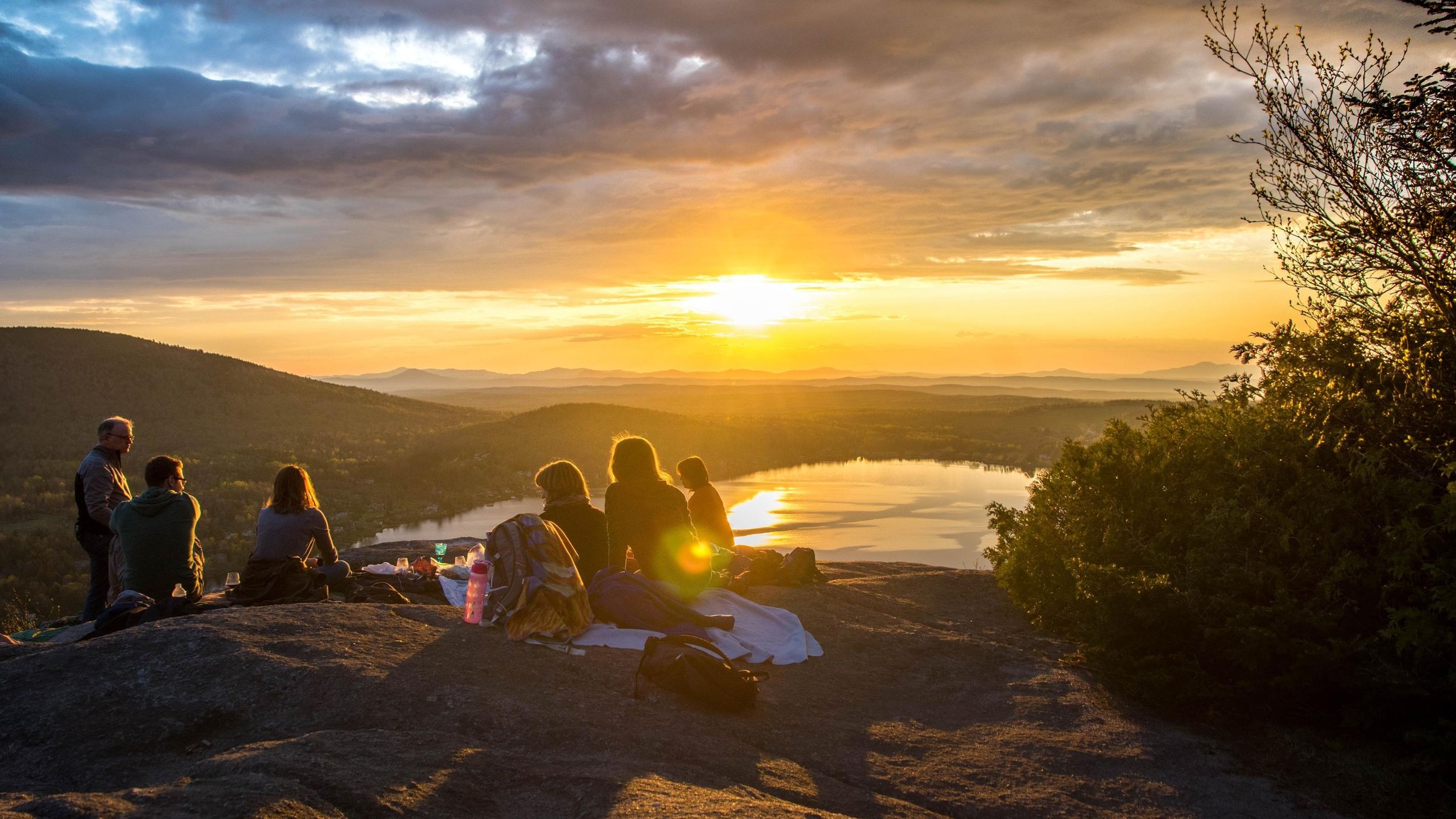
A pre-funeral ceremony helps us say goodbye. It is both a celebration of life and a way to come to terms with death.
Let's say goodbye while we still have the strength. Let's find peace within ourselves, with death, among family, friends, and colleagues. This new concept of a pre-funeral helps us let go with a calm mind.

REFLEX, SPACE X: A TRADITIONAL FUNERAL SCARES PEOPLE. WE CAN EVEN SEND ASHES INTO SPACE.
Almost everyone has been to a funeral at some point. They usually follow a similar pattern—a funeral home or crematorium, flowers, and a eulogy. The atmosphere is often impersonal and hectic. But a funeral doesn’t have to be like that, and the possibilities for how a final farewell can look are virtually limitless. Funeral director Oleg Vojtíšek explains why it’s important to experience and process death and funerals in the right way.

CZECH RADIO, GOOD ADVICE: "WE CAN OVERCOME DEATH BY ACCEPTING IT," SAYS OLEG VOJTÍŠEK
“Death is a very difficult topic in our society. But funeral directors present a person’s final moments in a slightly different light. They say, ‘People deserve a good funeral. A good funeral service. A good farewell—one that helps the bereaved while celebrating the life of the deceased.”
Most of the time, we don’t even realize that a ceremony to say goodbye to a loved one doesn’t have to have anything to do with a funeral as most of us know it. In fact, it doesn’t even have to take place in a funeral home or at a cemetery.
There are plenty of options. For example, at a river confluence, on a hill, in a villa, in an art gallery, or even on a soccer field. In short, final farewell ceremonies can be very personal and revolve entirely around the deceased—based on what they loved, what they hated, what they were like, what they did, and where they went.

DATA TALK #77: OLEG VOJTÍŠEK (FUNERAL GUIDES)
In the next episode of Data Talk, you’ll hear from Oleg Vojtíšek, AI Product Owner at TV Nova and co-founder of Pohřební průvodci. Oleg has had an impressive career in data, from his early days in telecommunications to fintech services at Alza and machine learning at TV Nova; however, the most pivotal part of the interview is devoted to our society’s taboo—death.
We’ll explore the topic of death and dying through *The Funeral Guide*, covering everything from a startup perspective to urban planning and humanistic perspectives. The podcast builds up to the connection between death and AI. How is AI “disrupting” death? Is a Black Mirror-style episode about dying and grieving on its way to every family, or is there a reason to be techno-optimistic even in an area as intimate as death? Check out this episode—it’s worth it!
-

How should you talk to children about death? What about children at a funeral?
Let’s stop protecting children from death simply because we ourselves are afraid of it. Let’s forget the idea that “what children don’t know won’t hurt them.” In reality, what children don’t know, they’ll make up.
-

Don't you eat at funerals? A Czech guide to funerals explores funerals in Indonesia.
In the Czech Republic, we’re afraid of funerals. But in Indonesia, people look forward to them. For several days, they eat, drink, and chat together. First, though, they slaughter buffalo and horses. Then they cut up the meat and distribute it to the guests.
-

When is the best time for a funeral?
How about holding the service in the afternoon, in the evening, or on Sunday? Funeral services are typically held in the morning or early afternoon—at the latest, in the early afternoon—on weekdays. They last less than half an hour, and the family and mourners don’t always have enough time…

CZECH RADIO DVOJKA: GUEST: OLEG VOJTÍŠEK, FUNERAL DIRECTOR
What can we do if we didn't get a chance to say a proper goodbye to a loved one? Should children attend a funeral? And is it possible to prepare for death in advance? Hosted by Barbora Chuecos.

A GUIDE TO FUNERALS: A CEREMONY CAN BE BEAUTIFUL AND JOYFUL, AND CHILDREN BELONG THERE
A funeral is about coming to terms with loss. Children perceive it the way we teach them to. It’s best to talk to them about funerals. The more openly and matter-of-factly, the better. It’s good to take them to a funeral, and it can even be beneficial to involve them in the preparations,” says funeral director Oleg Vojtíšek.
According to him, the current Czech funeral tradition is dignified, but it doesn’t do much to help the deceased. He believes that a funeral serves many more purposes. For example, it’s a chance to say the things we didn’t have time to say before. He discusses other functions and possibilities of funerals in the podcast. There, among other things, he’ll explain what an important role something like a Lego set can play for children during a funeral.
The Vlček Family Foundation Podcast: Oleg Vojtíšek with Mirek Čepický
-

A Person's Final Arrangements: What to Do with the Deceased's Ashes?
The loss of a loved one is always a painful ordeal. That’s why it’s good to know how to handle certain purely practical matters—such as what to do with the ashes once the funeral is over.
-

Death is still a taboo subject in the Czech Republic. People don't know how to say goodbye to their loved ones.
Nearly two-thirds of Czechs have no idea what their funeral should look like. Only a quarter of them know what kind of final farewell their parents would want. A recent study also confirms that people tend to avoid talking about death.
-

How to choose a funeral home?
Even when planning a final farewell, it’s important to make careful choices. But how can you do that when grief has numbed you and you don’t know what to look out for?

CZECH RADIO PLUS, PETR VIZINA’S TALKS: CZECHS ARE TRUE CHAMPIONS AT DENYING DEATH
“By then, I won’t care what kind of funeral I have. A farewell is, above all, for the bereaved. Of course, according to the Civil Code, we’re supposed to conduct the funeral exactly according to the deceased’s instructions and respect their wishes as much as possible. But I say that a funeral should mainly help the bereaved say goodbye, take a deep breath, and move on,” explains Vojtíšek.
He explains pragmatically why they founded Průvodce: Years ago, Vojtíšek attended a service in Berlin that was reportedly fantastic—and, what’s more, held in a church.
“It blended the sacred and the profane. The connection was made by people who were in a church perhaps for the first time—maybe even attending a funeral for the first time,” he recalls.
“But the service worked wonderfully: at the beginning, people were focused; in the middle, they were really crying—even the big guys—and by the end, they were laughing and singing along a bit. I’d never seen anything like that in Eastern Europe before.”