
The First 48 Hours: The Power We Handed Over to the System: Oleg Vojtíšek, Olga Nešporová, Magdalena Ondrová, Barbora Steinlauf
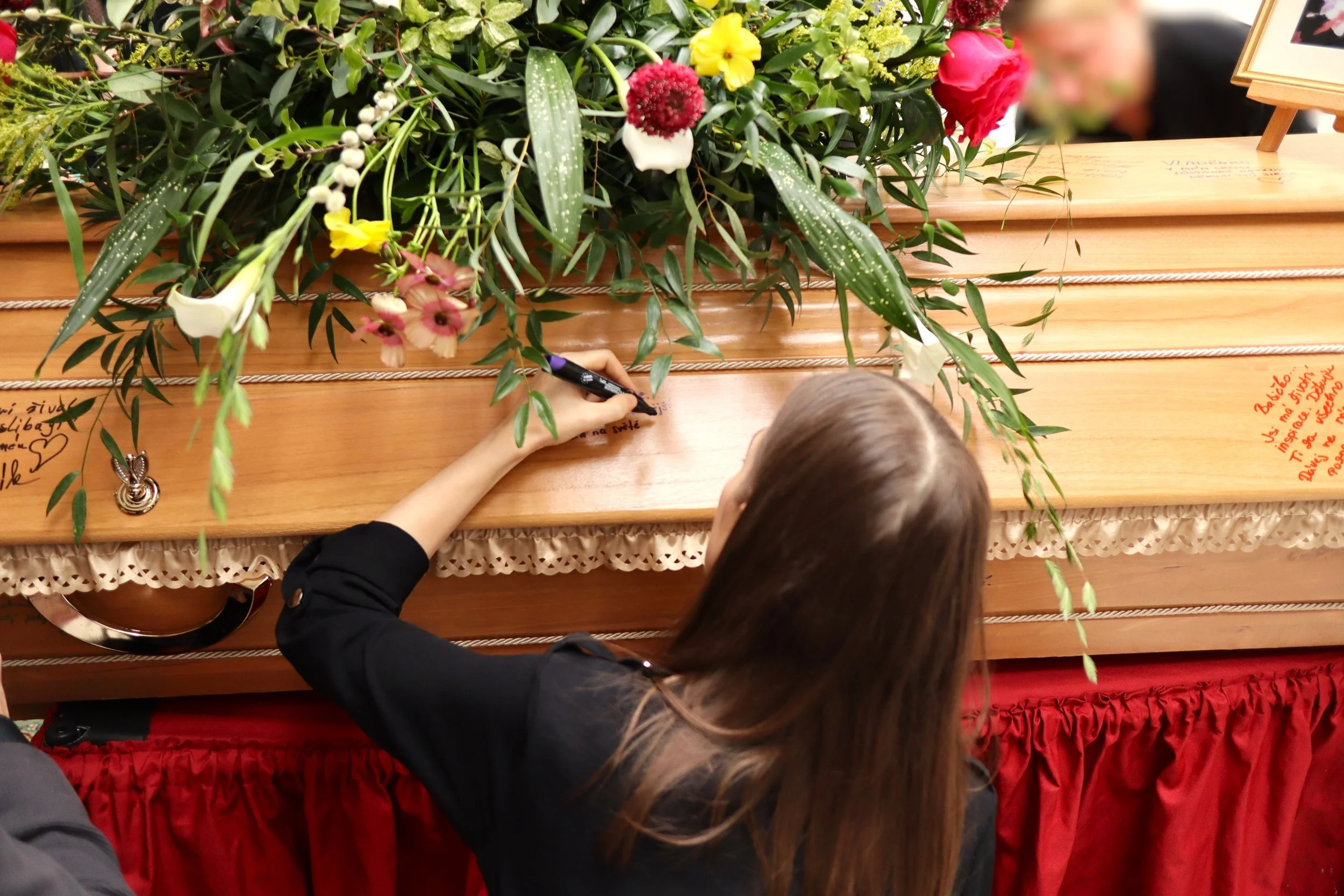
At a funeral, we can write messages on the coffin.
Dad has died. And now, quickly: call a doctor, search the internet for the nearest funeral service, and have them pick him up as soon as possible. First thing in the morning, go arrange the funeral at a branch office, ideally before work. Order wreaths, put together a death notice, choose a coffin from a catalog. That is what the most classic 48 hours after a death look like.
Olga Nešporová, an ethnologist from the Czech Academy of Sciences, notes: "People have stopped being used to caring for the dying. We don't know what to do with the deceased, and we are afraid of their physicality and potential changes."
A dead human body is not biological waste, however. As our Oleg nicely puts it: "A dead person no longer breathes, coughs, or sneezes. Bacteria may be there, but they love our living 36 degrees. If you weren't afraid to touch them in life, there is no reason to pull away now." The first few hours after death belong to you and them, not to funeral attendants.
Magdalena Ondrová from the hospice adds practical examples: in hospices, it is normal for nurses to help the family wash, dress, and generally prepare the body. Sometimes the family wants to style the hair, other times give them something to take along on their journey. And sometimes someone just needs a phone consultation on how to do it.
All three experts across fields agree on the same thing: we are afraid of death and we are afraid of the dead body. Yet caring for it can help us immensely. The deceased is already calm, nothing hurts them, and you have them fully in your hands. That peace transfers to you when you give yourself the chance. To say goodbye, do them a final service, and care for them one last time. And only then let them go.
If you want to learn more about the first 48 hours after a death—what your rights are and what no one is allowed to forbid you—read Klára Nesitová's interview with our Oleg, as well as Olga Nešporová, Magdalena Ondrová, and healthcare attorney Barbora Steinlauf.